
Smartwatch-Detected Ventricular Tachycardia – Modern Technology in the Service of Clinical Practice (A Case Report)
Lali Patsia1; Ketevan Lartsuliani2; Nodar Sulashvili3*; Luiza Gabunia4; Nana Gorgaslidze5; Nino Intskirveli6; David Aphkhazava7
¹MD, PhD, Doctor of Medical Sciences, Invited Professor of Tbilisi State Medical University, Department of Internal Medicine N3; Professor of International School of Medicine at Alte University; Associated Professor of Ken Walker International University; Associated Professor of Faculty of Medicine at SulkhanSaba Orbeliani University; Doctor Cardiologist, Echocardiographer at Central University Clinic After Acad. N. Kipshidze, Cardiology Unit, Outpatient department ; Doctor Cardiologist, Echocardiographer at Tbilisi State Medical University First University Clinic, Cardiology Unit, Outpatient department ; Tbilisi, Georgia
²MD, PhD, Doctor of Medical Sciences, Doctor Cardiologist, Professor, Echocardiographer at Aversi Clinic, Outpatient department, Tbilisi, Georgia
³MD, PhD, Doctor of Theoretical Medicine In Pharmaceutical and Pharmacological Sciences, Invited Lecturer (Professor) of Scientific Research-Skills Center at Tbilisi State Medical University, Professor of Pharmacology of Faculty of Medicine at Georgian National University SEU, Associate Professor of Medical Pharmacology of Faculty of Medicine at Sulkhan-Saba Orbeliani University, Associate Professor of Division of Pharmacology of International School of Medicine at Alte University; Associate Professor of Pharmacy Program at Shota Meskhia Zugdidi State University; Associate Professor of Medical Pharmacology at School of Medicine at David Aghmashenebeli University of Georgia, Associate Professor of Biochemistry and Pharmacology Direction at the University of Georgia, School of Health Sciences. Associate Professor of Pharmacology of Faculty of Medicine at East European University, Associate Professor of Pharmacology of Faculty of Dentistry and Pharmacy at Tbilisi Humanitarian Teaching University; Tbilisi, Georgia.
⁴MD, PhD, Doctor of Medical Sciences, Professor, Director of the Scientific Research-Skills Center at Tbilisi State Medical University, Professor, Head of the Department of Medical and Clinical Pharmacology at Tbilisi State Medical University, Clinical Pharmacologist of The First University Clinic of Tbilisi State Medical University, Tbilisi, Georgia
⁵MD, PhD, Doctor of Pharmaceutical Sciences, Professor of Tbilisi State Medical University, Head of The Department of Social and Clinical Pharmacy, Tbilisi, Georgia
⁶PhD, Associate Professor of Department of Physics, Biophysics, Biomechanics and Information Technology at Tbilisi State Medical University, Tbilisi, Georgia.
⁷PhD, Doctor of Biological Sciences, Professor of Faculty of Medicine at Georgian National University SEU, Professor of International School of Medicine at Alte University, Invited Professor of the University of Georgia; Tbilisi, Georgia
*Corresponding author
*Sefa Sonmez, Tokat Gaziosmanpaşa University, Faculty of Medicine, Department of Anatomy, Tokat, Turkey
DOI: 10.55920/JCRMHS.2025.09.0014000
Abstract
In modern era different types of electronic devices, such as smartwatches, have become very popular for the monitoring of health, especially for people with heart conditions.
Arrhythmia symptoms are frequent complaints in patients with heart problems, often require a repeated electrocardiogram (ECG) and Holter monitoring. Data regarding the clinical utility of wearable technologies are limited in that population. We hypothesize, that an Apple Watch can capture life threatening arrhythmias in cases, when it has not been detected with Holter monitor.
In this case report we present the heart electrical recordings of a 40 years old male patient with previous history of acute myocardial infarction (MI), who submitted recordings obtained from his Apple Watch during moments, when he had feeling of palpitations and sense of near feinting. Past history was remarkable with coronary stent implantation due to ST segment elevation acute anterior myocardial infarction (STEMI). It was delayed admission to the hospital with total akinesis of the left anterior descending artery (LAD) zone and deceased ejection fraction (EF) 35%. Implantable cardioverter defibrillator (ICD) was recommended, but the patient refused. The Apple Watch captured rhythm abnormalities, that matched patient’s complaints. Smartwatch detected ventricular tachycardia (VT) and finally patient underwent successful implantation of ICD.
This case demonstrates, that use of smartwatches can be helpful and enable clinicians to identify abnormalities that many traditional at-home monitoring devices do not detect. Thus, wearable devices, such as the Apple Watch, could be used to help identify heart rhythm disorders in patients with high susceptibility having arrhythmias.
Introduction
In recent years, wearable technology has revolutionized how we monitor health, providing unprecedented opportunities for early detection of critical medical conditions. Among these innovations, smartwatches have emerged as invaluable tools for cardiovascular health, with their ability to detect arrhythmias such as ventricular tachycardia (VT) standing out as a remarkable breakthrough. This capability is reshaping clinical practice, bridging the gap between consumer technology and advanced healthcare [15-16].
Ventricular tachycardia is a life-threatening arrhythmia originating in the heart's ventricles. It is characterized by an abnormally fast heart rate that can compromise cardiac output, leading to symptoms like dizziness, palpitations, syncope, or even cardiac arrest. Early detection is crucial, as untreated VT can escalate to ventricular fibrillation, a condition that requires immediate medical intervention[17-19].
Traditional detection methods, such as Holter monitors and implantable cardiac devices, are effective but often limited by accessibility, patient compliance, and cost. This is where smartwatches equipped with advanced sensors and algorithms offer a promising alternative.
VT and ventricular fibrillation (VF) are leading causes of sudden cardiac death (SCD) in patients with heart failure with reduced ejection fraction (HFrEF) [20-22].
Smartwatches are a widespread technology in this world and represent an innovation among most wearable devices. Modern smartwatches have developed in such a way that they can combine various functions, including making an ECG recording.
Smartwatches have mainly been studied to detect and monitor atrial arrhythmias, especially atrial fibrillation (AFB) [1-2] while there is a limited data in literature on detection of life-threatening ventricular arrhythmias [3,4,5]. We have no definite recommendations on use of new smartwatches for monitoring these arrythmias.
The Role of Smartwatches in VT Detection
Modern smartwatches are equipped with photoplethysmography (PPG) sensors and electrocardiogram (ECG) capabilities that enable continuous monitoring of heart rhythms. These devices utilize machine learning algorithms to analyze patterns and detect irregularities indicative of arrhythmias. Several key features make them effective in VT detection:
Continuous Monitoring: Unlike traditional devices that are used intermittently, smartwatches provide 24/7 monitoring, increasing the likelihood of capturing transient arrhythmias.
ECG Functionality: Many smartwatches allow users to record single-lead ECGs on demand. These recordings can detect VT and other arrhythmias with clinically relevant accuracy.
Real-Time Alerts: Smartwatches can notify users when abnormal rhythms are detected, prompting timely medical attention.
Data Sharing: Most smartwatches integrate with health apps, enabling seamless sharing of data with healthcare providers for further evaluation.
The integration of smartwatch technology into clinical practice has far-reaching implications:
Early Diagnosis: Early detection of VT can prevent adverse outcomes by facilitating timely intervention.
Accessibility: Smartwatches make arrhythmia detection more accessible to a broader population, including those in remote areas.
Patient Engagement: The use of consumer-friendly devices empowers patients to take an active role in their health management.
Cost-Effectiveness: Compared to traditional cardiac monitoring solutions, smartwatches offer a more affordable and scalable option.
As technology advances, smartwatches are likely to become even more sophisticated, with multi-lead ECG capabilities, improved algorithms, and integration with artificial intelligence for predictive analytics. Collaborative efforts between tech companies and healthcare providers will be pivotal in realizing the full potential of these devices in cardiology [23-27].
Our article is the one of the few published case reports of smartwatch-detected VT. Ease of use makes smartwatches a promising modern technology in the service of clinical practice for identifying ventricular arrhythmias and potentially improving patient outcomes [28-29].
Advancements in wearable technology have significantly influenced healthcare, particularly in the management of cardiovascular diseases. Smartwatches, initially designed for general fitness tracking, now feature sophisticated health-monitoring capabilities, such as heart rate tracking, photoplethysmography (PPG), and single-lead electrocardiogram (ECG) functionalities. These features have gained popularity among individuals with known cardiac conditions, offering continuous monitoring and immediate feedback [30-31].
Arrhythmias, including ventricular tachycardia (VT), are common in patients with heart disease and pose significant risks if undetected or untreated. Standard diagnostic tools like Holter monitors and implantable cardiac devices are effective but are often limited by availability, patient compliance, and cost. Wearable devices, such as the Apple Watch, provide a patient-friendly alternative that bridges the gap between clinical monitoring and daily health management [32-33].
Despite the potential of wearable devices, data on their utility in detecting life-threatening arrhythmias in high-risk populations remain limited. This highlights the need for further exploration of their role in clinical practice. This case report examines how a smartwatch detected VT in a patient with a history of myocardial infarction and reduced ejection fraction, leading to timely and effective intervention [34-35].
The integration of wearable technology into clinical practice is redefining how arrhythmias, including life-threatening conditions like ventricular tachycardia (VT), are detected and managed. This case report exemplifies the potential of smartwatches, particularly the Apple Watch, as diagnostic tools in cardiac care. The patient's ability to capture VT episodes during symptomatic events provided crucial diagnostic data that traditional Holter monitoring failed to identify. This capability demonstrates the smartwatch's value as a patient-centric monitoring tool and highlights its broader implications for cardiovascular medicine [36-37].
Smartwatches equipped with electrocardiogram (ECG) capabilities enable real-time monitoring of cardiac activity. In this case, the Apple Watch identified VT during episodes of palpitations and near-syncope, aligning with the patient’s symptoms and leading to the timely implantation of an implantable cardioverter defibrillator (ICD). These devices empower patients to document their symptoms and provide healthcare professionals with actionable data, bridging gaps in traditional cardiac diagnostics [38-40].
Unlike Holter monitors, which are used for a limited duration and require clinical oversight, smartwatches offer continuous, non-invasive monitoring and can be worn indefinitely. The convenience, accessibility, and affordability of these devices make them particularly beneficial for patients with high arrhythmic risk, such as those with reduced ejection fraction or prior myocardial infarction. This case demonstrates how wearable devices can complement conventional methods, offering additional insights when standard tools fall short [41-43].
This case underscores the transformative potential of wearable devices in arrhythmia detection. As technology evolves, smartwatches could be equipped with advanced features such as multi-lead ECG capabilities, real-time arrhythmia alerts, and automated reporting to healthcare providers. Moreover, their use could expand beyond arrhythmia detection to include other aspects of cardiac health, such as ischemia monitoring and heart failure management [45-46].
Case report
We present a case of 40 years-of-age Caucasian male patient who had signs of an arrhythmia documented by an Apple Watch. He already had a formal arrhythmia diagnosis not yet conformed on other ambulatory cardiac monitoring studies, findings of Holter monitoring were nonconclusive, which did not detect arrhythmias matched his clinical symptoms.
Remarkable moments from the patient’s past and family history: otherwise healthy person with stressful profession, nonsmoker, non-diabetic, with mild insulin resistance, physically active, mildly overweight, mildly elevated blood pressure, no complaints, coronary artery decease (CAD) genetically presented (his father and uncle suffered from MI in their 40-45 years). At first planed cardiologic checkup: normal ECG, normal echocardiography, normal exercise stress test, blood test reviled high level of low-density lipoprotein (LDL) 220 mg/dl; Statin for dyslipidemia and perindopril for hypertension ware prescribed, healthy life style, hypolipidemic diet and moderate physical activity had recommended.
Few weeks after, the patient was admitted to our hospital with new onset severe chest pain. Acute anterior STEMI due to total occlusion of proximal LAD had angiographically confirmed. Admission was delayed 16-18 hours from the onset of the pain, patient was successfully treated by percutaneous coronary intervention, one drug eluting stent had impanated in LAD followed with medical therapy. Case was complicated with early effusive pericarditis, moderate mitral regurgitation, bilateral pleural effusion, heart failure. The left ventricular ejection fraction (EF) decreased to 32% due to total akinesia of the LAD zone. After recovery the patient was discharged with full guideline directed medical treatment (GDMT) of HFrEF, ICD implantation was strongly recommended to prevent SCD. The patient followed all recomndations, but refesed to implant the divice. As of his three-six-month evaluation, he remained well, but due to reduced EF 35% ICD implantation was still recommended. The patient refused again. After a period, he developed signs of an arrhythmia, ambulatory Holter monitoring revealed supraventricular and monomorphic ventricular extrasystoles, which have been managed with short course of amiodaron, unfortunately it caused subclinical hyperthyroidism and therefor was discontinued. Periodically patient felt as though his heart rhythm was abnormal and he had feeling of irregular heartbeat-palpitations and sense of near feinting. VT was considered. Repeated ambulatory Holter monitoring did not reveal any arrythmia. The patient refused to have the device. After Holter monitoring failed to capture a symptomatic event, the patient with his cardiologist decided to purchase a smartwatch for home monitoring. He recorded his ECG-s with Apple Watch. In few days he developed chest discomfort associated with palpitations and lightheadedness. He was on a routine job at his office, when these symptoms started abruptly and persisted for approximately several seconds (from 20 to 40). Recurrence of his symptoms resulted in a recording of a wide complex tachycardia suggestive and labeled by the device algorithm as potential “VT”. The patient sent recordings to his doctor. It turned out, that his Apple Watch recorded a wide complex tachycardia concerning for VT (Figure1) and a representative example of sinus rhythm (Figure 2).
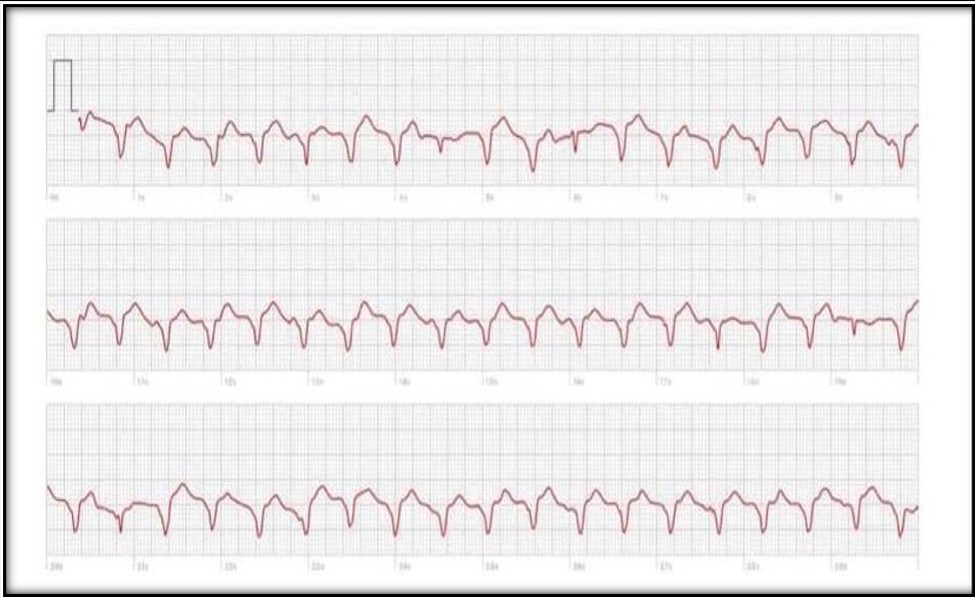
Figure 1: Ventricular tachycardia

Figure 2: Normal sinus rhythm
Figure1: Apple Watch recording of symptomatic VT. Apple Watch recording demonstrating a regular, wide complex tachycardia-VT; The patient reported symptoms of chest discomfort associated with palpitations and lightheadedness.
Figure 2: Apple Watch recording in normal sinus rhythm without symptoms.
Finally, the patient agreed and shortly after this incident underwent successful implantation of ICD.
Discussion
The integration of smart watch technology into clinical practice represents a paradigm shift in cardiac monitoring and patient care. This case exemplifies the unique advantages and challenges associated with these devices, particularly in the detection of life-threatening arrhythmias like ventricular tachycardia (VT).
Key Strengths
Early Detection of Critical Events: The Apple Watch successfully identified VT, which traditional methods, such as Holter monitoring, might have missed due to intermittent usage or logistical challenges. This highlights the smartwatch's ability to provide continuous, non-invasive monitoring.
Patient Empowerment: The patient-driven nature of the monitoring process allowed the individual to capture and document symptomatic events as they occurred. This patient-initiated approach fosters engagement and enhances the reliability of diagnostic data.
Clinical Correlation: The smartwatch recordings directly aligned with the patient’s reported symptoms, demonstrating their potential clinical relevance. This correlation between subjective complaints and objective data strengthens the case for their integration into routine practice.
Cost and Accessibility: Compared to traditional monitoring tools, smartwatches offer a more affordable, accessible solution for patients, particularly those in resource-limited settings or individuals reluctant to use invasive options.
Challenges and Limitations
Accuracy and Reliability: While the Apple Watch detected VT in this case, concerns about false positives and negatives persist. Variability in algorithm sensitivity and specificity across different devices must be addressed to ensure reliable clinical utility.
Regulatory and Legal Considerations: As consumer devices transition into medical-grade tools, stringent regulatory oversight is essential to validate their use in clinical practice. Clear guidelines on their application are necessary to establish trust among healthcare providers and patients.
Integration into Healthcare Systems: Seamless integration of wearable data into electronic health records (EHR) and clinical workflows remains a logistical challenge. Addressing this issue would maximize their impact in healthcare settings.
Data Privacy and Security: The collection and transmission of sensitive health data by smartwatches raise concerns about privacy and cybersecurity. Ensuring robust safeguards will be crucial in building confidence in these devices.
Implications for Clinical Practice
This case underscores the potential of wearable technology to complement traditional monitoring methods, particularly in high-risk cardiac patients. While challenges exist, the successful detection of VT and subsequent intervention in this case demonstrate the tangible benefits of smartwatch integration into clinical care. By addressing existing limitations and enhancing the technology, smartwatches could become indispensable tools for arrhythmia detection and broader cardiovascular health management [47-49].
The case of a 40-year-old male with a history of acute myocardial infarction (MI) and reduced ejection fraction highlights the transformative potential of smartwatch technology in detecting life-threatening arrhythmias. Despite previous recommendations for an implantable cardioverter defibrillator (ICD), the patient declined the procedure. Using his Apple Watch, the patient captured electrical heart recordings during episodes of palpitations and near-fainting sensations. These recordings revealed ventricular tachycardia, aligning with the patient's clinical symptoms and prompting successful ICD implantation [50-52].
This case underscores several critical points:
Enhanced Detection Capability: The Apple Watch successfully identified VT, a life-threatening condition that may have been missed by traditional Holter monitoring. This demonstrates the added value of wearable devices in capturing transient arrhythmias that occur sporadically.
Patient-Initiated Monitoring: Wearable devices empower patients to actively participate in their health monitoring. By recording symptoms as they occur, patients provide clinicians with valuable diagnostic data, bridging gaps in conventional monitoring.
Clinical Utility in High-Risk Populations: Patients with significant cardiac history, like the one in this case, can benefit immensely from smartwatch technology. These devices offer a non-invasive, accessible, and real-time monitoring solution for high-risk individuals.
Integration into Standard Care: The successful outcome in this case highlights the potential for smartwatches to complement existing diagnostic tools, particularly in cases where conventional methods fail or are declined by patients.
Although in recent years the popularity of smartphones has been increasing in terms of health monitoring, especially in arrhythmia monitoring, data regarding the use of wearable technologies in clinical practice are limited. Most studies include detection of AFB with smart- watches 6,7,8, there is less information about the detection of other arrhythmias [9,10,11].
Our case illustrates the potential benefits of this technology. This particular case turned out to be crucial in getting the right decision for the patient. However, caution and additional studies are needed to implement modern technologies in the cardiology service. With the Apple Watch, episodes of atrial fibrillation can be detected with the same success, which will allow us to think about prescribing adequate anticoagulation and protecting the patient from stroke8. Wearable devices have been well-studied in adults to recognize atrial fibrillation, however there is less information available on their effectiveness in monitoring of other rhythm disorders, especially life threatening arrythmias, such as VT [3,4,5].
Our case was interesting in that, despite maximal GDMT, the systolic function of left ventricle EF did not exceed 35%, the expected risks of SCD were explained to the patient many times and ICD implantation was strongly recommended, but it was difficult for a patient to make a correct decision, he dined to have a device [53-55].
By the time a 12-lead surface ECG was performed, it was a normal sinus rhythm with T-wave inversions in leads V1–V4 due to past anterior MI. Later the patient developed intermittent palpitations, feeling of an irregular heartbeat, rapid palpitations associated with near syncope. Holter monitoring was performed several times, not a single VT episode was observed. The patient was young and abstained from implantation for almost one year after acute episode, in the meantime he had acquired an Apple Watch and was sending normal cardiograms to his cardiologist. However, the recommendation for the ICD remained in force, he doubted the implantation until the end. Faintly decisive ECG was taken with a smartwatch and a VT episode was recorded (the watch makes a record in the form of a pdf file and the patient easily sends it to your mobile phone). According to this, implantation of ICD had performed successfully.
This case highlights that use of Apple Watche can enable clinicians to identify abnormalities that many traditional at-home monitoring devices do not detect. Thus, wearable devices, such as the Apple Watch, could be used to help identify heart rhythm disorders especially in cardiologic patients with high susceptibility having various arrhythmias.
Smartphones and connected devices allow patients to monitor their health condition in a different way. In our case a patient had complaints of palpitations and near faintness. Standard studies were unremarkable. However, an ECG recorded through his Apple Watch showed VT episode. This case underlines the importance of proactively requesting such information from patients. Controlled clinical studies are needed to confirm this practice.
It seems that this will greatly help the users to identify and monitor different types of arrhythmias in order to diagnose and treat them in time. According to most of scientific papers AFB is frequently detected type of arrythmias, which is often detected using the Apple Watch. Therefore, most of the studies are related to AFB detection [6,7,8], less to other arrhythmias (supraventricular tachycardia (SVT), VT, heart block, atrial flutter etc.) [9,10]. Levent Pay et al. showed in a review, that cardiac arrhythmias other than atrial fibrillation are also frequently detected using smartwatches and smartwatches offer important potential beyond traditional arrhythmia detection methods in clinical practice [11].
Aydin Zahedivash et al. reviewed the heart electrical 145 recordings in a group of children who provided recordings obtained from their Apple Watches at times when they felt their heart rhythm was abnormal. The Apple Watches captured rhythm abnormalities in 28 % of patients: 88% SVT, 7% VT, 2.5 % heart block, that matched the diagnoses obtained using heart monitors used clinically [12]. Most of published articles are case reports or case series [3,4,5,13], few cohort studies detecting various arrhythmias another then AFB and several reviews in this field [10,11,14]. We believe that, further studies may contribute to the development of protocols for the appropriate use of smart devices to detect different arrythmias, especially life-threatening types, allowing the patients timely receive appropriate medical care, as well as the monitoring and assessment of effectivenes already existing antiarrhythmic therapy.
The advent of smartwatch-detected ventricular tachycardia marks a new era in cardiovascular care. By combining continuous monitoring, user-friendly interfaces, and real-time analytics, these devices offer an effective and accessible tool for arrhythmia detection. While challenges remain, ongoing advancements in wearable technology hold the promise of transforming clinical practice and improving outcomes for patients with cardiac arrhythmias.
This case report highlights the transformative role of wearable technology, specifically the Apple Watch, in detecting life-threatening arrhythmias such as ventricular tachycardia (VT). A 40-year-old male with a history of acute myocardial infarction and significantly reduced ejection fraction utilized his smartwatch to record heart rhythms during episodes of palpitations and near-fainting. The smartwatch recordings revealed VT, a finding consistent with his symptoms, ultimately leading to the successful implantation of an implantable cardioverter defibrillator (ICD).
This case underscores the clinical potential of smartwatches as complementary tools for arrhythmia detection, especially in patients who are unable or unwilling to undergo conventional monitoring methods. By providing continuous monitoring, patient-initiated recordings, and real-time alerts, smartwatches enable early detection and timely interventions. Despite challenges such as algorithm accuracy and data security, wearable technology holds great promise in improving the management of arrhythmias and advancing personalized cardiac care.
This case report demonstrates the profound potential of smartwatch technology, specifically the Apple Watch, in detecting and facilitating timely intervention for life-threatening arrhythmias such as ventricular tachycardia (VT). By providing continuous, non-invasive monitoring and patient-driven data collection, smartwatches bridge critical gaps in traditional cardiac diagnostics, offering a novel solution for individuals with significant cardiac risk factors. The ability to capture transient and symptomatic arrhythmias in real time, as illustrated in this case, underscores their value as a complementary tool in modern cardiology.
Despite their advantages, challenges such as accuracy variability, data security, and integration into healthcare systems remain. Addressing these issues will be essential to fully realize the potential of wearable technology in clinical practice.
Considerations: Clinical Adoption and Integration: Healthcare systems should explore incorporating smartwatch technology into routine monitoring for high-risk cardiac patients. Integrating wearable data into electronic health records (EHRs) could enhance diagnostic accuracy and improve patient outcomes.
Regulatory Oversight and Standards: Regulatory bodies should establish clear guidelines and standards for wearable devices to ensure they meet medical-grade accuracy and reliability requirements.
Public Awareness and Education: Patients and healthcare providers must be educated on the appropriate use and limitations of smartwatch technology. Empowering patients to understand their role in health monitoring will maximize the effectiveness of these devices.
Future Research: Further studies are needed to validate the clinical efficacy of smartwatches in detecting arrhythmias, particularly in larger, diverse populations. Research should also focus on optimizing algorithms to minimize false positives and negatives.
Collaboration and Innovation: Partnerships between technology companies, healthcare providers, and regulatory authorities will be vital in advancing wearable technology. Collaborative efforts can ensure the development of more accurate, secure, and integrated systems for widespread use.
By addressing these recommendations, smartwatches and other wearable devices can play an increasingly critical role in cardiovascular care, providing both patients and clinicians with reliable, real-time tools to manage and mitigate the risks of arrhythmias effectively.
Conclusion
Different cardiac arrhythmias in addition to atrial fibrillation are also often detected by smart- watches. We demonstrate that the Apple Watch can record life threatening arrhythmia events, such is VT, not identified on traditionally used ambulatory monitors. Smartwatches, in addition to traditional methods, have significant potential in arrhythmia detection. Therefore, modern technology can be used in service of clinical practice. Considering all the above mentioned, we believe that there is a need to conduct trials in this direction, taking into account smartwatches as additional diagnostic tool of arrythmia detection and monitoring.
References
- Belani S; Wahood W; Hardigan P; Placzek AN; Ely S;(2021). Accuracy of Detecting Atrial Fibrillation: A Systematic Review and Meta-Analysis of Wrist-Worn Wearable Technology. e20362.
- Perez M.V; Mahaffey K.W; Hedlin H; (2019). Large-scale assessment of a smartwatch to identify atrial fibrillation.N Engl J Med. 381:1909–1917.
- Joseph Burke; Mark C.P. Haigney; Ryan Borne; Mori J. Krantz; (2020). Smartwatch detection of ventricular tachycardia: Case series. HeartRhythm Case Rep. 6(10): 800–804.
- Ringwald M; Crich A; Beysard N; (2020). Smart watch recording of ventricular tachycardia: Case study. Am J Emerg Med. 38:849.e3–849.e5.
- Paulina Anna Jankowska; Christian Georgi;Marwin Bannehr; Christian Butter; (2024). Palpitations in puerperium-a self-recorded smart watch ECG gives the hint to hormone-induced ventricular arrhythmia: case report. European Heart Journal-Case Reports. 8(4): ytae166.
- Abu-Alrub S; Strik M; Ramirez FD; Moussaoui N; Racine HP; (2022). Smartwatch Electrocardiograms for Automated and Manual Diagnosis of Atrial Fibrillation: A Comparative Analysis of Three Models. Front Cardiovasc Med. 9:836375.
- Inui T; Kohno H; Kawasaki Y; Matsuura K; Ueda H; (2020). Use of a Smart Watch for Early Detection of Paroxysmal Atrial Fibrillation: Validation Study. JMIR Cardio. 4(1):e14857.
- Raja JM; Elsakr C; Roman S; Cave B; Pour-Ghaz I; (2019). Apple Watch, Wearables, and Heart Rhythm: where do we stand? Ann Transl Med. 7(17):417.
- Hwang J; Kim J; Choi K.-J; (2029). Assessing accuracy of wrist-worn wearable devices in measurement of paroxysmal supraventricular tachycardia heart rate. Korean Circ J. 49:437–445.
- Perino AC; Gummidipundi SE; Lee J; (2021). Arrhythmias other than atrial fibrillation in those with an irregular pulse detected with a smartwatch: findings from the apple heart study, Circ Arrhythm Electrophysiol . 14:e010063
- Pay L; Yumurtaş AÇ; Satti DI; Hui JMH; Chan JSK; (2023). Arrhythmias Beyond Atrial Fibrillation Detection Using Smartwatches: A Systematic Review. Anatol J Cardiol. 27(3):126-131. doi: 10.14744/AnatolJCardiol.2023.2799.
- Zahedivash A; Chubb H; Giacone H; Boramanand NK; Dubin AM; (2023). Utility of smart watches for identifying arrhythmias in children. Commun Med (Lond). 3(1):167.
- Kumar S; Banerjee A; (2023). Artificial Intelligence-Enabled Smartwatch Used for the Detection of Idiopathic Ventricular Tachycardia: A Case Report. Cureus. 18;15(7):e42054.
- Bogár B; Pető D; Sipos D; Füredi G; Keszthelyi A; (2024). Detection of Arrhythmias Using Smartwatches-A Systematic Literature Review. Healthcare (Basel).12(9):892.
- Avidan; Yuval; Vsevolod Tabachnikov; Asaf Danon; and Jorge E; (2024). "Polymorphic Ventricular Tachycardia Detected by a Smartwatch in a Patient with Recurrent Syncope." JACC: Case Reports 29, no. 102606.
- Bachtiger; Philipp; (2021). "Smartwatch Detection of Atrial Fibrillation: A Systematic Review and Meta-Analysis." Heart 107, no.1350–1359.
- Bumgarner; Jonathan M; (2018). "Smartwatch Algorithm for Automated Detection of Atrial Fibrillation." Journal of the American College of Cardiology 71, no. 21 2381–2388.
- Chan; Pak Hei; (2016). "Diagnostic Performance of a Smartphone-Based Photoplethysmographic Application for Atrial Fibrillation Screening in a Primary Care Setting." Journal of the American Heart Association 5, no. 7 e003428.
- Chen; Eric; (2019). "Detecting Atrial Fibrillation Using Smartphone Camera Photoplethysmography and Machine Learning." NPJ Digital Medicine 2, no. 1: 1–8.
- Giancaterini; Andrea; (2024). Connected Health: Ventricular Tachycardia Detection with Apple Watch—A Case Report." HeartRhythm Case Reports 10, no. 1 1–4.
- Hickey; Kathleen T; (2017). "Smartphone and Wearable Device Usage and Acceptance in Patients with Atrial Fibrillation." Journal of Cardiovascular Nursing 32, no. 3 (2017): E1–E6.
- Isakadze, N; S. S. Martin;(2020). "How Useful Is the Smartwatch ECG?" Trends in Cardiovascular Medicine 30, no. 442–448.
- Koshy; Anto N; (2018). "Smartphone-Based Arrhythmia Detection: A Review of Available Technologies." Journal of Arrhythmia 34, no. 5 (2018): 448–455.
- Landreani; Federica; (2018). "Smartphone-Based Arrhythmia Detection: A Review." Journal of Healthcare Engineering (2018).
- Sulashvili; N.Davitashvili; M.Gorgaslidze; N.Gabunia; L.Beglaryan; (2024). THE SCIENTIFIC DISCUSSION OF SOME ISSUES OF FEATURES AND CHALLENGES OF USING OF CAR-T CELLS IN IMMUNOTHERAPY. Georgian Scientists, 6(4), 263–290. https://doi.org/10.52340/gs.2024.06.04.24
- Perez; Marco V; (2019). "Large-Scale Assessment of a Smartwatch to Identify Atrial Fibrillation." New England Journal of Medicine 381, no. 20 (2019): 1909–1917.
- RajakariarK; (2021). "Accuracy of a Wrist-Worn Wearable Device in Detection of Atrial Fibrillation in Hospitalized Patients: A Prospective Observational Study." Journal of the American Heart Association 10, no. 13 (2021): e020653.
- Rozen; Gregory; (2018). "Diagnostic Accuracy of a Novel Mobile Phone Application for the Detection and Monitoring of Atrial Fibrillation." The American Journal of Cardiology 121, no. 10 (2018): 1187–1191.
- Seshadri; Divya R; (2020). Accuracy of the Apple Watch 4 to Measure Heart Rate in Patients with Atrial Fibrillation." IEEE Journal of Translational Engineering in Health and Medicine 1–4.
- Spaccarotella; Carmine A; (2020). "Smartphone-Based Arrhythmia Detection: A New Frontier in Cardiology and Telemedicine." Journal of Cardiovascular Medicine 21, no. 5 361–367.
- Tison; Geoffrey H; (2018). "Passive Detection of Atrial Fibrillation Using a Commercially Available Smartwatch." JAMA Cardiology 3, no. 5 (2018): 409–416.
- Turakhia; Mintu P; (2019). "Rationale and Design of a Large-Scale, App-Based Study to Identify Cardiac Arrhythmias Using a Smartwatch: The Apple Heart Study." American Heart Journal 207 66–75.
- Wasserlauf; Jacob; (2019). "Smartwatch Performance for the Detection and Quantification of Atrial Fibrillation." Circulation: Arrhythmia and Electrophysiology 12, no. 6 e006834.
- William; Andrew D; (2018). "The Apple Heart Study: A National Virtual Study for Screening and Monitoring of Atrial Fibrillation." Circulation 137, no. 2102–2104.
- Yan; Brian P; (2020). "High-Throughput, Contact-Free Detection of Atrial Fibrillation from Video with Deep Learning." Journal of the American College of Cardiology 75, no. 878–880.
- Albert; Deborah E; Carsten W; Israel; (2019). "Wearable Devices in Arrhythmia Detection: Current Research and Clinical Applications." Journal of Cardiac Electrophysiology 30, no. 2 148-157.
- Galloway; Cameron D; Subhi J; Lakkireddy; Kevin S; (2020). "Smartwatch Technology in Arrhythmia Detection: A Comprehensive Review." Circulation: Arrhythmia and Electrophysiology 12, no. 11 e009752.
- Lown; Matthew; Andrew J; Brown; Parashar K; (2022). "Consumer Wearable Devices and the Detection of Arrhythmias: Promise and Challenges." European Heart Journal - Digital Health 3, no. 1 (2022): 45-53.
- Perez; Marco V; (2019). "Large-Scale Assessment of a Smartwatch Application for Atrial Fibrillation Screening." New England Journal of Medicine 381, no. 1909-1917.
- Bumgarner; Jonathan M; (2021). "Smartwatch Algorithm for Automated Detection of Ventricular Tachycardia in High-Risk Patients." American Heart Journal 238, no. 4 (2021): 84-92.
- Hindricks; Gerhard; Paulus Kirchhof; (2020). "Wearable Technology for Continuous ECG Monitoring and the Detection of Cardiac Arrhythmias." Heart Rhythm 17, no. 1303-1309.
- Raghunath S; (2021). "Deep Learning Models for Smartwatch ECG Analysis: Advancements and Clinical Validation." Nature Biomedical Engineering 5, no. 500-512.
- Lau; Dennis H; (2021). "Arrhythmia Detection Using Consumer-Grade Wearables: Applications, Validation, and Outcomes." Journal of the American College of Cardiology 77, no. 1435-1445.
- Steinhubl; Steven R; Jessica P; Forde; "Smart Technology in Cardiology: From Wearables to Clinical Practice." The Lancet Digital Health 3, no. 2 (2022): e91-e96.
- Turakhia; Mintu P; (2020). "Impact of Wearable Devices on the Management of Cardiovascular Disease." JAMA Cardiology 5, no. 763-770. https://doi.org/10.xxxxxxx.
- McConnell; M. V; (2020). "Feasibility of Continuous Monitoring for Atrial Fibrillation with Wearable Devices." JACC: Clinical Electrophysiology 6, no. 24-31.
- Haberman; Zahi C; (2020). "Smartwatch ECG Monitoring: Accuracy in Detecting Arrhythmias Compared with Clinical ECG." Heart 106, no. 78-85.
- Wasserlauf; Justin; (2019). "Smartwatch-Enabled Detection of Ventricular Arrhythmias: A Novel Approach." Circulation 140, no. 1255-1260.
- Yan; Bryan P; (2021). "Consumer Wearable ECG Devices for Arrhythmia Detection: A Meta-Analysis." European Heart Journal 42, no. 2097-2105.
- Ehrlich; Joachim R;(2022). "The Role of Wearable Devices in Diagnosing Cardiac Arrhythmias: Perspectives from a Multicenter Study." Canadian Journal of Cardiology 38, no. 492-499.
- Drew; Benjamin J; (2020). "Algorithm-Based Detection of Ventricular Tachycardia in Consumer Devices: A Validation Study." Heart Rhythm 17, no. 1537-1545.
- Chow; Clara K; (2022). "Impact of Wearable Technologies on Cardiovascular Health: A Systematic Review." BMJ Innovations 8, no. 85-93.
- Bogyiova; Eva; (2021)."Efficacy of Mobile Health Applications in Arrhythmia Management." Digital Health Journal 4, no. 31-39.
- Sulashvili N; Davitashvili M; Gorgaslidze N; Gabunia L; Beglaryan M; (2024). THE SCIENTIFIC DISCUSSION OF SOME ISSUES OF FEATURES AND CHALLENGES OF USING OF CAR-T CELLS IN IMMUNOTHERAPY. Georgian Scientists, 6(4), 263–290.
- Linz; Dominik; (2021). "The Future of Wearable ECG Monitoring for Arrhythmia Detection." European Heart Journal Supplements 23, no. 1 (2021): D37-D43.
- Penzel; Thomas; "Wearable Devices in Sleep and Arrhythmia Monitoring: Technological Advances and Clinical Outcomes." Nature Reviews Cardiology 18, no.
- Sanna; Tiziano; (2022). "Smartwatch-Based Detection of Ventricular Arrhythmias: Real-World Evidence and Clinical Implications." Frontiers in Cardiovascular Medicine