
Contrast-Induced Sialadenitis of the Submandibular Glands: Case Report and Review of the Literature
Pennacchio E*
Emergency Department San Carlo Regional Hospital, Potenza. San Giovanni di Dio Hospital, Melfi
*Corresponding author
*Pennacchio E, Emergency Department San Carlo Regional Hospital, Potenza. San Giovanni di Dio Hospital, Melf
DOI: 10.55920/JCRMHS.2025.09.001408

Figure 1a
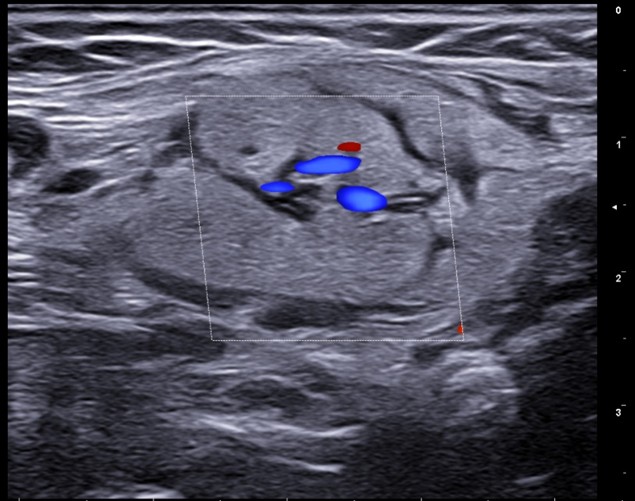
Figure 1b
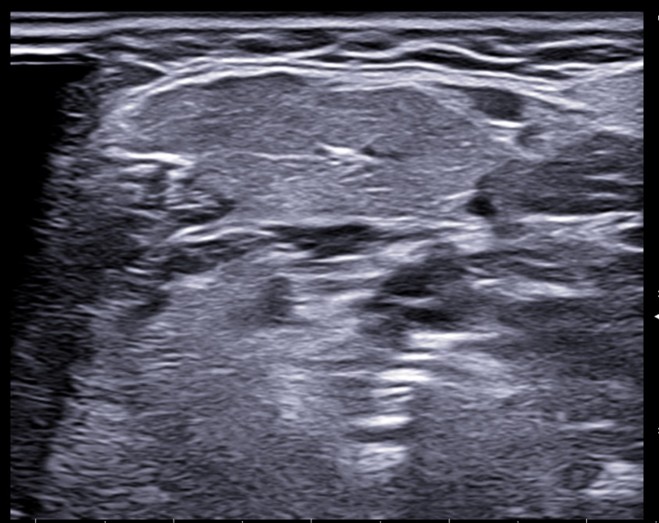
Figure 2a
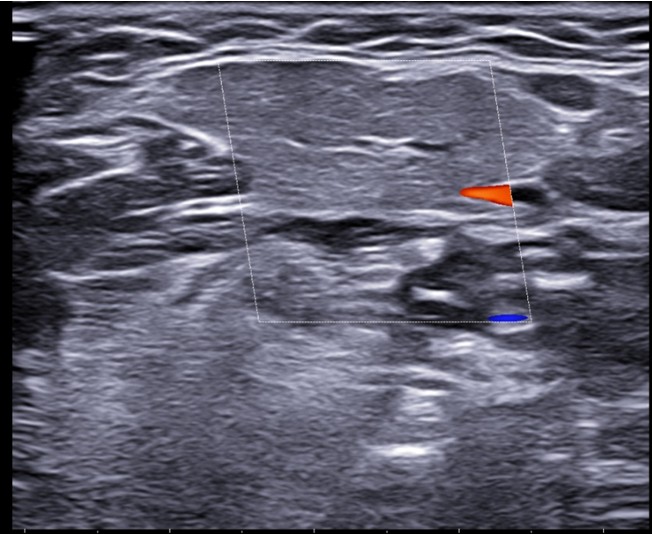
Figure 2b
Epidemiology and Clinical Features: Iodide mumps is recognized as a rare complication. Its true incidence is difficult to establish given the scarcity of reports and the likelihood that mild cases go undocumented. Cases have been reported worldwide, across a spectrum of imaging procedures involving iodinated contrast, including CT scans, angiographic procedures, pyelography, and other contrast-enhanced studies. [7] Chronic renal failure is considered to be a risk factor for this adverse reaction. A large amount of injected iodide is initially secreted in the salivary glands and subsequently reabsorbed, [8] but the kidneys ultimately eliminate the most part (about 98%), and only 2% of iodide is excreted from salivary, sweat and lacrimal glands. Furthermore, these percentages can be altered in case of renal insufficiency, resulting in a higher concentration of contrast medium in the salivary ductal system. [8-10]
Clinical Presentation: Patients typically present with a sudden onset of painless or minimally painful swelling in one or more salivary glands — most frequently the parotid glands — minutes to a few days after receiving iodinated contrast. Both unilateral and bilateral involvement can occur. While the parotids are the most commonly affected, submandibular gland swelling has also been reported in rare instances. [7] Accompanying symptoms may be limited to a sense of discomfort or fullness in the cheeks or near the angle of the jaw or in the submandibular region. Trismus is uncommon. Importantly, systemic symptoms such as fever or significant malaise are not typical, helping distinguish iodide mumps from infectious etiologies.
Natural History: The edema usually resolves spontaneously within 24 to 72 hours without specific intervention. Recurrent episodes have been documented in patients who receive iodinated contrast multiple times, but this remains a rare scenario.
Pathophysiology: The precise mechanism underlying iodide mumps remains unclear, but several pathophysiological theories have been proposed. [2-3, 5, 7] 1. Hypersensitivity Reaction: one proposed mechanism is a non-IgE-mediated hypersensitivity reaction. Iodinated contrast media may trigger acute glandular inflammation and edema, leading to temporary enlargement. 2. Toxic Glandular Edema: Contrast agents might exert a direct toxic effect on the salivary ductal or acinar cells. This could impede normal saliva outflow, causing an accumulation of fluid and subsequent gland swelling. 3. Osmotic effect another hypothesis suggests that iodine-rich fluid enters the glandular ducts and creates an osmotic gradient. The resulting fluid shift into the gland’s tissue may cause swelling. 4. Ductal obstruction Alternatively, transient obstruction of the salivary ducts by viscous secretions altered by the contrast agent could play a role. Despite these theories, definitive scientific evidence pinpointing the exact underlying pathophysiological mechanism remains elusive.
Differential Diagnosis: The sudden onset of salivary gland swelling can have numerous etiologies. It is essential to differentiate iodide mumps from other conditions; some of those pathologies are listed in the following table.

Clinical history, timing of contrast exposure, and the benign and transient nature of the swelling are key features that help distinguish iodide mumps from these other entities.
Diagnostic Approach: Diagnosis is primarily clinical. Important steps include:
- Detailed History: Inquire about recent exposure to iodinated contrast agents. The temporal correlation between contrast administration and gland swelling is highly suggestive.
- Physical Examination: Evaluation of gland swelling, tenderness, and the presence or absence of systemic signs is crucial.
- Imaging Studies: In ambiguous cases, ultrasound or CT imaging may confirm glandular enlargement but often does not reveal a specific cause. The imaging findings are nonspecific and serve mostly to exclude other pathologies such as glandular abscesses or stones.
- Laboratory Tests: Routine laboratory tests are usually normal. If infection is suspected, a complete blood count (CBC) or inflammatory markers (CRP, ESR) might be ordered. Normal results support the benign nature of iodide mumps.
Management and Treatment: The hallmark of iodide mumps management is supportive care. The condition is benign and self-limiting, and swelling typically resolves without intervention. [3] Conservative measures consist in reassurance; warm compresses and massage; adequate hydration to maintain adequate salivary flow. NSAIDs or analgesics can help alleviate discomfort. Antihistamines or corticosteroids may be considered in cases of recurrent or persistent swelling where an allergic mechanism is suspected.
Follow-Up: Patients usually recover fully within a few days. Followup is rarely necessary unless symptoms persist or recur, in which case further evaluation might be warranted to rule out other underlying conditions.
Prognosis and Prevention: The prognosis is excellent. Most episodes are one-time occurrences that resolve without lasting effects. Infrequent recurrences have been reported, suggesting that some individuals may be more susceptible than others.
Risk Factors There are no well-established risk factors for iodide mumps, and it appears to be an idiosyncratic reaction. Patients who experience this condition should inform their healthcare providers before undergoing future contrast enhanced studies, although premedication or substitution with a different type of contrast agent is not routinely recommended in the absence of other risk factors.