
Heamotology and Thalassemia, Biopharmaceuticals Tier -1 Tier-2 Blood Pathogens: Blood Transfusion by Human Contact
V Lunde Dadon*
Unilabs Biomedical Research Institute L.P, Outlying Islands
*Corresponding author
*V Lunde Dadon, Unilabs Biomedical Research Institute L.P, Outlying Islands.
DOI: 10.55920/JCRMHS.2025.09.001405
Introduction to Abstract
In this article we will discuss the shares and value of those who “drink” blood from another person. We will provide academic research into blood matching by low oxygen level, and the need for regenerative bloods cells and bone marrow. The “blood transfusion by human contact” is seen as a non-clinical ATMP (Advanced Therapeutic Medicinal Product). The product of extracting blood through a live specimen is a process the human-animal-human inbourne trait in the Neurobiology of the Species. The neuro-chemicals involved in this process are serotonin, and dopamine in which the brain single cell signals the body that its low on oxygen and proteins in the hemoglobin with blood cells, and bone marrow. The Type 0 matching is when the Type of transfusion has zero interaction with common clinical practices therefore categorizing as Type O- the matching is done for Oxygen, Type O or Type O2. The Advanced therapeutic medicinal product, is when the extraction tools are introduced to the dermis of the specimen where the extraction will proceed. The area is cleansed with synthetic fluid, and the two penetrating marks are made in the vital area of the skin, below the vital areas of the dermis is essential oxygenated therapeutic product exists, the medicinal quality is to receive a Type O or Type O2 transfusion without the nitrogen, or carbon monoxide interference.
We will discuss the Medicinal Qualities of Blood, and Blood Transfusion, and Heamotology, Epigenetics, Epidemiology, Therapeutic Medicinal Products, and Neurobiology, and Endocronology. We will also discuss hemophillia, and other diagnosis that arise from low oxygen in the blood, and low blood cells in bone marrow, and neuro-chemicals. This is a advanced article written and researched by a Epigeneticist and Hematologist for review in a corporate laboratory that performs general, and common investigational tests for future biomedical engineering.
Medical Science behind Hematology and Blood Transfusion
Each Laboratory takes precaution on labelling Blood Transfusion specimens. Here we explain Blood Types in A, B, O; BD A (anaerobic), B (Biomedical), O (oxygenated). The blood specimens are labeled for taxonomy, and for ICD-11 Classification, and also for specimen preservation(S-CID-PMID Reference). The Common, General sequence is the cell biology. Hemoglobin is a (ATMP) used with (IMD), in this area of Heamotology we will explain Advanced Therapeutic Medicinal Products, and Investigation Medical Devices. The Blood Donor Devices will be shown to you in this article in a sequence.
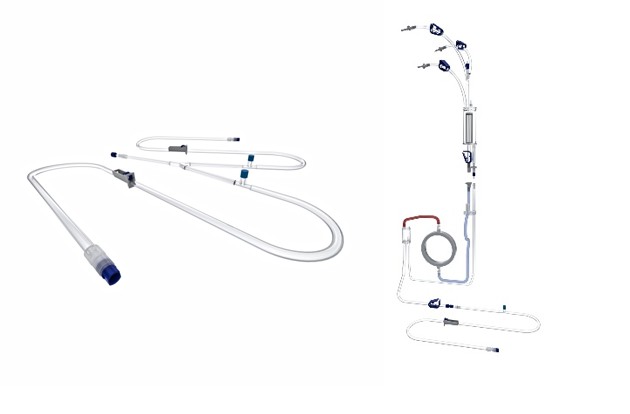
Figure 1 & 2: DME: 250 Micron Coarse Blood Filter (IMD)
DME: DPL (Dual Patient Lines) Luer Fitting (IMD)
Blood Disorders and Methodology for Categorizing Blood Disease and Disorder
Extensive research has been done on how to categorize Blood Disorders, the taxonomy and the laboratory classifications. The best method is the assign a ICD-11 codes with pathology/toxicology test. The APC Publications has a CPC and ISA patent under International Committee of Vitals and Health Statistics (ICD-11) ICRC International Committee Red Cross, which grows each 5 years as the world population becomes more indigenous to erythrocyte’s diseases. The classification started in the 1895 the organization established codes in classification alphabetic and numeral code index under ICD-8 ICD-9 ICD-10 and now-ICD-11 and taxonomy.
The International Classification of Diseases (ICD-11) classifies blood disorders we will discuss in this article, shared with other disorders. Chapter 3 is the section where diseases of the blood and blood-forming organs.
Blood Disorders in ICD-11, include erythrocyte’s disease Iron Deficiency 3A00, Atransferrinemia H01145, Hypochromic microcytic anemia H01196, and other codes used as diagnostic tools.
Investigational Pharmaceutical Treatment for Blood Disease
Blood Stenosis, and Bone Marrow Disease treatments (non-invasive): Blood stenosis, is the stale blood, where the blood has no circulatory function.
Endocrinology, Lymphatic Systems, and BD A, B, O (Blood Types) Extraction
Lymphatic Systems regulates blood, and lymphatic cells, to prevent pathogens and toxins from attacking essential protein and cell membranes, blood transfusions are like “pillars” to assist in the blood disorder and restore to homeostasis for the organism. Ingesting blood, and receiving blood transfusion through the veins and capillaries would be similar to Ativan IV Solution or Ativan 5 mg pill.
“Drinking Blood” Aluminum Free (Metallurgic) Human-Contact with Donor
The didactics of “drinking blood” has fable of ideas and philosophies of “vampirism”, or “Dracula” imposter syndrome. The “teeth” are illustrated in these “programmed” fables, myths, urban legends as the tool to drink blood. In fact, “humans” prefer to drink blood by two puncture marks, due to the consumption of the blood like a Dual Patient Lines shown above for Blood Transfusion devices, the “oral cavity” is used to “suck” the blood, two punctures are for the frontal dysexecutive “overbite” dental features, that “hold and grip” and object in place, like “clamps”. The myth is non essential in this necessity to “drink blood” because is a phenomena that cannot simple be put into rationale explanation.
There are patients that prefer to drink blood without the metallurgic factors, atmospheric interference, or biogenetic mutations from Clinical Blood Banks. Some Clinical Blood Banks have blood mutations in there transfusion samples, or cancerous cells, or sick cell, therefore, the specimen, can be tested for BD A, B, O, simple by “necessity”. Those who prefer organic blood, “drink blood”, to inherit the qualities of O2, or A, this is discussed in Tier-1 and Tier-2, levels of obtaining essential nutrients from blood through the dermis. The Puncture marks are the human- animal contact features, were the consuming, or ingesting is easier with “clamps”, “grip” like certain species use to survive (Darwin’s Theory of Survival). But the question is who needs to survive? And why?. The necessity stands alone in the world, and is an independent decision based on the species needs for blood, balance in the endocrine system, or lymphatic systems.
Neurobiology and Blood Disorder Signals
The Neural Functions of the brain are small molecules with single cell erythrocytes and transmembrane protein, within the regulation of the protein are Occludin and Claudin-5, these proteins assist subcategories the barrier to endothelial cells and functions.
Simple Neurobiology for blood-brain barriers are the explanation of endothelial cells to the circulatory system, and signals. The selective semipermeable border of endothelial cells that regulates the transfer of solutes and chemicals between the circulatory system and the central nervous system, thus protecting the brain from harmful or unwanted substances in the blood.[1] The blood–brain barrier is formed by endothelial cells of the capillary wall, astrocyte end-feet unsheathing the capillary, and pericytes embedded in the capillary basement membrane. The signals from the Neurochemicals are generated by ATP- and transferase protein, and travel through circulatory systems. The system transcripts low blood count, bone marrow deficiency, need for O2, or CO2, and at the same time protects the blood brain barrier from pathogens, and toxins in the blood. As in Ocular- Barrier, Cardiac-Barrier, Skeletal Barrier, and Blood Brain Barrier. These barriers protect organs and blood from toxins and pathogens. While receiving necessities such as O2, proteins, and nutrients. The neural functions of reaction to low-blood count, or low blood oxygen, enables the system to attach to a donor through “blood transfusion human contact”.
Conflict of Interest: None
Acknowledgements: None