
Diphtheria Myocarditis: A Case Report of a 12 years old girl in Garowe – Somali
Ibrahim Yusuf Hassan1,2*, Dafa Alla Banga Mahdi2
¹Department of Pediatrics, Yashfiin Women and Children’s Hospital, Garowe City Puntland, Somalia.
²Department of Cardiology, Faculty of Medicine and Health science, University of Bosaso, Garowe , Somalia
*Corresponding author
* Ibrahim Yusuf Hassan ,Department of Pediatrics, Yashfiin Women and Children’s Hospital, Garowe City Puntland, Somalia.
DOI: 10.55920/JCRMHS.2025.09.001394
Abstract
Introduction: Respiratory diphtheria is a major public health concern in low-income communities, particularly those with inadequate vaccine coverage. Myocarditis is the deadliest manifestation of diphtheria and the most prevalent cause of death in these patients, occurring 1-3 weeks following the onset of respiratory disease. This case report discusses the clinical and public health consequences of diphtheria myocarditis in Somalia, a region devastated by vaccine-preventable illnesses.
Case Presentation: We present a 12-year-old unvaccinated female for diphtheria, who was referred to our facility from a rural district health center two weeks after receiving treatment with intravenous antibiotics for a diagnosis of respiratory diphtheria. She had experienced an allergic reaction to diphtheria antitoxin.
She was discharged home a week after her neck swelling improved. Upon arrival at Yashfiin Hospital, she exhibited signs of cardiogenic shock and severe hypovolemia. She was admitted to a high-dependence unit (HDU) where she received supportive care and cardiac inotropes for three weeks. After two weeks in the HDU, she was transferred to an inpatient ward and began a regimen of oral prednisolone and omeprazole.
She did not develop any neurological complications or kidney injury following her bout with diphtheria, and her blood pressure returned to the normal range during her hospital stay and subsequent outpatient care. Over the follow-up period, her condition improved significantly.
After six weeks of outpatient follow-up, we prescribed her oral multivitamins and iron supplements due to her mild to moderate anemia. She returned home with her grandmother, and we connected her with the village health team for ongoing follow-up and care.
Conclusion: Children with diphtheria should be followed up for possible cardiac and other systemic complications after being discharged from the health facility. Diphtheritic myocarditis can lead to rapid and severe deterioration of cardiac function, early diagnosis and aggressive treatment is needed. Public health initiatives to improve vaccination coverage are essential to prevent such life-threatening complications.
Keywords: Diphtheria, Myocarditis, Heart failure, Somalia
Introduction
Diphtheria is a one of the vaccine preventable communicable diseases brought on by the bacterium Corynebacterium diphtheria wherein the respiratory tract gets infected. Regions with high poverty and low vaccination coverage, especially in developing nations, still face major threats from it, and so, even when effective vaccines have been produced, it is still regarded as a critical health concern [1].
In nations where political situations are unstable, there is conflict or poverty, campaigns for vaccination don’t proceed successfully and these countries suffer from prolonged diphtheria outbreaks, as reported by WHO [2]. Somalia is another third world nation that has been struggling to cope with humanitarian crises and has other serious underlying health issues making it highly susceptible to multiple diseases, including diphtheria [3].
Myocarditis secondary to diphtheria is the most severe complication of diphtheria and is characterized by diffuse inflammation of the heart muscle. It appears between the first and third weeks after the initial infection. It is believed to be the result of the widespread action of diphtheria toxin which destroys the protein production in heart muscle cells leading to their death and heart’s impairment [4].
Its clinical features are arrhythmias, heart failure and cardiogenic shock. The cause of death is quite high in severe cases. This problem in resource poor areas is compounded with considerable delay in diagnosis, unavailability of diphtheria antitoxin DAT as well as advanced cardiac facilities [5] [6].
This case report outlines the clinical course of diphtheria myocarditis in a 12-year-old girl from a rural region of Somalia who has not received vaccination, emphasizing the difficulties encountered in treating severe diphtheria complications in the context of low-resource regions [7].
Moreover, it discusses case studies available from East Africa, India, Bangladesh and Pakistan in order to better understand the extent of diphtheria myocarditis along with its patient outcomes in these regions [8] [1] [9] [10].
Case presentation
We present a 12-year-old female unvaccinated for Diphtheria referred from rural district health center 2 weeks after she was being managed with only I.V antibiotics with the working diagnosis of respiratory diphtheria since she got anaphylactic reaction to the diphtheria Anti-Toxin and was not able to continue administering the anti-toxin. She was discharged from the health center 1 week after the neck swelling has resolved.
She came back with her grandmother to the district health center which is 3 hour distance from our hospital, then the health team in that health center immediately referred her to our specialized hospital. On admission at yashfiin women and children’s hospital she was in hypovolemic and cardiogenic shock (reduced mentation with GCS of 9/15, cold and clammy extremities, tachycardia and oliguria, capillary refill time of 5s, BP 40/20 mmhg, pulse was un undetectable and had cold and clammy extremities with sunken eyes).
We drew blood samples while making her stabilized in the Emergency room with I.V fluid boluses twice then we realized that she is not improving and her blood pressure kept lowering with rapid and feeble pulse rate, then we started Dobutamine infusion, patient was out of shock after 5 hours being in the ER.
After that the team performed 12 lead ECG (electrocardiography) fig.1 and bedside ECHO cardiograph. the ECG showed ST depression in V1 up to V4. Cardiac troponin I was 20.96 ng/ml (70X higher than the normal range) and NT-proBNP was 9441 pg/ml (100X higher than the normal range). Echo cardiograph study showed reduced ejection fraction of 35% (normal 56-72%) with anterior , anterolateral , inferiolateral and inferior walls hypokinesia) with severely reduced bi-ventricualr systolic function, there was no pericardial effusions. She also had chest x-ray which showed features of pulmonary edema as shown in Fig2.
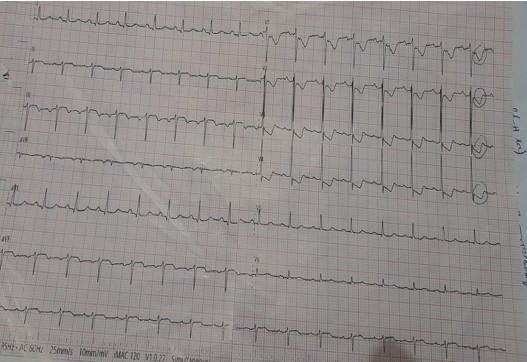
Figure 1: 12 lead ECG of the 12-year-old girl showed: - ST depression in V1 – V4
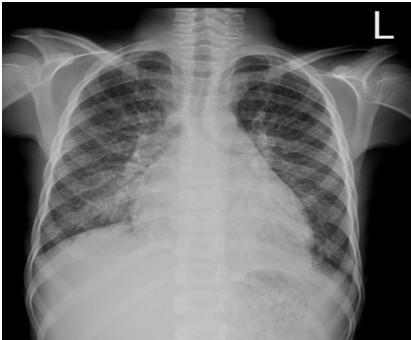
Figure 2: Chest x-ray of the 12yrs old girl with diotheria myocarditis showing bilateral upper lung vascular diversion and reticulatons which suppestive of grade II pulmonry edema .
After she became out of shock she was started on oral prednisolone and omeprazole for two weeks. being gradually improving, and stayed with us for 3 weeks which she was being managed supportively with her acute myocarditis and decompensated Heart failure, she did not develop arrhythmia through her admission in the hospital. Her renal function test went normal throughout the illness. She was discharged home thereafter.
After 6 weeks of clinic follow up she showed great improvement and went back home with her grandmother. She did not develop neurological complications of post diphtheria and her blood pressure went normal through follow-up days. We also prescribed her oral multivitamins since she was in mild anemia , also linked her to the village health team for further follow - up and care.
Discussion
Diphtheria is still endemic in impoverished nations across the world, and occasional outbreaks are observed in East Africa and South Asia. During the last decade, due to civil unrest and conflict, there has been a deterioration in Somalia’s healthcare system which has affected the country’s routine immunization schedules [11]. As of 2023, UNICEF and WHO estimate that coverage with diphtheria-tetanus-pertussis (DTP3) in Somalia is only about 42 percent which is one the lowest in the global perspective as well [12].
The challenges of unvaccinated populations are not unique to Kenya as seen in a 2019 diphtheria outbreak which was reported in East Africa. Such populations often face greater case fatality rates which have been estimated to be 10 %, due to poor diagnosis and lack of access to Diphtheria Antitoxin [7]. Poverty, poor environmental sanitation, and low vaccination coverage have all contributed to frequent outbreaks of diphtheria in Nigeria, affecting both children and adults [13].
This has also been seen in India and Pakistan in South Asia. Moreover, a 2020 study in Punjab reported the same to be 22 percent in patients suffering from diphtheria myocarditis, further emphasizing the need for timely intervention [6] . Diphtheritic myocarditis, which manifests with heart failure, cardiogenic shock, and conduction abnormalities, is the most frequent cause of death due to diphtheria [4] .
The medical condition of the patient in this case is consistent with findings from Thailand, this was a 9 year old boy which was referred to the Chiang Mai University Hospital with diphtheria myocarditis experienced severe arrhythmias and required extended hospitalization and intensive care admissions [14].
Case series from India also report increased occurrences of cardiac and neurological sequelae in children with respiratory diphtheria. In contrast to our case, where the childôs recovery was uneventful and free of neurological complications, many children in these studies experienced complications like polyneuropathy which required protracted rehabilitation [8].
Managing diphtheria myocarditis in Somalia epitomizes systemic problems found across many low-resource settings. DAT was unavailable at the referring health center, and the patient was being treated with antibiotics alone initially [15]. Moreover, the presence of allergic reactions to DAT, as in this case, makes treatment more complicated. By comparison, some Asian countries has taken steps toward domestic production of DAT and training of health care workers, albeit with major challenges remaining in rural areas [5].
This case study highlights the urgent need for public health measures to increase vaccination coverage in Somalia. To prevent future outbreaks, community-based immunization campaigns, in conjunction with efforts to strengthen routine vaccination services, are critical [16]. Moreover, training service providers in diphtheria complications recognition and care is the mainstay to address morbidity and mortalities. Experiences from India, Bangladesh and Pakistan indicate that including diphtheria control in broader infectious disease programs, such as tuberculosis and polio eradication initiatives, can enhance outcomes for scarce-resource countries.
This case study demonstrates the essential clinical characteristics and systemic complications, particularly concerning cardiac involvement, and further emphasizes the need for close follow-up in children with diphtheria for possible development of complications while they have been discharged.
Conclusion
This study emphasizes the vital significance of attentive follow-up in children diagnosed with pharyngeal diphtheria, in case they develop post-diphtheria sequel in which subsequent loss to follow-up may result in life-threatening myocarditis and heart failure, emphasizing the dangers of lack of DAT and inadequate care. In addition to that, there is a need for strong immunization efforts, including booster doses of DPT or DT for children and adolescents, especially in resource-limited countries such as Somalia, where the risk of epidemics in vaccine-preventable diseases remains high.
Limitations: Confirmation of pharyngeal diphtheria requires both clinical and laboratory tests. Since we had an outbreak of diphtheria in Somalia, we always rely on clinical diagnosis. Some cases have been used PCR (Polymerase Chain Reaction) and confirmed the disease at the federal government and state level. Since then, cases have been used to diagnose clinically.
Abbreviations: DAT:- Diptheria Antitoxin; BP: Blood Pressure; DPT: Ditheria Pertusis Tetanus; BCG: Bacillus Calmette Guerin; ECG: Electrrocardiography; GCS: Glascow Coma Scale; HDU: High Dependency Unit; IV: Intravenous; WHO: Word Health Organization; DT: Diptehria & Tetanus; ECHO: Echocardiography; NT-proBNP: N-terminal prohormone of brain natriuretic peptide; PCR: Polymerase Chain Reaction; UNICEF: United Nations Children’s Fund
Ethics approval and Consent to participate: We obtained a written consent from the caretaker to use the clinical information of the patient. The hospital provided us clearance to use the laboratory results and radiographic images of the patient.
Consent for publication: Written informed consent for publication of this case report, including clinical details and clinical images, was obtained from the patient’s legal guardian
Availability of data and materials: All data generated or analyzed in this case report are included in this published article
Competing interests : We declare that we don’t have competing interest in this case report.
Funding: This report was not funded and was not intended for profit making purposes
Author’s Contributions: Ibrahim Yusuf conceptualized the care report, collected the clinical data, and wrote the initial draft of the manuscript. Both Ibrahim Yusuf and Dafa Alla met and treated the patient; both of them designed and wrote this care report; they have also read and approved the final manuscript.
Acknowledgement: We acknowledge the patient and her grandmother for allowing us use their clinical information for this publication. We also acknowledge the Yashfiin women and children’s hospital for caring this patient.
References
- Ilyas, S (2024). Diphtheria-Associated Myocarditis: Clinical Profiles and Mortality Trends in a Tertiary Care Hospital in Pakistan. 16(3).
- Organization, W.H. Vaccine-preventable disease update: reported diphtheria cases in the WHO European Region, 2022: 19 January 2023. 2023, World Health Organization. Regional Office for Europe.
- Amendola, A. and M. Canuti (2023). Vaccine-preventable diseases, in Global Health Essentials. Springer. p. 117-127.
- Naidoo, K (2023). Diphtheritic myocarditis: a case report, with toxin-mediated complications and multi-organ involvement. 34(2): p. 117-120.
- Eisenberg, N (2021). Diphtheria antitoxin administration, outcomes, and safety: response to a diphtheria outbreak in cox’s bazar, Bangladesh. 73(7): p. e1713-e1718.
- Arvind, B (2022). Diphtheritic myocarditis: An unusual and reversible cause of heart failure. 15(3): p. 311-313.
- Geteri, F (2024). A recent history of disease outbreaks in Kenya, 2007–2022: Findings from routine surveillance data. 2024. 17(1): p. 309.
- Singh, S (2020). Diphtheritic myocarditis: A case series and review of literature. 2020. 9(11): p. 5769-5771.
- Polonsky, J.A (2021). Epidemiological, clinical, and public health response characteristics of a large outbreak of diphtheria among the Rohingya population in Cox’s Bazar, Bangladesh, 2017 to 2019: A retrospective study. 18(4): p. e1003587.
- Ogero, M (2022). Pentavalent vaccination in Kenya: coverage and geographical accessibility to health facilities using data from a community demographic and health surveillance system in Kilifi County. 22(1): p. 826.
- Bile, A.S (2024). Assessing Vaccination Delivery Strategies for Zero-Dose and Under-Immunized Children in the Fragile Context of Somalia. 2024. 12(2): p. 154.
- Ahmed, A.Y (2023). Universal Health Coverage in Somalia: Charting the Path to Equitable Healthcare Financing and Governance. 2023. 15(11): 1298-1317.
- Denue, B.A (2024). Clinical presentation and outcome of diphtheria in health facility in North-East Nigeria. 36(1): p. 105.
- Washington, C.H. K. Makonkawkeyoon, and P.J.C.R. Oberdorfer (2014). A 9-year-old boy with severe diphtherial infection and cardiac complications. p. bcr2014206085.
- Mohamud, M.M.H.T (2020). Barriers for Full Immunization Coverage among under Five Years Children in Mogadishu, Somalia.
- Thompson, K.O. J. Fulton, and C.J.P.H.i.S.-S.A.S.E.P. Hayes (2024). VACCINE-PREVENTABLE DISEASES.