
The effects of Methylene Blue administered during and after cardiac arrest: A case series of three patients who achieved ROSC
Paul Henning1*, MD, MS; Larry B. Mellick2, MD, MS
¹Department of Emergency Medicine, University of South Alabama, Mobile, Alabama.
²Department of Emergency Medicine, Augusta University, Augusta, Georgia.
*Corresponding author
*Paul Henning, MD, MS, Department of Emergency Medicine, University of South Alabama, Mobile, Alabama.
DOI: 10.55920/JCRMHS.2024.08.001361
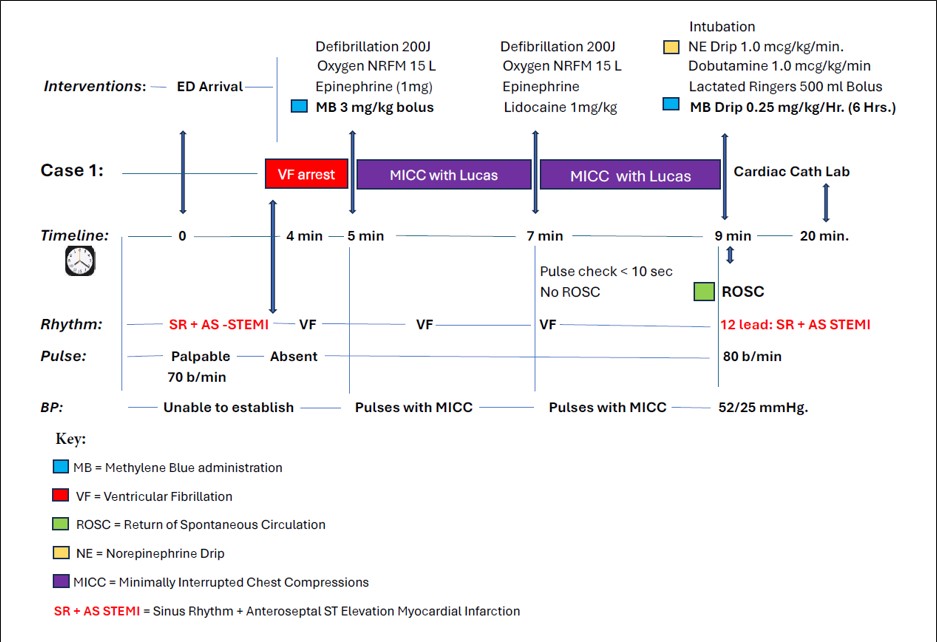
Figure 1: Sequence of Events During Cardiac Arrest (Case #1)
Table 1: Vasoactive Inotropic Score. (Case #1).

Legend: VIS quantifies the degree of hemodynamic support. A higher score is a predictor of poor outcomes. The vasoactive inotropic score includes norepinephrine + dobutamine in the calculation. Based on Belletti et al, a correction factor of 20 could apply to the dose of MB in their 2020 updated VIS version.17 Methylene Blue infusion was constant at 0.25/mcg/kg/minute and continued for 6 hours.
Case #2:Patient 2, a 60-year-old male, presented to the emergency department with palpitations. Within minutes (< 5 minutes), his rhythm deteriorated to pulseless ventricular fibrillation. MICC was initiated, followed by an initial shock of 200 J, but there was no return of spontaneous circulation. The patient received an intravenous bolus of 1 mg epinephrine (1:10,000), 300 mg of amiodarone, and 3 mg/kg of methylene blue. After the second 200-joule defibrillation, the patient converted to a pulseless idioventricular rhythm. Epinephrine was administered every 5 minutes during resuscitative efforts. At the 13-minute mark, an additional bolus of 2 mg/kg of methylene blue was given and was followed by the return of spontaneous circulation at the 15-minute mark. With a MAP of 34 mmHg post-resuscitation, a 500 mL bolus of lactated Ringer's was administered. Norepinephrine (1.0 mcg/kg/minute) and methylene blue (0.25 mg/kg/hour) drips were started. The patient was intubated and a dobutamine infusion (2.0 mcg/kg/minute) was added. Both norepinephrine and methylene blue drips were continued, and serum lactate levels showed ongoing improvement.
The patient was extubated within thirty hours and had a hospital stay of eight days. During his stay, an Implantable Cardioverter-Defibrillator (ICD) was placed. Prognostically, the patient developed a foot drop but was otherwise neurologically intact. His Cerebral Performance Category (CPC) score14,15 at discharge was two. Figure 2 demonstrates a resuscitation timeline and sequence of events. Table 2 presents the patient’s vasoactive inotropic score (VIS) over time.
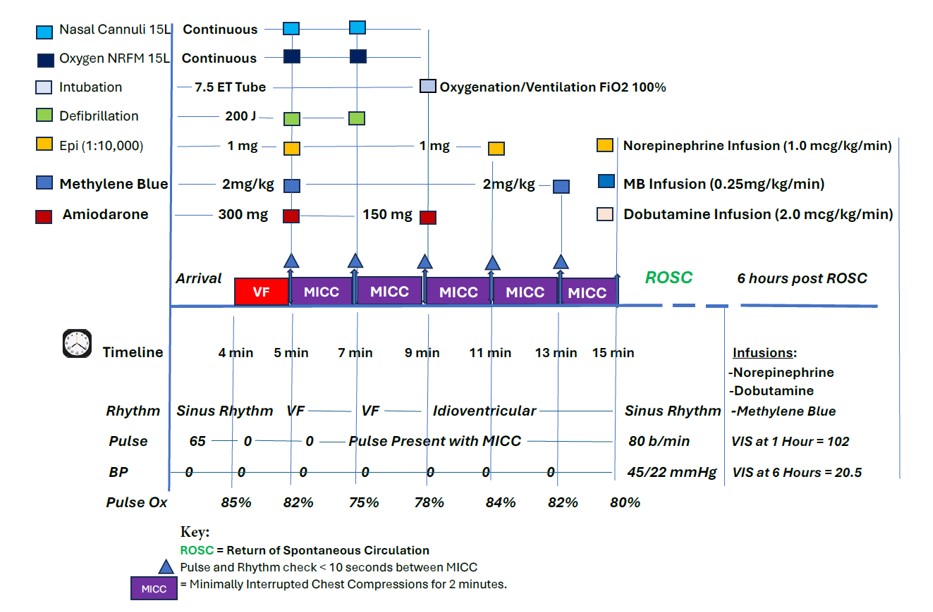
Figure 2: Timeline and sequence of events during cardiac arrest (Case #2)

Figure 3: Timeline and sequence of events during cardiac arrest (Case #3)
Table 2: Vasoactive Inotropic Score (Case #2)

Legend: VIS quantifies the degree of hemodynamic support. A higher score is a predictor of poor outcomes. The vasoactive inotropic score includes norepinephrine + dobutamine in the calculation. Based on Belletti et al, a correction factor of 20 could apply to the dose of MB in their 2020 updated VIS version.17 Methylene Blue infusion was constant at 0.25/mcg/kg/minute and continued for 6 hours.
Case #3: Patient 3, an obese 42-year-old male, had a witnessed syncopal event followed by unresponsiveness at a local shopping mall. Bystander CPR was initiated within three minutes. An Automatic External Defibrillator (AED) was located, attached to the patient, and used for defibrillation. The patient was pulseless and apneic prompting bystanders to continue chest compressions without ventilations. A 911 call was made, and a Basic Life Support (BLS) EMS unit from a nearby regional trauma center arrived at the scene within a few minutes. The patient was defibrillated a second time without ROSC. The EMS crew noted the patient was in fine ventricular fibrillation (VF). An oropharyngeal airway was inserted, and the patient was ventilated with a BVM. He was placed on a long spine board, and chest compressions continued. During transport, the patient was defibrillated for a third time without successful conversion. On arrival at the trauma center, ACLS resuscitative measures were continued. Total downtime with BLS transport was estimated to be fifteen minutes.A primary and secondary survey were conducted. There were no signs of any obvious external injuries. The patient was intubated and peripheral intravenous access including intraosseous access was established. A mid-line thoracic surgical scar consistent with a previous coronary artery bypass graft (CABG) was noted. The ECG demonstrated fine VF. The patient was defibrillated at 200 joules and received 300 mg of amiodarone, 1 mg of epinephrine (1:10,000), and 2 mg/kg of methylene blue intravenously. Four cycles of MICC were initiated with interruptions of less than ten seconds. At the 21-minute mark, an additional 150 mg of amiodarone, 1 mg of epinephrine, and 2 mg/kg bolus of methyleneblue was administered.The patient underwent defibrillation four more times, with one defibrillation occurring after each 2-minute MICC cycle. Return of spontaneous circulation (ROSC)was attained 25 minutes post-arrest. The MB infusion continued at 0.25 mg/kg/hour. Due to a low MAP of 30 mmHg, a norepinephrine infusion at 0.5 mcg/kg/minute and milrinone bolus (50 mcg/kg) and drip (0.75mcg/kg/min) were started. A 12-lead ECG demonstrated Q waves in the anterior, septal, and lateral leads. The patient was admitted to the medical intensive care unit. His vasoactive inotropic scores (VIS) including serum lactate levels were trended with improvement. The patient remained intubated for approximately forty-eight hours. During the patient’s 6-day hospital course an ICD was placed by cardiology. At hospital discharge, the patient exhibited signs of neurologic sequelae, including mild ataxia and memory impairment, with a CPC score of two. Figure 3 demonstrates a resuscitation timeline and sequence of events. Table 3 presents the patient’s vasoactive inotropic score over time.
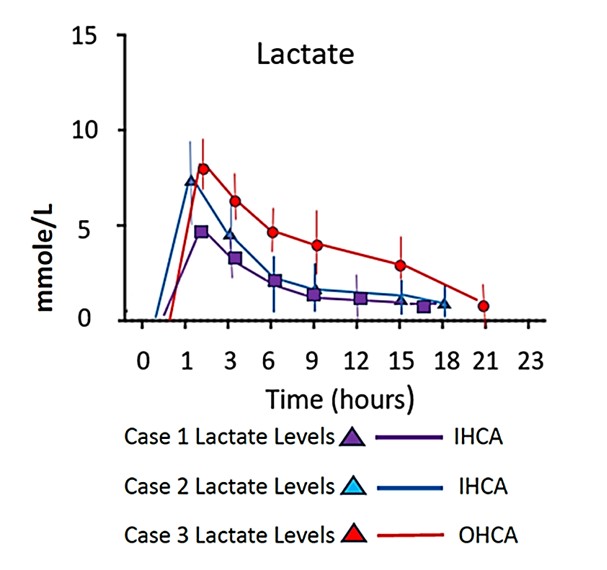
Figure 4: Lactate levels post ROSC for the 3 Cases.
Table 3: Vasoactive Inotropic Score (Case #3)
Legend: VIS quantifies the degree of hemodynamic support. A higher score is a predictor of poor outcomes. The vasoactive inotropic score includes norepinephrine + dobutamine in the calculation. Based on Belletti et al, a correction factor of 20 could apply to the dose of MB in their 2020 updated VIS version.17 Methylene Blue infusion was constant at 0.25/mcg/kg/minute and continued for 6 hours