
Fever unmasking Brugada‐like lectrocardiographic pattern induced by fever: ICD OR NOT?
Jihane Fagouri1, Youssef Lahmouz1*, Hanae Elghiati1, Jaouad Nguadi1, Meryem Bennani1, Abdelilah Benelmekki1, Jamal Kheyi1, Hicham Bouzelmat1, Ali Chaib1, Aatif Benyass2
¹Rythmology department, Cardiology Center, Mohammed V Military Instruction Hospital of Rabat, Mohammed V University, Rabat, Morocco.
²Cardiology Center, Mohammed V Military Instruction Hospital of Rabat, Mohammed V University, Rabat, Morocco
*Corresponding author
*Youssef Lahmouz, Cardiology Center, Mohammed V Military Instruction Hospital of Rabat, Mohammed V University, Rabat, Morocco.
DOI: 10.55920/JCRMHS.2024.08.001330
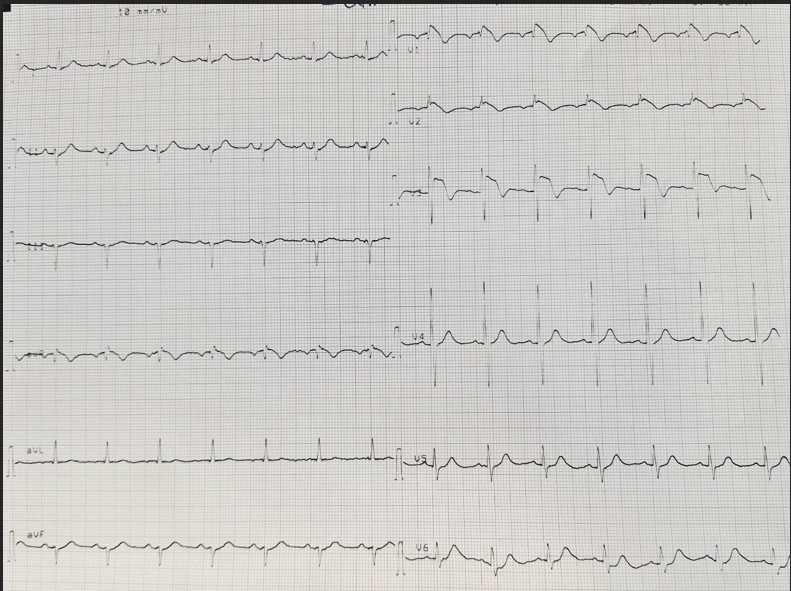
Figure 1: ECG on admission
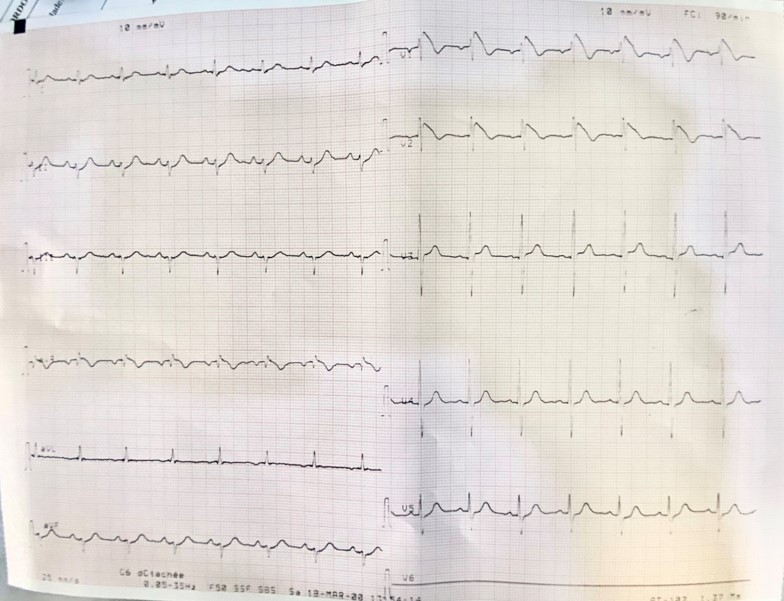
Figure 2: ECG 24 hours later, the patient was still febrile
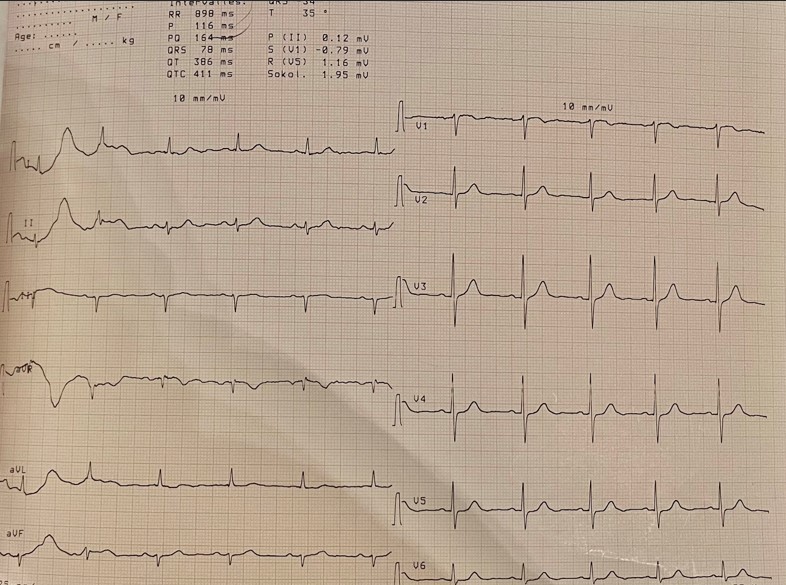
Figure 3: ECG after apyrexia
On echocardiography, He had no structural heart disease, no wall motion abnormalities and no pericardial effusion
After biological sampling, the patient was promptly admitted to catheterization laboratory, the coronary angiography revealed stenosis of 50% of the right coronary artery.
Biological assessment showed negative troponin, no electrolyte disorders or acidosis, but positive markers of inflammation. The chest X-ray showed a right lower lobe pneumonia
An ECG was repeated 24 hours later (fig 2), by another medical staff, with leads V1 and V2 placed in the second intercostal space, showing the same electrical aspect in V1-V2 with no typical evolution of ischemia or q wave of necrosis. Note that the patient was still febrile.
The patient was admitted to the intensive care unit for continuous monitoring with a defibrillator nearby, he was put on antibiotics and antipyretics, with repeated ECG. He did not have any arrhythmia during hospital stay.
After 24 hours of being afebrile, another ECG was done (fig3), and the previous shift had completely regressed with a normalization of the ECG.
Considering the advanced age of our patient, it was deemed necessary to deepen the etiological research to exclude reversible causes of ST-segment elevation. Ischemic heart disease, conduction impairment, and electrolyte disturbance were all ruled out. No pulmonary embolism or mechanical mediastinal compression was found on thoracic CT scan, no pericarditis was observed.
Cardiac MRI didn’t reveal any signs of arrhythmic right ventricular dysplasia or other structural heart disease.
To document any arrhythmia that may be responsible for syncope, the patient underwent a 48-hour Holter monitoring, it did not show any ventricular or supraventricular tachycardia, but there was PVCs With precordial transition which favor RVOT region
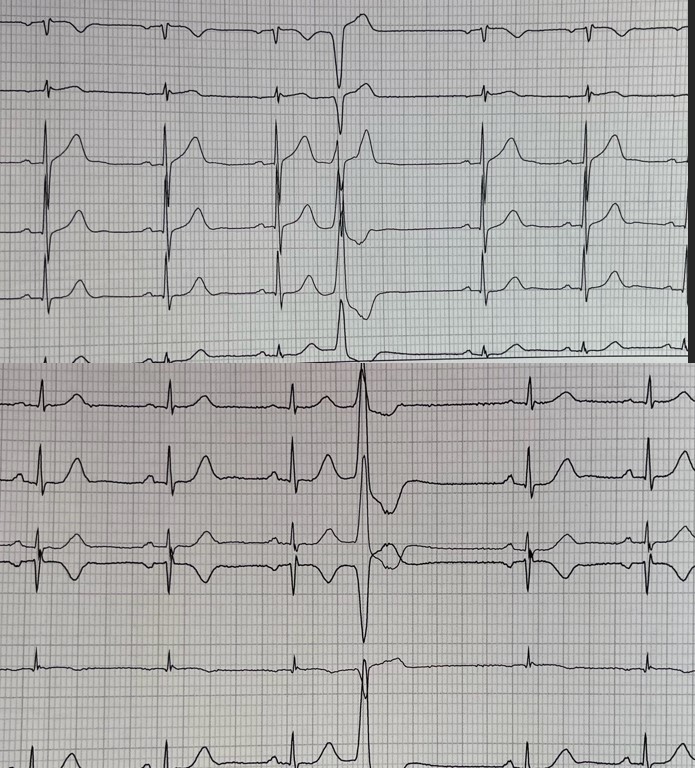
On the EP study, there was No sinus node dysfunction, normal HV interval of 53 ms, programmed electrical stimulation (PES) with standard protocol and with right ventricle, apex and RVOT aggressive protocol did not triggered ventricular arrythmia.
Our patient exhibits a fever induced Type 1 brugada pattern with symptoms including syncope. Taking into account the results of all the tests, we have considered the diagnosis of brugada syndrome. The challenge was how to manage our patient with the optimal balance of benefice and risks, either to propose an implantable cardioverter-defibrillator (ICD) to confer full protection sense patients with syncope are at high-risk arrhythmic events, or implantable loop recorder (ILR) to document a ventricular arrhythmia with high risk of sudden death if the patient does not seek medical attention in time.
Our patient, refuses to get implanted with an ICD, and he didn’t afford to get an ILR, he was discharged with recommendation for regular check-up in cardiology center.
He Did not relapse; however, he did not present with fever. He was made aware that his first-relatives should seek evaluation for BrS, to avoid drugs with sodium channel blocking activity, treatment of fever and the emergency for monitoring during episodes of fever, and about the warning signs: recurrence of syncope, palpitations.