Dr Bensaka Mohammed, Dr Chafai Alaoui Karim, Dr Aicha El Boukhrissi, Dr Miloudi Mouad, Pr Abid Hatim, Pr Mohammed El Idrissi, Pr Elmrini Abdelmajid
Residence Jnane Pasteur, Boulevard Abdelmoumen, Casablanca, Morocco.
*Corresponding author
*Drs. Bensaka Mohammed, Residence Jnane Pasteur, Boulevard Abdelmoumen, Casablanca, Morocco.
Abstract
The management of synovial sarcomas is multidisciplinary, and imaging plays a crucial role at various stages .MRI is currently the examination of choice for the diagnosis of synovialosarcoma, helping to determine the site of surgical or radio-guided biopsy, to establish locoregional extension, enabling the choice of therapeutic options, and to evaluate and monitor post-treatment.
The diagnosis of certainty is based on histological examination, with immunohistochemistry playing an important role, and cytogenetics detecting the SS18 translocation characteristic of synovialosarcoma. Surgical resection remains the mainstay of treatment, with perioperative radiotherapy providing local control. Synovialosarcoma is a chemosensitive tumor, but the role of neoadjuvant or adjuvant chemotherapy remains controversial in adults with localized forms of the disease.
The evolution is marked by the occurrence of local recurrences and metastases, especially pulmonary.
We report in our retrospective study 19 cases of synovialosarcoma of the limbs managed in the Department of Osteoarticular Surgery B4 of the Hassan II University Hospital of Fez, Morocco, over a period of 6 years (from January 2017 to December 2022).
Introduction
The synovial sarcoma is a malignant mesenchymal tumor with variable epithelial differentiation, representing 5 to 10% of soft tissue sarcomas. It is a rare and poorly prognostic sarcoma that mainly affects adults, with an incidence peak in the third decade of life and a preference for the lower extremities. It is generally extra-articular and most commonly presents as a swelling.
The management of synovial sarcomas is multidisciplinary, and imaging plays a crucial role at various stages .MRI is currently the examination of choice for the diagnosis of synovialosarcoma, helping to determine the site of surgical or radio-guided biopsy, to establish locoregional extension, enabling the choice of therapeutic options, and to evaluate and monitor post-treatment.
The diagnosis of certainty is based on histological examination, with immunohistochemistry playing an important role, and cytogenetics detecting the SS18 translocation characteristic of synovialosarcoma. Surgical resection remains the mainstay of treatment, with perioperative radiotherapy providing local control. Synovialosarcoma is a chemosensitive tumor, but the role of neoadjuvant or adjuvant chemotherapy remains controversial in adults with localized forms of the disease.
The evolution is marked by the occurrence of local recurrences and metastases, especially pulmonary.
Material and Method
We report in our retrospective study 19 cases of synovialosarcoma of the limbs managed in the Department of Osteoarticular Surgery B4 of the Hassan II University Hospital of Fez, Morocco, over a period of 6 years (from January 2017 to December 2022).
Purpose of the study: The objective of our study is to identify the specific characteristics at the epidemiological and clinical level of synovialosarcomas of the limbs, to analyze the medical imaging methods used and to detail the radiological results of these tumors, while examining the basis of their Therapeutic PEC.
Period of the study: We took a period from January 2017 to December 2022, i.e. a period of 6 years.
Procedures for recruiting patients and collecting data: During this period, 19 patients presented with synovialosarcoma of the limbs, including 3 with a recurrence; were treated at the B4 traumatology orthopedics department of the Hassan II University Hospital in Fez.
Patient data was collected from the HOSIX computer system, hospital registers from the B4 traumatologyorthopedics department, operative reports, pathological anatomy results, as well as radiology reports from the HASSAN II University Hospital. FES, then recorded on operating sheets.
Inclusion criteria:
Patients treated in the department during the study period.
Tumors located on the limbs.
Histological evidence of obligate synovialosarcoma.
Usable medical file.
Exclusion criteria:
Tumors of the face, trunk, skull and neck.
Absence of histological evidence.
Medical file not usable.
Limitations of the study: Since our study concerns only 19 cases of synovialosarcoma of the limbs treated in our hospital structure, this study may have limitations, mainly:
Sample size: With only 19 cases, the sample size is small, which may limit the statistical validity and generalizability of the results to a larger population.
By limiting ourselves to the study of cases of synovialosarcoma at the limb level, the generalization of the results to other locations of synovialosarcoma (trunk, neck, head) becomes difficult
Results and Analysis
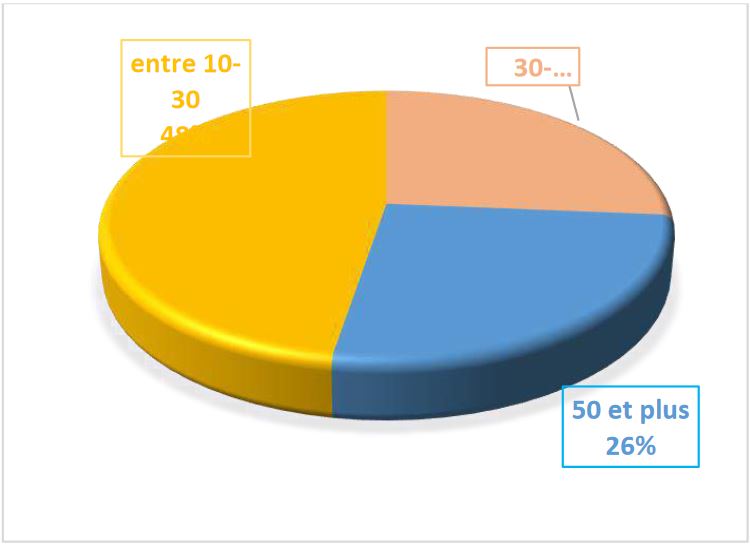
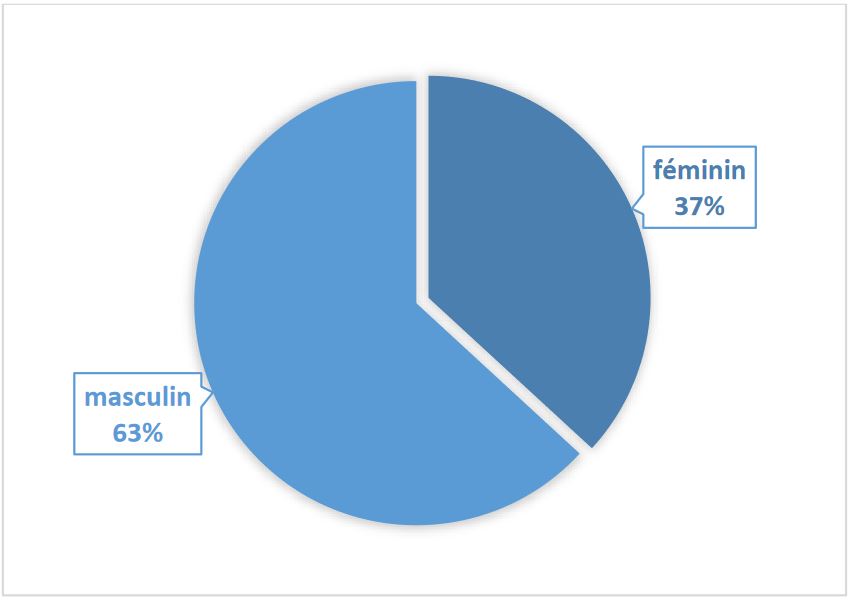
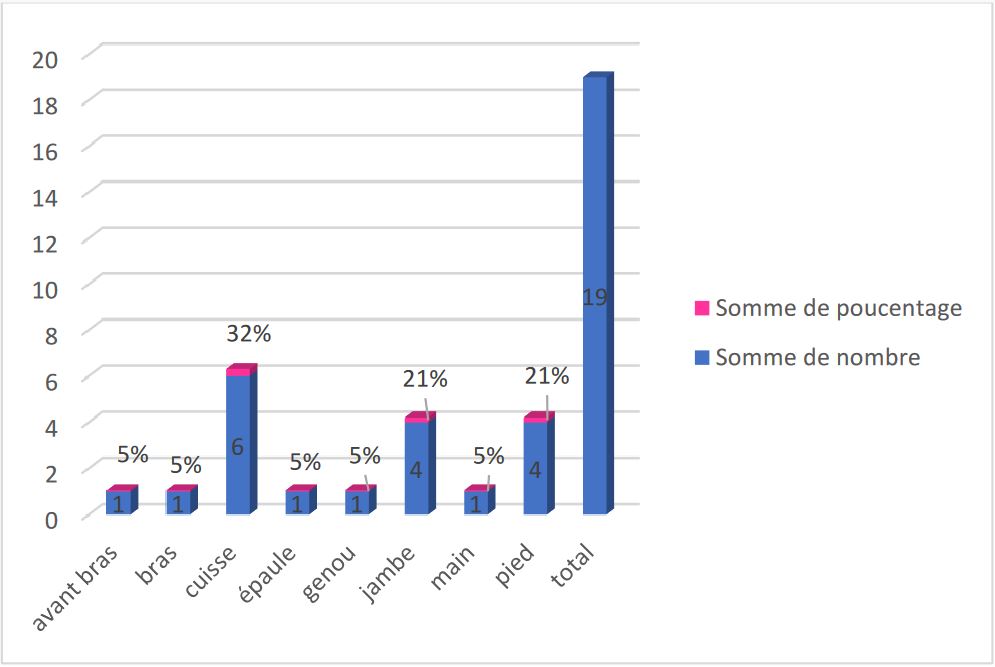
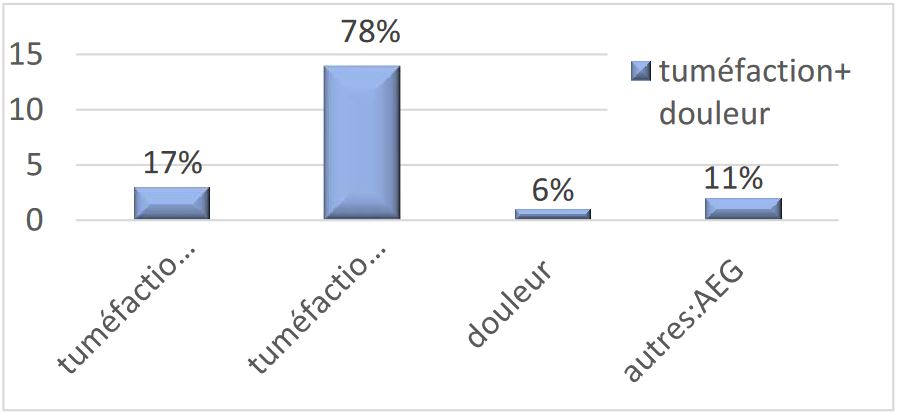
The study aims to determine the epidemiological, clinical, radiological, histopathological, therapeutic, and evolutionary aspects of synovial sarcomas. The average age of our patients was 38.6 years (Figure1), with a male predominance (12 men and 7 women) (Figure 2). In our series, synovial sarcoma electively affects the lower limbs (79%), particularly the thigh (32%) (Figure3). The patients in our series consulted after an average of 18 months. Swelling was the main reason for consultation, and was found in 17 patients (96%) (Figure 4).
Figure 1: Distribution of patients in our series according to age
Figure 2: Distribution of patients by gender
Figure 3: Distribution of synovialosarcomas according to location
Figure 4: Distribution of patients according to clinical symptoms
Clinical examination data: The clinical examination revealed the presence of swelling, as the main physical sign, in 17 patients. It was painful in 3 patients and varied in location.
Inflammatory signs: The presence or absence of inflammatory signs was specified in 14 patients in our series, or 74%.
Inflammatory signs were observed on clinical examination in 2 patients, or 14%.
Tumor size: In our series, tumor size varied from one tumor to another, with dimensions ranging from 6 cm to 20 cm.
In 67% of cases, the tumor size exceeded 10 cm, while in only 33% of cases the size was less than or equal to 10 cm.
Consistency: The consistency was specified in 4 patients, or 21% of our series.
The hard nature of the tumor mass was reported in 3 patients, representing 75%, while the firm character was identified in only one patient, representing 25% of the total number.
Tumor fixity: The fixity of the tumor was specified in 2 patients, or 11% of our series, with a fixed nature reported in both cases.
Lymphadenopathy: The detection of lymphadenopathy during the clinical examination was noted in one patient, corresponding to 5% of our population (having been treated with palliative chemotherapy).
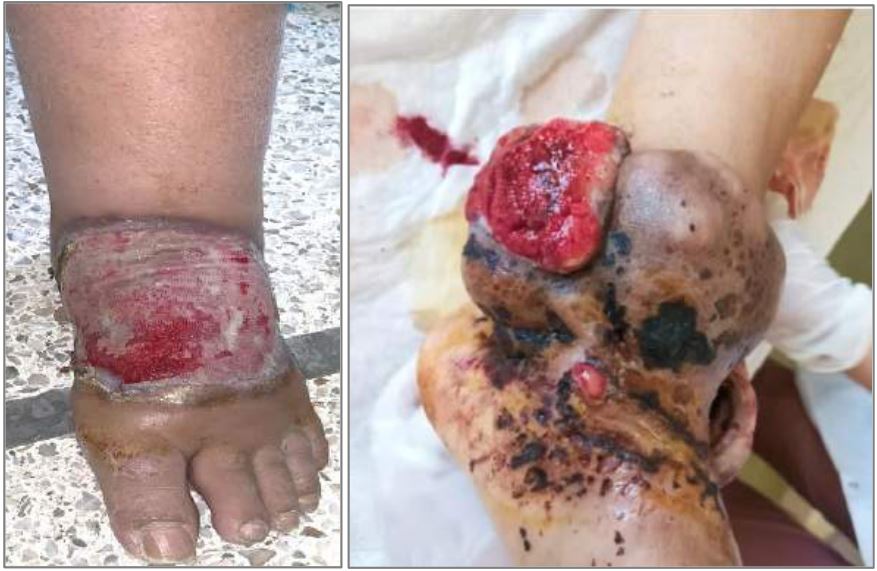
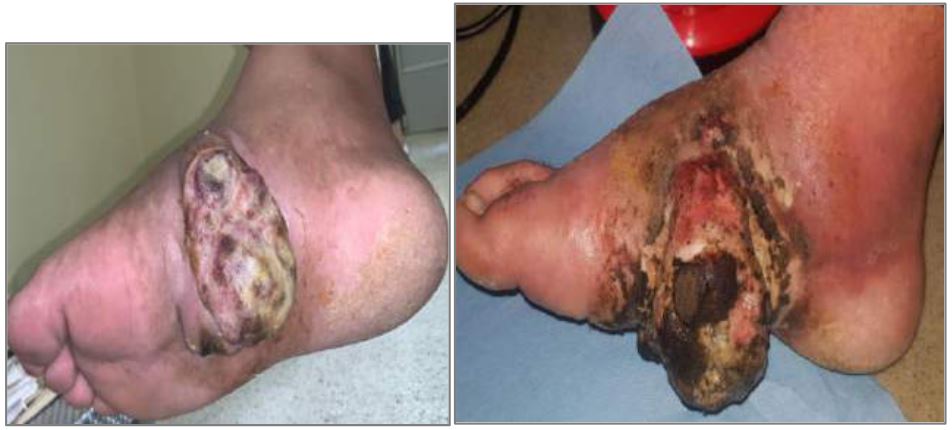
Skin opening: The skin opening was found in 2 patients, or 11% of the population. (Figure 5; 6)
Paraclinical study:
Local radiological assessment
Radiographically, soft tissue opacity was frequently observed, and CT scans were performed in 4 patients, while MRI was conducted in 16 cases.
Standard radiography:
- Standard radiography was requested in 11 patients, or 58%.
- Soft tissue opacity was the most frequently encountered element in patients.
- Bone lysis was observed on standard radiography in only one patient in our series, representing 9%.
- Calcifications were noted on standard radiography in 2 patients, or 18% of the population.
Computed tomography (CT): Four patients in the series, or 21%, underwent a CT scan. The results obtained are as follows:
- Seat: at the level of the soft parts of the limbs.
- Nature: tissue or solido-cystic, heterogeneous.
- Appearance after contrast: enhancement after injection of contrast product (PDC) was observed in 2 patients (50%).
- Bone involvement: bone lysis was reported in 2 patients, i.e. 50% of patients who underwent CT
Figure 5: Clinical appearance of a synovialosarcoma of the foot on admission (Figure A) and after 2 years of evolution (Figure B).
Figure 6: Clinical appearance of synovialosarcoma of the sole of the foot
Figure 7: X-ray of the foot in frontal and lateral view, showing no
Figure 8: X-ray of the foot in front and profile view, of a patient in our series, highlighting an opacity of the soft parts of the back of the foot, containing microcalcifications scattered within it (white arrow).
Figure 9: Standard x-ray of the leg in frontal and lateral view, of a patient in our series, illustrating an opacity of the soft tissues in the middle third of the leg, with lysis of the bony cortex of the tibial diaphysis opposite associated with a periosteal reaction (having subsequently benefited from amputation).
Magnetic resonance imaging (MRI): An MRI was performed in 16 patients, or 84%, before the biopsy for 11 patients, or 69%.
The results obtained are:
Nature: Tissue in all cases; cystic changes were found in only one case. o Topography: At the level of the soft parts of the limbs, this can be:
- Extra-aponeurotic subcutaneous, or
- Intramuscular intra-aponeurotic.
Limits: fuzzy limits in 6 cases, clear limits in 2 cases o Shape: Multiloculated in 2 cases and oval in 2 cases. o Contours: Regular in one case, lobulated in 2 cases and irregular in 2 cases. o Signal: the most used sequences are T1, T2, FAT-SAT, STIR.
- T1+T2 hyposignal was observed in 2 cases.
- T1+T2 hyperintensity was noted in 2 cases.
- T1 isosignal was detected in one case. o Post-contrast appearance: Post-contrast enhancement was observed in all cases. It was intense in 3 cases, homogeneous in 2 cases, and heterogeneous in only one case.
Presence of necrosis or hemorrhage: Necrotic-hemorrhagic changes were identified in 2 cases, and necrosis alone was noted in one case. o Bone involvement: Bone lysis was reported in 3 cases.
Vasculo-nervous involvement: arterial involvement was found in 2 cases, invasion of adjacent vessels and nerves was reported in 2 cases.
Deep local lymphadenopathy (ADP): ADP along the humeral canal was observed on MRI in only one case.
Assessment of extension: A general radiological assessment was carried out in search of a distant metastatic location of the synovialosarcomas of the limbs:
Chest radiography aimed at detecting a suspicious lung lesion or an image of pleurisy was performed in 7 patients, or 37% of the target population.
Thoracic CT looking for secondary localization, particularly pleuropulmonary, was performed in 2 patients, i.e. 11%.
TAP CT was performed in 17 patients or 89%.
Abdominal ultrasound looking for secondary localization, particularly hepatic, was performed in 2 patients or 11%.
The PET scan was performed in a single patient, representing 5% of the target population.
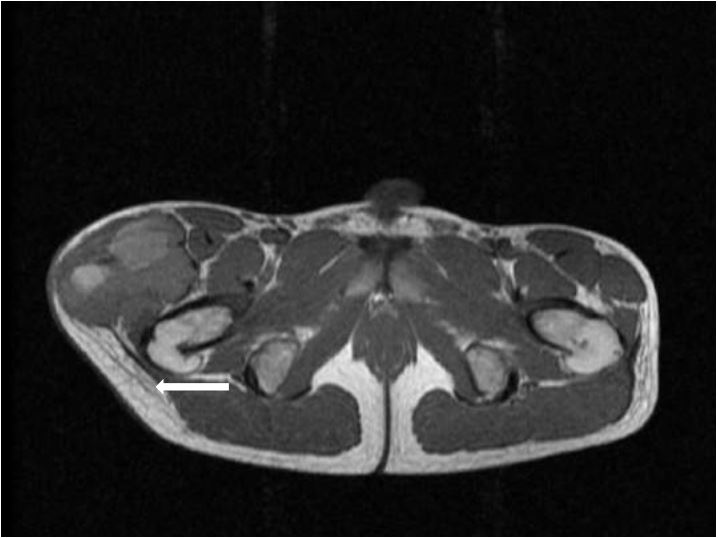
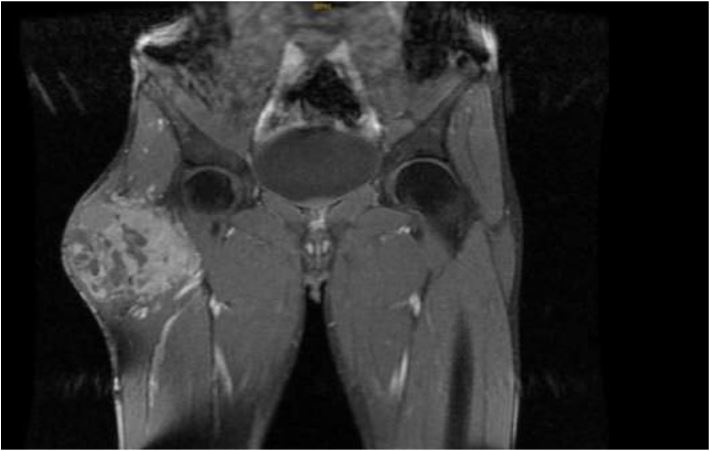
Figure 10: (A,B,C): MRI of the right thigh showing a tissue mass at the level of the vastus lateralis muscle, polylobed, heterogeneous
with the presence of hemorrhagic areas, enhanced at the periphery, delimiting areas of necrosis and infiltrating adjacent muscles.
A:I MRI of both thighs in axial T1 section
B: MRI of both thighs in T2 coronal section
C:MRI of both thighs in axial sectionT2/ FATSAT
Figure 11: (A,B): MRI of the left leg showing a tissue mass of the anterior soft parts, poorly defined, multiloculated, heterogeneously enhanced in a heterogeneous manner delimiting areas of necrosis, this mass lyses the tibial periosteum opposite.
A: MRI of both legs in T2 axial section
B: MRI of both legs in coronal STIR section.
Figure 12: (A,B): MRI of the left knee showing a tissue mass in the popliteal fossa, well limited with regular contours, containing areas of necrotico-hemorrhagic changes (Blue Arrow), enhanced intensely and heterogeneously after contrast, it encompasses the popliteal artery and invades the popliteal vein and the sciatic nerve (White arrow)
A:MRI of the left knee in sagittal T1 section
B:MRI of the left knee in axial and sagittal FAT-SAT sections
Figure 13: (A,B):MRI of the left foot in sagittal section showing a sub-aponeurotic mass on the dorsal side with an oval shape well limited in iso T1 signal in relation to the muscle and in hyper DP delimiting fine partitions, it sheaths the tendon of the tibialis anterior muscle and encompasses the pedal artery.
A: MRI of the left foot in sagittal T1 section
B:MRI of the left foot in sagittal section DP FS
Discussion
The talus is exposed to significant traumatic risk due to the intermediate position between the leg and the foot and the absence of muscular or tendinous insertion. It is subjected to considerable stress during walking and other activities and is at the center of a highly mobile joint complex.
Talus Enucleation isn’t an usually lesion that has rarely been described in the literature. The functional prognosis of the ankle is compromised by the risk of osteonecrosis. The direction of enucleation can var.most often is dislocated anterolateraly but the displacement may also be anteromedial or, and less in posteromedial.
However, the pathophysiological mechanism is still debated. For Pennal [6], anterolateral enucleation is performed through a dual process of forced plantar flexion and inversion. Plantar flexion results in rupture of the collateral ligament, while inversion leads to a tear of the talocalcaneal ligaments. The most precise study of enucleation mechanisms is that of Leitner (in 2), who described enucleation as the ultimate stage of supination trauma—in other words, the ultimate stage of medial subtalar dislocation. The treatment advocated by the various authors is far from unequivocal. Currently, the trend go for a conservative treatment for acute enucleations [2], reserving arthrodesis for secondary septic complications and late arthrosicevolution. The reduction of talus dislocation should be an emergency in order to prevent skin and vascular complications [7]. Tibiocalcaneal arthrodesis was adopted by Detenbeck and Kelly [3] but is a source of significant stiffness. Butel and Witvoet [9] noted the poor functional results of talectomy in enucleations of the talus and recommended triple arthrodesis as the firstline procedure, using the talus as a graft. Some authors recommend closed reduction with the aid of transcalcaneal traction [7]. Tibiocalcaneal arthrodesis was adopted by Detenbeck and Kelly [3] but is a source of significant stiffness. Butel and Witvoet [8] noted the poor functional results of talectomy in enucleations of the talus and recommended triple arthrodesis as a first-line treatment, using the talus as a graft. Some authors recommend closed reduction with the aid of transcalcaneal traction [7]. In the event of failure, the bloody approach is recommended [9,10]. Once the talus has been reduced, open focus allows the capsuloligamentous structures to be repaired [7,11]. Immobilization is achieved with a cast for four to eight weeks [7] or with a pin [11]. The evolution of talus enucleation is fraught with complications the main one being osteonecrosis after conservative treatment. Some authors consider this necrosis inevitable [2,9]. This is thought to be due to destruction of the capsuloligamentous attachments and complete rupture of the entire vascular supply [2]. As a few cases of enucleation of the talus have escaped this type of complication, several hypotheses can be put forward. Shahparee [2] suggested that the persistence of some ligamentous attachments, particularly the deltoid ligament, explains the inconsistency of necrosis. The tarsal canal artery is a branch of the posterior tibial artery and constitutes the main vascularization site of the body of the talus [13]. Its integrity at the time of the accident could explain the absence of talus necrosis in some anterolateral enucleations. Biga and Defives [1] reported a case of pure anterolateral enucleation of the talus treated by simple reduction.
At the two-year follow-up, we found no radiological signs of talar necrosis in any of our patients.
Conclusion
Conservative treatment with reduction by external manoeuvring of an enucleation of the talus, whatever its variety', constitutes a major prognostic element to avoid damage by bloody reduction, which remains the vascular attachments and favors evolution toward osteonecrosis of the talus, which remains the main complication in this rare pathology.
Ethical Approval: As per international standard or university standards written ethical approval has been collected and preserved by the author(s).
Consent: As per international standards or university standards, patient(s) written consent has been collected and preserved by the author(s).
Competing Interests: Authors have declared that no competing interests exist.
References
- Biga N, Defives T. Adult malleolar fractures and instep dislocation. encycl med chir. Musculoskeletal System, Elsevier, Paris. 1997;14:088-10.
- Asselineau A, Augereau B, Bombart M, et al. Partial or total enucleations of the astragalus. interest in conservative treatment. Rev Chir Orthop .1989;75:34-9.
- Detenbeck LC, Kelly PJ Total dislocation of the talus. J Bone Joint Surg (Am) 1969;51:283-8.
- Kenwright J, Taylor RG Major injuries of the Talus. J Bone Joint Surg (Br). 1970;52:3-48.
- Maffulli N, Francobandiera C, Lepore L. Total dislocation of the talus. Foot Surg. 1989;28:208-12.
- Butel J, Witvoe¨t J Fractures and dislocations of the talus. Rev Chir Orthop 1967;53:494-624.
- Pinzur MS, Meyer PR Complete posterior dislocation of the talus. Case report and discussion. Clin Orthop. 1978;231:205-9.
- Mann RA Total dislocation of the talus: Surgery of the foot (5th ed.). In: Mann RA, Mosby CV (ed.), St Louis. 1986;770-3.
- Ritsema GH Total talus dislocation. J Trauma. 1988;28:692-4.
- Korovessis P, Sidiropoulos P, Katsardis T, et al. Complete lateral dislocation of the talus without fracture. Orthop Trauma. 1992;6:125-8.
- Shahraree H, Sajadiik AK, Silver C, et al. Total dislocation of the talus, a case report four-year follow-up. Ortho Rev. 1980;9: 65-8.
- idalgo Ovejero AM et al. Posterior medial dislocation of the talus. A case report and review of the literature Acta Othop Belg ; 1991.
- Curvale G Traumatic pathology of the talus. SOFCOT teaching notebooks. Teaching conferences, Paris. 1999: 87-102.