
The role of the new techniques in the evaluation of the ability to understand and want in patients affected by dementias
Mirko Avesani 1,2,3,4,5,*, Graziella Beghini1, Francesco Agnoli1, Lucilla Franchi2, Camilla Vianello2, Assunta Zamparelli2, Cristiana Trevisan2, Cinzia Scarpa2, Nicola Siliprandi3, Manuela Camicia3, Laura Adami3, Laura Rossi3, Licia Mazzocchi3, Antonietta Conforto3, Lorella Frittoli3, Claudia D’Angelis3, Alfonso Ciccone3, Francesco Paladin2,Giuseppe Sartori4
¹University of Verona, Division of Clinical Neurology, Section of Rehabilitative Neurology, Dementia Center.
²AUSL 3 Serenissima, Civil Hospital “SS. Giovanni e Paolo” of Venice, Department of Medical Sciences, Division of Neurology, Dementias Center.
³ASST of Mantua, Civil Hospital “Carlo Poma” of Mantua, Department of Neurological Sciences, Division of Neurology, Dementias Center.
⁴University of Padua, Degree Course of Law, Department of crimen law.
⁵European Forensic Institute (EFI) – Degree Course of Criminology – Section of Physiological Psychology.
*Corresponding author
*Mirko Avesani, University of Verona, Division of Clinical Neurology, Section of Rehabilitative Neurology, Dementia Center
DOI: 10.55920/JCRMHS.2023.06.001270

Figure 1: Distrubution of DMN in the brain

Figure 2: The name of several area parts of DMN

Figure 3: Connectivity of Default Mode Network. In yellow the main regions of DMN.In red, green, blu the connectivity among regions chromatically codified by direction of structural crossing (xyz → red-green-blu).
Activation and deactivation of DMN
The default mode network (DMN) comprises defined brain regions contributing to internally-directed thought processes. Reductions in task-induced deactivation in the DMN have been associated with increasing age and poorer executive task performance, but factors underlying these functional changes remain unclear (Brown, 2018).
DMN is a distributed network of brain regions more active during rest than during performance of many attention-demanding tasks and characterized by a high degree of functional connectivity (i.e., temporal correlations between brain regions). Functional magnetic resonance imaging studies have revealed that the DMN in the healthy brain is associated with stimulus-independent thought and self-reflection and that greater suppression of the DMN is associated with better performance on attention-demanding tasks (Whitfield-Gabrieli, 2012).
Human cognition is flexible, enabling us to select appropriate information from memory, according to current goals. Multiple-demand (MD) cortex, which overlaps with frontal-parietal control network (FPCN) and dorsal attention network (DAN), has an established role in cognitive flexibility (Duncan, 2010), showing stronger responses in more demanding conditions across tasks (Fedorenko et al., 2013; Turnbull et al., 2019a, Turnbull et al., 2019b) and activation patterns that can classify task-critical details in an adaptive fashion (Erez and Duncan, 2015; Cole et al., 2016; Bracci et al., 2017; Qiao et al., 2017). However, the role of other heteromodal brain regions, such as regions of default mode network (DMN), is more poorly understood ( Wang, 2021).
The default mode network (DMN) is a set of widely distributed brain regions in the parietal, temporal and frontal cortex. These regions often show reductions in activity during attention-demanding tasks but increase their activity across multiple forms of complex cognition, many of which are linked to memory or abstract thought. Within the cortex, the DMN has been shown to be located in regions furthest away from those contributing to sensory and motor systems. Here, several authors [Smallwood et al, 2021] consider how their knowledge of the topographic characteristics of the DMN can be leveraged to better understand how this network contributes to cognition and behaviour. And cognition and behaviour are the most important task to study in people accused of a crimen, in order to understand their ability to understand and will what they have done.
Pathophysiology of DSM (Wang 2011 and Wang 2021)
Wang (2011) used a semantic feature-matching task combined with multivoxel pattern decoding to test contrasting accounts of the role of the default mode network (DMN) in cognitive flexibility. By one view, DMN and multiple-demand cortex have opposing roles in cognition, with DMN and multiple-demand regions within the dorsal attention network (DAN) supporting internal and external cognition, respectively. Consequently, while multiple-demand regions can decode current goal information, semantically relevant DMN regions might decode conceptual similarity regardless of task demands. Alternatively, DMN regions, like multiple-demand cortex, might show sensitivity to changing task demands, since both networks dynamically alter their patterns of connectivity depending on the context. This task required human participants (any sex) to integrate conceptual knowledge with changing task goals, such that successive decisions were based on different features of the items (color, shape, and size). This allowed Wang to simultaneously decode semantic category and current goal information using whole-brain searchlight decoding. As expected, multiple-demand cortex, including DAN and frontoparietal control network, represented information about currently relevant conceptual features. Similar decoding results were found in DMN, including in angular gyrus and posterior cingulate cortex, indicating that DMN and multiple-demand regions can support the same function rather than being strictly competitive. Semantic category could be decoded in lateral occipital cortex independently of task demands, but not in most regions of DMN. Conceptual information related to the current goal dominates the multivariate response within DMN, which supports flexible retrieval by modulating its response to suit the task demands, alongside regions of multiple-demand cortex. Wang tested contrasting accounts of default mode network (DMN) function using multivoxel pattern analysis. By one view, semantically relevant parts of DMN represent conceptual similarity, regardless of task context. By an alternative view, DMN tracks changing task demands. This semantic feature-matching task required participants to integrate conceptual knowledge with task goals, such that successive decisions were based on different features of the items. Wang demonstrate that DMN regions can decode the current goal, as it is applied, alongside multiple-demand regions traditionally associated with cognitive control, speaking to how DMN supports flexible cognition (Wang, 2021).
DMN and DAN are proposed to subserve internally and externally directed cognition, respectively, and functionally couple with different subsystems of FPCN (Spreng et al., 2010, Spreng et al. 2013; Dixon et al., 2018). DMN is highly heteromodal and is thought to support information integration (Simony et al., 2016;Lanzoni et al, 2020), which is relevant to both long-term episodic memory (Sestieri et al., 2011) and semantic cognition (Binder and Desai, 2011; Wirth et al., 2011; Krieger-Redwood et al., 2016). Semantically relevant DMN regions, including left angular gyrus (AG) and lateral temporal cortex, show less deactivation, relative to rest, when semantic and nonsemantic tasks are compared (Binder et al., 1999, Binder et al. 2009; Humphreys et al., 2015), even when task difficulty is taken into account (Binder et al., 2005; Seghier et al., 2010; Murphy et al., 2018). These observations suggest that DMN might support similarity structures in long-term memory, such as global conceptual similarity (Murphy et al., 2017; Wang et al., 2020), as well as goal information when this information is retrieved from memory.
Recent data on DSM in brain organization (Wang, 2020)
Contemporary accounts of brain organization suggest that neural function is organized along a connectivity gradient from unimodal regions of sensorimotor cortex, through executive regions to transmodal default mode network. Wang’s team examined whether this graded view of neural organization helps to explain how decision-making changes across situations that vary in their alignment with long-term knowledge. They used a semantic judgment task, which parametrically varied the global semantic similarity of items within a feature matching task to create a ‘task gradient’, from conceptual combinations that were highly overlapping in long-term memory to trials that only shared the goal-relevant feature. They found the brain’s response to the task gradient varied systematically along the connectivity gradient, with the strongest response in default mode network when the probe and target items were highly overlapping conceptually. This graded functional change was seen in multiple brain regions and within individual brains, and was not readily explained by task difficulty. Moreover, the gradient captured the spatial layout of networks involved in semantic processing, providing an organizational principle for controlled semantic cognition across the cortex. In this way, the cortex is organized to support semantic decision-making in both highly familiar and less familiar situations (35Wang, 2020).
DSM in Neuropsychiatric disorders, often cause of crimen (Whitfield-Gabrieli, 2012).
Neuropsychiatric disorders are associated with abnormal function of the default mode network (DMN), a distributed network of brain regions more active during rest than during performance of many attention-demanding tasks and characterized by a high degree of functional connectivity (i.e., temporal correlations between brain regions). Functional magnetic resonance (fMRI) imaging studies have revealed that the DMN in the healthy brain is associated with stimulus-independent thought and self-reflection and that greater suppression of the DMN is associated with better performance on attention-demanding tasks. In schizophrenia and depression, the DMN is often found to be hyperactivated and hyperconnected. In schizophrenia this may relate to overly intensive self-reference and impairments in attention and working memory. In depression, DMN hyperactivity may be related to negative rumination. These findings are considered in terms of what is known about psychological functions supported by the DMN, and alteration of the DMN in other neuropsychiatric disorders (Whitfield-Gabrieli, 2012).
DMN alteration in Dementia (Browun, 2018) – [fig. 4]
Brown (362018) investigated contributions of white matter (WM) microstructure, WM hyperintensities (WMH) and Alzheimer's pathology to age-related alterations in DMN function. Thirty-five cognitively normal older adults and 29 younger adults underwent working memory task fMRI and diffusion tensor imaging. In the older adults, it was measured cerebrospinal fluid tau and Aβ42 (markers of AD pathology), and WMH on FLAIR imaging (marker of cerebrovascular disease). It was identified a set of regions showing DMN deactivation and a set of inter-connecting WM tracts (DMN-WM) common to both age groups. There were negative associations between DMN deactivation and task performance in older adults, consistent with previous studies. Decreased DMN deactivation was associated with AD pathology and WM microstructure but not with WMH volume. Mediation analyses showed that WM microstructure mediated declines in DMN deactivation associated with both aging and AD pathology. Together these results suggest that AD pathology may exert a “second-hit” on WM microstructure, over-and-above the effects of age, both contributing to diminished DMN deactivation in older adults.
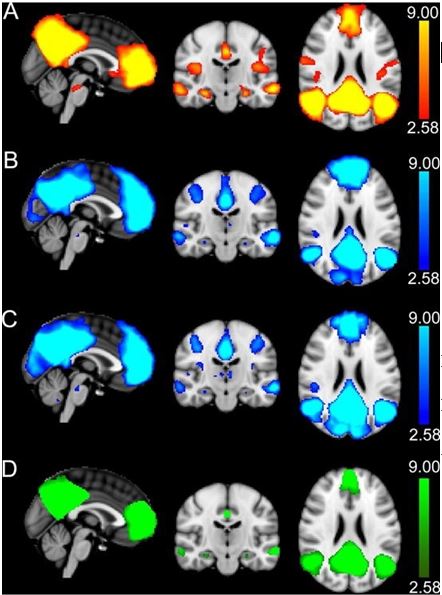
Figure 4: Identification of DMN with Independent Component Analysis (ICA) in Alzheimer’s disease.
A: ICA was used to identify the DMN component in rs-fMRI data
B-C: ICA was performed for run 1 (B) and run 2 ( C) of the task based fMRI separately. The task components weRE averaged together and masked by the rs-fMRI component to form a final mask of DMN regions ( C). The Clusters in this final mask sued for all functional analyses and as seeds for probabilistic tractography.A-D: The DMN regions overlaid on top of the MNI151 T1 2 mm3 standard brain. Color scale is shown to the right, with values representing the minimum and maximum Z-values shown.
The New Tecniques Useful To Integrate The Classic Neuropsychological Examination In People Accused Of A Crimen And To Be Studied In Order Their Will Of Understand And Want
Independent component model of the default-mode brain function: combining individual-level and population-level analyses in resting-state fMRI (Esposito, 2018)
Resting-state functional magnetic resonance imaging (RS-fMRI) is a technique used to investigate the spontaneous correlations of blood-oxygen-level-dependent signals across different regions of the brain. Using functional connectivity tools, it is possible to investigate a specific RS-fMRI network, referred to as "default-mode" (DM) network, that involves cortical regions deactivated in fMRI experiments with cognitive tasks. Previous works have reported a significant effect of aging on DM regions activity. Independent component analysis (ICA) is often used for generating spatially distributed DM functional connectivity patterns from RS-fMRI data without the need for a reference region. This aspect and the relatively easy setup of an RS-fMRI experiment even in clinical trials have boosted the combined use of RS-fMRI and ICA-based DM analysis for noninvasive research of brain disorders. Esposito, in his work, considered different strategies for combining ICA results from individual-level and population-level analyses and used them to evaluate and predict the effect of aging on the DM component. Using RS-fMRI data from 20 normal subjects and a previously developed group-level ICA methodology, he generated group DM maps and showed that the overall ICA-DM connectivity is negatively correlated with age. A negative correlation of the ICA voxel weights with age existed in all DM regions at a variable degree. As an alternative approach, he generated a distributed DM spatial template and evaluated the correlation of each individual DM component fit to this template with age. Using a "leave-one-out" procedure, he highlighted the importance of removing the bias from the DM template-generation process.
Abnormalities in functional connectivity in borderline personality disorder: Correlations with metacognition and emotion dysregulation (Quattrini, 2019.)
A few studies reported functional abnormalities at rest in borderline personality disorder (BPD), but their relationship with clinical aspect is unclear. Quattrini aimed to assess functional connectivity (FC) in BPD patients and its association with BPD clinical features. Twenty-one BPD patients and 14 healthy controls (HC) underwent a multidimensional assessment and resting-state fMRI. Independent component analysis (ICA) was performed to identify three resting-state networks: default mode network (DMN), salience network (SN), and executive control network (ECN). FC differences between BPD and HC were assessed with voxel-wise two-sample t-tests. Additionally, he investigated the mean FC within each network and the relationship between connectivity measures and BPD clinical features. Patients showed significant lower mean FC in the DMN and SN, while, at the local level, a cluster of lower functional connectivity emerged in the posterior cingulate cortex of the DMN. The DMN connectivity was positively correlated with the anger-state intensity and expression, while the SN connectivity was positively correlated with metacognitive abilities and a negative correlation emerged with the interpersonal aggression. The dysfunctional connectivity within these networks might explain clinical features of BPD patients.
Network analysis of functional brain connectivity in borderline personality disorder using resting-state fMRI (Xu, 2021)
Another scientist studied (39Xu) the connectivity in patients with severe borderline personality, using the same tecnique, resting state fMRI with ICA.
Borderline personality disorder (BPD) is associated with symptoms such as affect dysregulation, impaired sense of self, and self-harm behaviors. Neuroimaging research on BPD has revealed structural and functional abnormalities in specific brain regions and connections. However, little is known about the topological organizations of brain networks in BPD. Xu (39) collected resting-state functional magnetic resonance imaging (fMRI) data from 20 patients with BPD and 10 healthy controls, and constructed frequency-specific functional brain networks by correlating wavelet-filtered fMRI signals from 82 cortical and subcortical regions. He employed graph-theory based complex network analysis to investigate the topological properties of the brain networks, and employed network-based statistic to identify functional dysconnections in patients. In the 0.03-0.06 Hz frequency band, compared to controls, patients with BPD showed significantly larger measures of global network topology, including the size of largest connected graph component, clustering coefficient, small-worldness, and local efficiency, indicating increased local cliquishness of the functional brain network. Compared to controls, patients showed lower nodal centrality at several hub nodes but greater centrality at several non-hub nodes in the network. Furthermore, an interconnected subnetwork in 0.03-0.06 Hz frequency band was identified that showed significantly lower connectivity in patients. The links in the sub-network were mainly long-distance connections between regions located at different lobes; and the mean connectivity of this subnetwork was negatively correlated with the increased global topology measures. Lastly, the key network measures showed high correlations with several clinical symptom scores, and classified BPD patients against healthy controls with high accuracy based on linear discriminant analysis. The abnormal topological properties and connectivity found in this study may add new knowledge to the current understanding of functional brain networks in BPD. However, due to limitation of small sample sizes, the results of the current study should be viewed as exploratory and need to be validated on large samples in future works.
Disrupted intrinsic functional brain topology in patients with major depressive disorder (Yang, 2021)
Aberrant topological organization of whole-brain networks has been inconsistently reported in studies of patients with major depressive disorder (MDD), reflecting limited sample sizes. To address this issue, Yang utilized a big data sample of MDD patients from the REST-meta-MDD Project, including 821 MDD patients and 765 normal controls (NCs) from 16 sites. Using the Dosenbach 160 node atlas, he examined whole-brain functional networks and extracted topological features (e.g., global and local efficiency, nodal efficiency, and degree) using graph theory-based methods. Linear mixed-effect models were used for group comparisons to control for site variability; robustness of results was confirmed (e.g., multiple topological parameters, different node definitions, and several head motion control strategies were applied). He found decreased global and local efficiency in patients with MDD compared to NCs. At the nodal level, patients with MDD were characterized by decreased nodal degrees in the somatomotor network (SMN), dorsal attention network (DAN) and visual network (VN) and decreased nodal efficiency in the default mode network (DMN), SMN, DAN, and VN. These topological differences were mostly driven by recurrent MDD patients, rather than first-episode drug naive (FEDN) patients with MDD. In this highly powered multisite study, he observed disrupted topological architecture of functional brain networks in MDD, suggesting both locally and globally decreased efficiency in brain networks.
Future approaches to people accused of a crimen and to be study about their will to understand and want
We are firmly convinced that rs-fMRI, using ICA, must be considered, in a next future, a technique to be systematically used as now is used Positron Emission TAC (PET TC). Unfortunately, nowadays, in Italy this technique is not yet used because, without a reasonable motivation, is (EVEN NOW!), despite the studies just summarized, considered “experimental” and not of routine!
A young woman from Sicily, with a rs-fMRI clear about her severe personality disorder, was considered able to understand and want and so considered guilty by the penal Court of murder of her little son, with a strange motive: rs-fMRI can’t be considered as part of evaluation, because, so far, experimental. Also PET-TAC, in Italy, was considered of routine after a long juridical discussion. We hope that all these studies, now summarized in this review, will be useful, at least in Europe, when a judge must decide if to sentence or to considered a subject to be addressed in a particular residence (in Italy defined REMS) of people of psychological o psychiatric problems.
We hope to start, in a brief time, a work on every subject with the clinical suspect of a psychiatric or psychological disorder, when the judge command for him/her an evaluation