A Retrospective Analysis of the Prevalence and Surgical Importance of Hepatic Vascular Variations Detected by Multi-Dedector Computed Tomography

Esin Cibiroglu1* (0000-0003-2825-5518); Davut Tüney2 (0000-0003-0021-7835)

¹Umraniye Training and Research Hospital, Department of Radiology, Istanbul Turkey
²Marmara University Faculty of Medicine, Department of Radiology, Istanbul Turkey

*Corresponding author

Esin Cibiroglu, Umraniye Training and Research Hospital, Department of Radiology, Istanbul-Turkey
Email: dr.esin.sipahi@gmail.com, datuney@hotmail.com

Abstract

Objective: The objective of this study is to determine the frequency and types of hepatic vascular (portal venous, hepatic arterial, and hepatic venous) variations in a large patient series using multi-dedector computed tomography (MDCT) and to highlight surgical complications that may arise secondary to vascular variations.

Material and Methods: Images of 860 patients who underwent routine dynamic abdominal MDCT examinations using standard protocols at our hospital between April 2012 and March 2013 were retrospectively examined for hepatic vascular variations. Fifty patients were excluded from the study because they did not meet the inclusion criteria. The obtained data were evaluated using advanced imaging methods such as maximum intensity projection (MIP), multiplanar reconstruction (MPR), and 3D volume calculation (volume rendering-VR).

Results: A normal portal venous (PV) branching pattern was observed in 656 of 810 patients (81%), a normal hepatic venous branching pattern was detected in 562 of 793 patients (70.9%), and a normal hepatic artery (HA) branching pattern was detected in 708 of 798 patients (88.7%). In our study, the most common hepatic artery variation was Type 3 (6.1%), and the most common hepatic venous variation was Type 2 (16.7%). The most common portal venous variation was identified as the segment 7 branch originating separately from the right portal vein in Type 1 portal venous branching (4.1%).ConclusionMDCT is an effective method for detecting hepatic vascular variations. During the reporting of abdominal tomography examinations, attention to and mention of hepatic vascular variations is important from a clinical perspective, as significant variations can alter the surgical plan and reduce complications.

Key words: Hepatic Vein, Hepatic Artery, Portal Vein, Variations, Computed Tomography

Introduction

Information regarding anatomical variations in hepatic vascular structures is of great importance in planning hepatobiliary surgery, liver transplantation and donor procedures, transarterial therapy, and other endovascular interventions (1). The presence of hepatic vascular variations may necessitate changes in surgical techniques, and failure to perform appropriate preoperative evaluations may lead to life-threatening outcomes such as graft ischemia, biliary (bile duct) complications, pseudoaneurysm, or hemorrhage (2). Therefore, clearly mapping the vascular anatomy prior to surgical or interventional radiology planning is fundamental to preventing complications.One of the most significant problems in liver transplantation is that the amount of liver available from cadavers cannot meet the demand for transplantation, leading to a rapid increase in the need for liver transplantation from living donors (3). Due to the complex structure and frequent variations in hepatic vascular anatomy, vascular mapping using appropriate imaging methods is essential for the safety of the donor and the success of the graft in living donor liver transplantation (4). Doppler Ultrasonography, digital subtraction angiography (DSA), magnetic resonance angiography (MRA), and CT angiography techniques can be used to visualize the hepatic vascular system. In recent years, with advances in radiology technology, low-risk, non-invasive diagnostic methods such as MDCT and magnetic resonance imaging (MRI) have begun to be used as alternatives to conventional angiography. The multi-detector structure used in MDCT has significantly reduced the imaging time and improved the image quality. Following routine imaging, the vascular system can be easily visualized using techniques such as MPR, VR, and MIP without the need for repeat imaging (5,6)

Hepatic Arterial Anatomy: It is the branch of the common hepatic artery originating from the celiac trunk that goes to the liver. After the gastroduodenal artery and right gastric artery branch off, it ascends as the a. hepatica propria within the hepatoduodenal ligament, to the left of the common bile duct and in front of the portal vein. It divides into two branches, right and left, within the hepatic pedicle, and into segmental branches within the liver. There are many variations of the hepatic artery. If a segment of the liver is supplied by an aberrant artery in addition to the branch it receives from the hepatic artery, then it is referred to as an accessory artery. If all blood is coming from the accessory artery, replacement is indicated. A. hepatica propria may originate entirely from the superior mesenteric artery (SMA), a condition referred to as total replacement (7). Table 1 shows the Michel Classification of Hepatic Artery Variations.

Hepatic Venous Anatomy: Generally, there are 3 main hepatic branches that drain into the inferior vena cava (IVC). The left hepatic vein (LHV) drains segments II and III, the middle hepatic vein (MHV) drains segments IV, V, and VIII, and the right hepatic vein (RHV) drains segments V, VI, and VII. Table 2 shows the classification of hepatic venous variations used in our study.

 Table 1: Michel Classification of Hepatic Artery Variations

Table 2: Hepatic Venous Variations

Portal Venous Anatomy: In normal anatomy, the main portal vein (PV) is divided into a large right PV (RPV) branch and a smaller left PV (LPV) branch at the level of the liver hilus. The left PV runs horizontally in the medial ligamentum teres. The main part supplies segments II and III of the liver, the superior and inferior branches supply segment IV, and the caudate branches supply segment I. The right PV is divided into anterior (right APV) and posterior (right PPV) trunk. The branches of the anterior trunk supply segments V and VIII, while the branches of the posterior trunk supply segments VI and VII. Any deviation from this structure is considered an anatomical variation.

Type 1 Normal Classical Branching Pattern

Variations;

  • Trifurcation (Type 2)
  • Origin of the right portal vein (PV) branch as the first branch of the main portal vein (Type 3)
  • Quadrifurcation
  • Absence of PV bifurcation
  • Intrahepatic clustered branching of the portal vein (total ramification)
  • Segment VI portal vein branch originating from the main portal vein
  • Segment VIII portal vein branch originating from the main portal vein
  • Congenital portocaval shunt

Right PV variations;

Normal classical branching pattern

Variations

  • -Separate origin of the segment VI portal vein branch from the right portal vein
  • -Separate origin of the segment VII portal vein branch from the right portal vein
  • -Separate origin of both segment VI and VII portal vein branches from the right portal vein
  • -Segment VII portal vein branch originating from the left portal vein
  • Trifurcation of the right posterior portal vein
  • Quadrifurcation of the right posterior portal vein

 Although studies reporting the frequency of hepatic vascular variations in different populations exist in the literature, there is a need for current data from large series using multi-dedector CT (MDCT) in the Turkish population. The aim of this study is to determine the frequency and types of hepatic vascular variations using MDCT in a large patient series and to emphasize the importance of these variations in surgical planning.

Materials and Methods

The study retrospectively included routine dynamic intravenous (IV) contrast-enhanced upper abdominal CT examinations performed using a 256-slice computed tomography scanner on patients who visited our hospital for any reason between April 2012 and May 2013. The study received ethical approval from the Marmara University Faculty of Medicine Hospital Ethics Committee under protocol code 09.2013.0090. Due to the retrospective design of the study, there is no need for a patient consent form. The study was conducted in accordance with the Declaration of Helsinki.

CT images of 860 patients were scanned for the study. Fifty of these patients were excluded from the study due to the presence of widespread tumors in the liver, partial hepatic resection, and disruption of arterial anatomy due to widespread collateral formation. A total of 810 patients, 403 men and 407 women, were included in the study. Portal venous system variations could be evaluated in all 810 patients included in the study. Hepatic arteries could not be evaluated in 12 patients and hepatic venous structures could not be evaluated in 17 patients because images could not be obtained in the appropriate phase after IV contrast administration.

All images were acquired using a 256-detector CT scanner device (Somatom Definition Flash CT scanner, Siemens Healthineers, Germany) at a routine section thickness of 3 mm, and 1 mm section intervals and 1 mm section thickness after reconstruction. Following IV contrast administration, arterial phase images were acquired at 30-40 seconds, portal venous phase images at 50-60 seconds, and venous phase images at 85 seconds.

Image Processing and Evaluation: Phase images obtained at the appropriate time after intravenous contrast administration were evaluated in the axial, coronal, and sagittal planes using post-processing applications such as MPR, VR, and MIP at the workstation. Michel's classification of variations in the hepatic arterial system, Atasoy and colleagues' classification of variations in the portal venous system, and Nakamura's study of variations in the hepatic venous system were accepted as references (8-10).  In the evaluation of the hepatic venous system, the presence of a vein wider than 5 mm draining segment V or segment VIII into the MHV and crossing the hepatectomy plane during liver transplantation, as well as the presence of a right accessory inferior hepatic vein, was investigated.When evaluating the portal venous system, potential variations that could adversely affect transplantation surgery, such as trifurcation or quadrifurcation of the main portal vein and the separate origin of segments VI and VII from the right main portal vein, were assessed. The shape of the opening between the origin of the right anterior PV and the right posterior PV was used for the distinction between Type 2 and Type 3 portal vein.  If this gap was triangular in shape, it was classified as Type 2; if it was quadrangular in shape, it was classified as Type 3.

Results

Hepatic Artery VariationsA total of 798 patients were evaluated for hepatic artery variations. The findings are shown in Table 3.

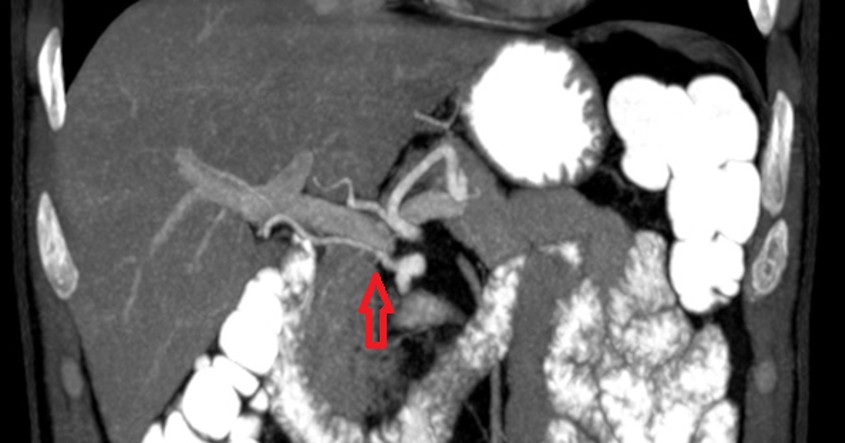
Examples of hepatic artery variations are shown in Figures 1 and 2.

Table 3: Distribution of Hepatic Artery Types

Figure 1: Type 3 hepatic artery variation in the coronal MIP image, where the right hepatic artery (red arrow) originates from the superior mesenteric artery.
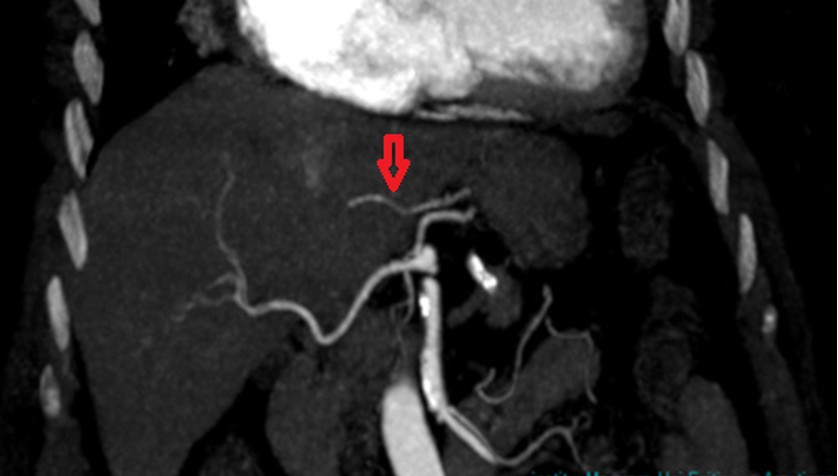
Figure 2: Type 2 hepatic artery variation in the coronal MIP image, where the left hepatic artery originates from the left gastric artery.

Portal Venous Variations A total of 810 patients were evaluated for portal vein variation. The findings are seen in Table 4.

Table 4: Distribution of Portal Vein Types

The most common variation observed in Type 1 is the separate origin of the segment VII branch from the right portal vein (RPV). The distribution of the variations observed in type 1 is indicated in Table 5 and examples of variations of the portal vein are seen in figures 3, 4 and 5.

Table 5: Distributions of the Variations Observed in Type 1
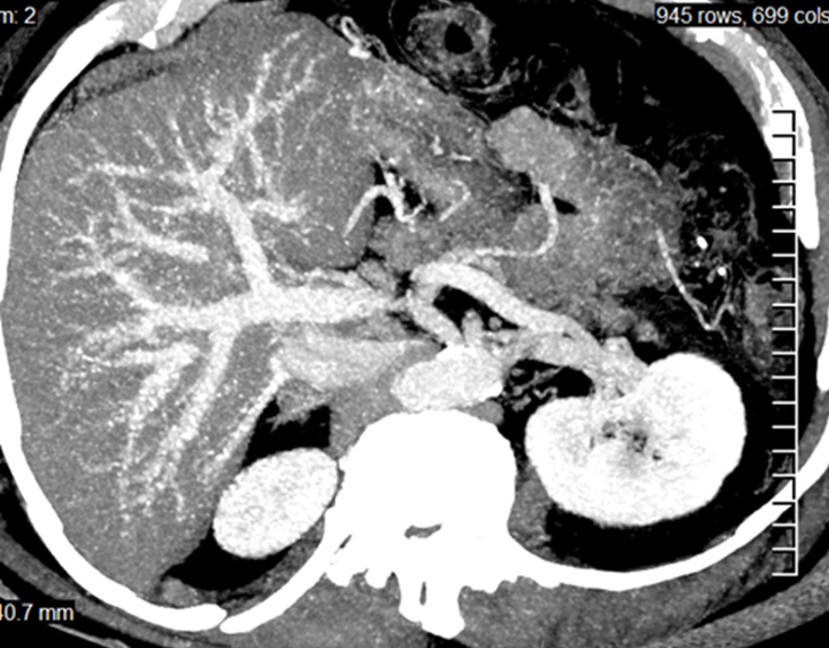
Figure 3: Conventional portal vein anatomy in axial MIP image. The portal vein branches into the right portal vein and the left portal vein. The right portal vein divides into the anterior sector branch supplying segments V and VIII and the posterior sector branch supplying segments VI and VII. The left portal vein divides into branches supplying the left lobe.
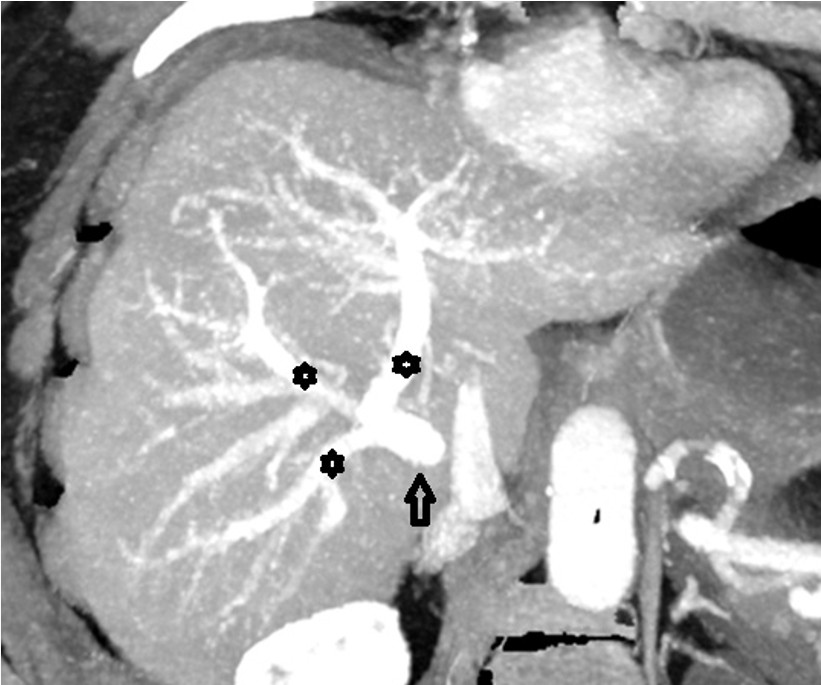
Figure 4: Trifurcation variation in the portal vein on MIP image. Three branches (stars) extend from the main portal vein (arrow): the posterior sector branch supplying segments VI and VII, the anterior sector branch supplying segments V and VIII, and the left portal vein supplying the left lobe.
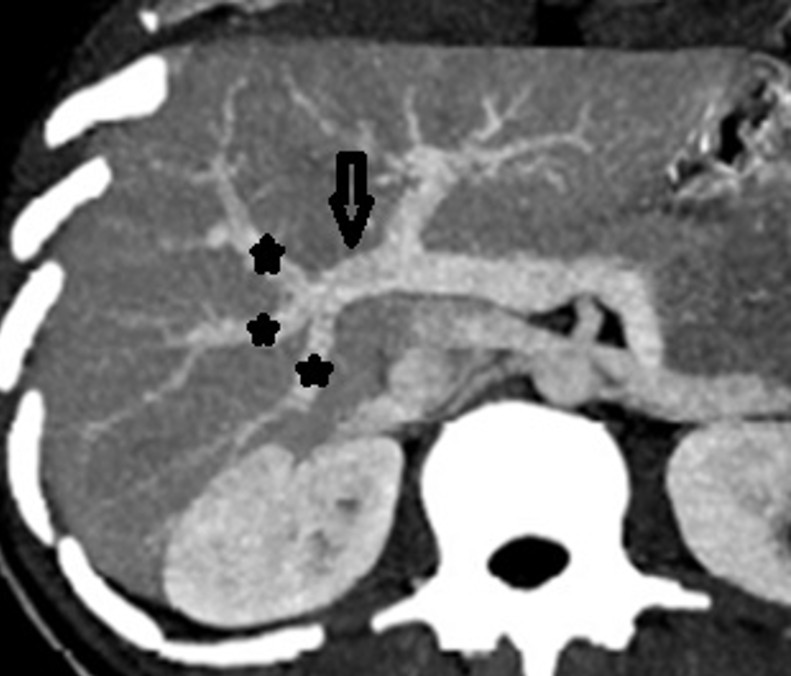
Figure 5: Trifurcation-like branching pattern (stars) in the right portal vein (arrow) on the axial MIP image.

Hepatic Venous Variations 793 patients were evaluated for hepatic vein variation. The findings are seen in Table 6.

Table 6: Distribution of Hepatic Vein Types
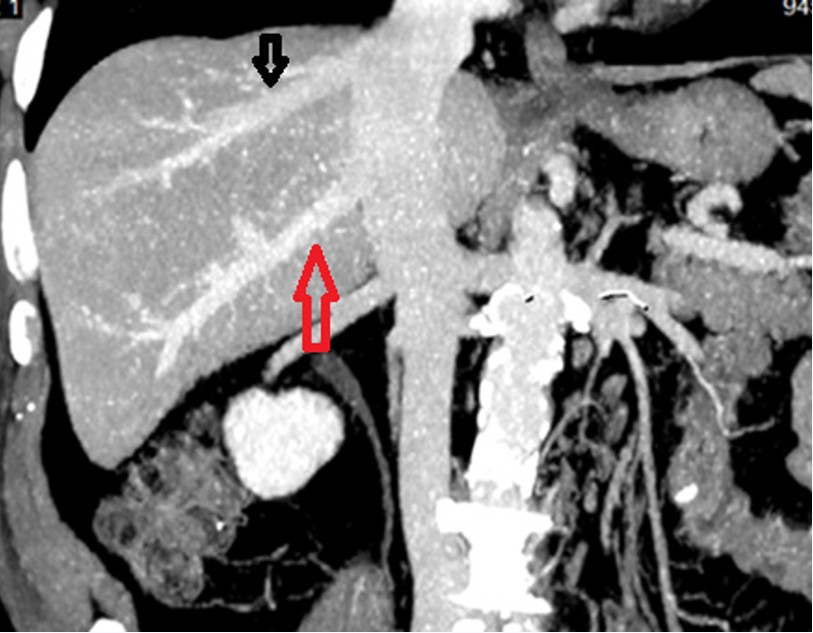
Figure 6: Coronal MIP image. Accessory inferior hepatic vein variation. The accessory right inferior hepatic vein (red arrow), which is almost the same width as the right hepatic vein (black arrow), is seen to open into the inferior vena cava more caudally than the right hepatic vein.

Discussion

Advances in CT, a non-invasive imaging modality, enable thin slices to be taken in a short scan time, allowing even very fine vascular structures to be evaluated. These capabilities now allow for more precise timing in imaging the arterial, portal, and hepatic venous phases. Thin-slice imaging has enabled three-dimensional reconstructions to become more visually successful and to be used more frequently for diagnostic purposes.The introduction of MDCT has enabled high-speed, high-resolution helical imaging of the entire liver parenchyma during a single breath hold. Rapid helical data acquisition enables the examination of larger volumes in a short time, reduces motion artifacts and the amount of contrast bolus used, and ensures accurate multiphasic organ scanning and vascular mapping. The ability to take thin slices increases spatial resolution and minimizes partial volume averaging.There are various publications on the evaluation of donor candidates with the MDCT before liver transplantation. Kamel et al, reported that MDCT scanning successfully displays both parenchymal and vascular structures in the radiological evaluation of liver transplant candidates and can accurately perform volumetric measurements (11). Gupta et al, compared MDCT findings with surgical outcomes and found that findings related to the hepatic arterial and portal venous systems were consistent with 100% sensitivity and specificity (12).Variations in the hepatic arterial system are common, as noted by Redman and Reuter in their 1969 publication, which has been referenced in numerous articles; however, while they do not constitute an absolute contraindication for transplantation, their presence informs the surgeon about which operative technique to use (13). Michel et al, have provided a detailed classification of the anatomy and variations of the hepatic arterial system (7). In addition to the types of arterial variations classified in Michel's study, variations considered rare were observed in our study. These are variations where in 1 patient the right hepatic artery (RHA) originates separately from the aorta, in 2 patients the RHA originates separately from the celiac trunk, in 4 patients the common hepatic artery originates separately from the aorta, in 1 patient it originates from the celiac trunk, and in 1 patient both the right and left hepatic arteries originate separately from the celiac trunk. Abdullah SS et al, demonstrated in their study involving 932 patients that the common hepatic artery originated separately from the aorta in 3 patients (14).The incidence of portal vein variations has been reported to be between 20% and 35% (15,16). In a study involving 1384 patients, Koç et al found the portal vein variation rate to be 27.4%, the Type 2 variation rate to be 11.1%, and the Type 3 variation rate to be 9.7% (17). Differences in variation rates across various studies have been attributed to the population studied, the number of patients, and the imaging technique used. Knowledge of portal vein variation types is essential, and clinically significant portal vein variations must be explicitly noted in CT reports. The shape of the opening between the origin of the right anterior PV and the right posterior PV was used for the distinction between Type 2 and Type 3 portal vein in our study. If this gap was triangular in shape, it was classified as Type 2; if it was quadrangular in shape, it was classified as Type 3.It is important to surgically identify primary PV type 2 variation in right lobe liver donor candidates, as failure to recognize it beforehand and during right lobectomy may result in damage to the liver parenchyma. The distinction between type 2 and type 3 PV variations is also quite important, as type 3 variations will make the surgical procedure more complex in transplant donor candidates. In Type 3 anatomy, two separate portal vein grafts will be used for the right anterior PV and right posterior PV, and the risk of thrombosis will increase (8,18,19). It has also been reported that biliary variations, known to be important in transplantation operations, accompany PV variations (20).Hepatic venous anatomy is important because it determines the anatomical structure of the liver. Identifying the location and variations of preoperative hepatic veins is certainly important for planning surgery and reducing potential complications. Two important variations that should be known prior to transplantation surgery, particularly in the hepatic venous system, are the hepatic vein variations known as type 2 and type 5. Sureka et al, reported a rate of 37% for type 2 right accessory inferior hepatic veins in a similar study involving 500 patients (21). Accessory hepatic veins are necessary for venous drainage of the transplanted right lobe (22). These accessory hepatic veins drain the posterior part of the liver (mainly segments VI and VII) (23). If accessory hepatic veins larger than 3 mm in diameter are not detected before surgery and are not reconstructed during surgery, venous drainage obstruction may lead to graft congestion and liver failure. If a large accessory inferior hepatic vein is detected, the distance between the point where this vein opens into the inferior vena cava in the coronal plane and the junction of the right hepatic vein and inferior vena cava also becomes important. A distance greater than 4 cm complicates the surgery and prolongs the surgical time (24). In right lobe transplantation, the hepatectomy line is routinely drawn approximately 1 cm to the right of the middle hepatic vein.   Therefore, it is important to know whether there is any significant vascular structure crossing the hepatectomy plane. Under ideal conditions, all venous drainage from segments V and VIII should be via the right hepatic vein. Segments V and VIII veins, which drain into the middle hepatic vein and are wider than 5 mm, should be examined in preoperative imaging. If these variations are unknown and the veins are ligated, ischemic necrosis occurs in the segment they drain, which can lead to graft failure in the recipient (6,25).Our study has some limitations. Firstly, the study was conducted at a single center, and all patient images were evaluated by a single researcher. Secondly, the number of patients is relatively low.

Conclusions

The incidence of variation in the hepatic vascular system is quite high. Although variations in the vascular system rarely prevent transplantation, knowing these variations in advance guides the surgeon during the operation and allows for the prediction of possible complications. Advances in radiological examination techniques have minimized the need for invasive tests such as hepatic angiography and endoscopic retrograde cholangiopancreatography (ERCP), which were previously routinely performed during the preoperative preparation phase and could lead to complications. As emphasized in numerous studies in the literature, multi-dedector CT and CT angiography provide preoperative mapping of the hepatic arterial, hepatic and portal venous systems of donor candidates prior to liver transplantation and non-invasively revealing vascular variations that may complicate or prevent surgery.

Conflicts Of İnterest: The authors declare that they have no conflicts of interest.

Funding: There is no funding in this study.

Data supporting the findings of this study are available from the corresponding author upon reasonable request.

References

  1. Noussios G, Dimitriou I, Chatzis I, Katsourakis A. The main anatomic variations of the hepatic artery and their importance in surgical practice: review of the literature. J Clin Med Res 2017;9(4):248–252.
  2. Cirocchi R, D'Andrea V, Amato B, et al. Aberrant left hepatic arteries arising from left gastric arteries and their clinical importance. Surgeon 2020;18(2):100–112.
  3. Kwong, A.J.; Kim, W.R.; Lake, J.R.; Smith, J.M.; Schladt, D.P.; Skeans, M.A.; Noreen, S.M.; Foutz, J.; Booker, S.E.; Cafarella, M.; et al. OPTN/SRTR 2019 Annual Data Report: Liver. Am. J. Transplant. 2021, 21 (Suppl. 2), 208–315.
  4. Kamel IR, Kruskal JB, Keogan, Pomfret EA, Keogan MT, Warmbrand G, Raptopoulos V. Impact of multidetector CT on donor selection and surgical planning before living adult right lobe liver transplantation. AJR Am J Roentgenol 2001; 176:193-200.
  5. Güven K, Acunaş B. Multidetector computed tomography angiography of the abdomen. Eur J Radiol 2004;52:44–55.
  6. Şaylısoy S, Atasoy Ç, Ersöz S, Karayalçın K, Akyar S, Karaciğer sağ lob donör adaylarında çok kesitli BT anjiografi ile vasküler sistemin değerlendirilmesi. Diagn İnterv Radiol 2005;11:51–592.
  7. Samuolyte A, Luksaite-Lukste R and Kvietkauskas M (2025) Anatomical variations of hepatic arteries: implications for clinical practice. Front. Surg. 12:1593800. doi: 10.3389/fsurg.2025.1593800
  8. Michels NA. Newer anatomy of the liver and its variant blood supply and collateral circulation. Am J Surg. 1966; 112(3): 337-347.
  9. .Atasoy C, Özyürek E. Prevalence and types of main and right portal vein branching variations on MDCT. AJR 2006; 187: 676–681.
  10. Nakamura S, Tsuzuki T. Surgical anatomy of the hepatic veins and the inferior vena cava. Surg Gynecol Obstet 1981; 152: 43–50.
  11. Kamel IR, Kruskal JB, Pomfret EA, et al. Impact of multidetector CT on donör selection and surgical planning before living adult right lobe liver transplantation. AJR 2001; 176(1): 193-200.
  12. Gupta V, Pallavi CJ, Kalyanpur A, Dayananda L. Multi-detector CT in the pre-operative assessment of live donors for liver transplantation. Int Surg J 2017;4:1930-5.
  13. Redman HC, Reuter SR. Angiographic demonstration of surgically important vascular variations. Surg Gynecol Obstet 1969; 129:33-39
  14. Abdullah SS, Mabrut JY, Garbit V, et al. Anatomical variations of the hepatic artery study of 932 cases in liver transplantation. Surg Radiol Anat. 2006;28:468–73
  15. Corness JA, McHugh K, Roebuck DJ, Taylor AM (2006) The portal vein in children: radiological review of congenital anomalies and acquired abnormalities. Pediatr Radiol 36:87–96
  16. Covey AM, Brody LA, Getrajdman GI, Sofocleous CT, Brown KT (2004) Incidence, patterns, and clinical relevance of variant portal vein anatomy. AJR Am J Roentgenol 183:1055–1064
  17. Koç Z, Oguzkurt L, Ulusan S. Portal vein variations: clinical implications and frequencies in routine abdominal multidetector CT. Diagn Interv Radiol. 2007; 13(2):75-80.
  18. Pomfret EA, Pomposelli JJ, Lewis WD, Gordon FD, Burns DL, Lally A, Raptopoulos V, Jenkins JL. Live donor adult liver transplantation using right lobe grafts: donör evaluation and surgical outcome. Arch Surg 2001; 136: 425–433.
  19. Marcos A, Orloff M, Mieles L, Olzinski AT, Renz JF, Sitzmann JV. Functional venous anatomy for right-lobe grafting and techniques to optimize outflow. Liver Transpl 2001; 7: 845–852.
  20. Kitami M, Takase K, Murakami G, Ko S, Tsuboi M, Saito H, Higano S, Nakajima          Y,Takahashi S. Types and frequencies of biliary tract variations associated with a major portal venous anomaly: analysis with multi-detector row CT cholangiography. Radiology 2006; 238: 156–166
  21. Sureka B, Sharma N, Khera PS, Garg PK, Yadav T. Hepatic vein variations in 500 patients: surgical and radiological significance. Br J Radiol. 2019 Oct;92(1102):20190487. doi: 10.1259/bjr.20190487. Epub 2019 Jul 11. PMID: 31271536; PMCID: PMC6774606.
  22. Guiney M, Kruscal J, Sosna J, Hanto D, Goldberg S, Raptopoulos V. Multidetector row CT of relevant vascular anatomy of the surgical plane in split-liver transplantation. Radiology 2003; 229:401–407.
  23. Deshpande R, Heaton N, Rela M. Surgical anatomy of segmental liver transplantation. Br J Surg 2002; 89:1078–1079.
  24. Mišič J, Popović P, Hribernik M, Starc A, Dahmane R. Morphological Characteristics and Frequency of Accessory Right Hepatic Veins - Evaluation with Computed Tomography. Acta Clin Croat. 2018 Jun;57(2):71-81. doi: 10.20471/acc.2018.57.02.08. PMID: 30431721; PMCID: PMC6532004.
  25. Kruskal J, Raptopaulos V. How I do it: preoperative CT scanning for adult living right lobe liver transplantation. Eur Radiol 2002; 12:1423–1431.
TOP