
Ruptured Spontaneous Splenic Artery Aneurysm: Case Report and Narrative Review
Sacco ML1, Fortunato G2, Esposito A3, Pasqua R3, Pennacchio E1*
¹Emergency Department, San Giovanni di Dio Hospital, Melfi, Italy
²Radiology, San Giovanni di Dio Hospital, Melfi, Italy
³Vascular Surgery San Carlo Regional Hospital, Potenza
*Corresponding author
Pennacchio E, Emergency Department, San Giovanni di Dio Hospital, Melfi, Italy
E-mail: edoardo.pennacchio@ospedalesancarlo.it
DOI: 10.55920/JCRMHS.2025.13.001573

Figure 1 :CT scan of the abdomen; venous phase
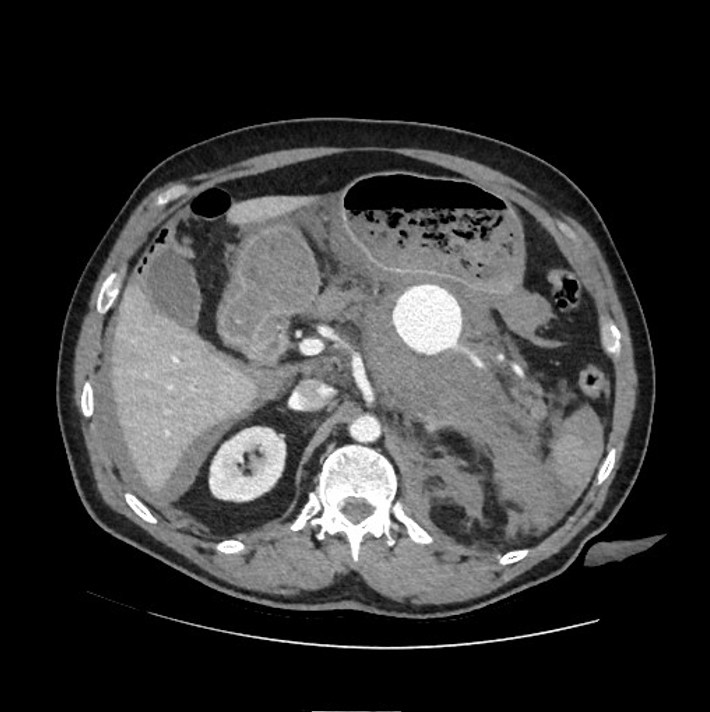
Figure 2 : CT scan of the abdomen; delayed phase
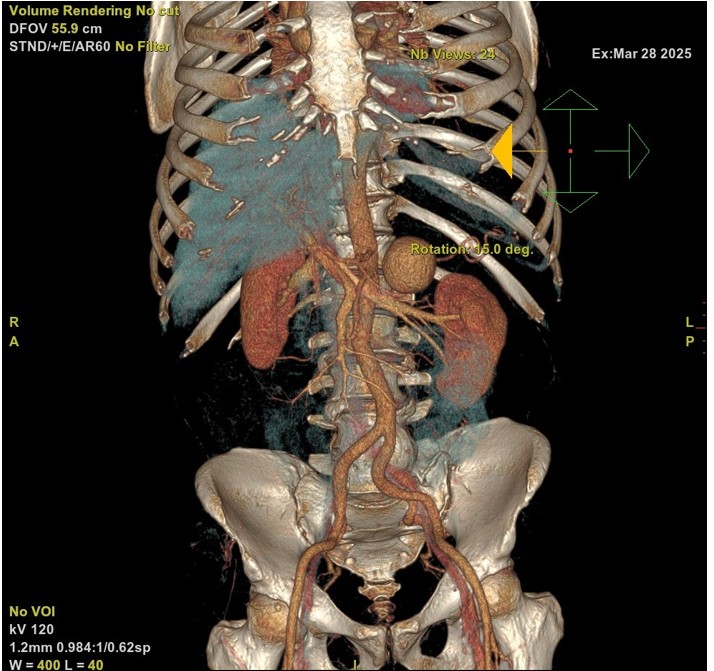
Figure 3 :CT scan of the abdomen; 3D image
Endovascular procedure: Under local anaesthesia, the procedure was performed via right common femoral artery access. Following catheterization of the celiac trunk, a 7F, 55 mm-long sheath (Cook Flexor, Cook Medical, Bloomington, IN) was positioned in the splenic artery over a 0,035 inch guidewire (Rosen, Cook Medical). A selective angiography confirmed the aneurysm of the mid-portion of the splenic artery (Figure 4A). The distal portion of the splenic artery was reached using a 5F diagnostic catheter (Sim, Cook Medical) and a 2,8F microcatheter (Rebar, Medtronic, Minneapolis, MN) in a coaxial fashion and embolized by releasing two 8 mm detachable coils (Penumbra Occlusion Device, Penumbra Inc., Alameda, CA). Subsequently, two vascular plugs (Amplatzer Vascular Plug 14 mm, Abbott, Chicago, IL) were deployed applying an oversizing of approximately 40% (Figure 4B). Post-embolization angiography showed the complete exclusion of the aneurysm (Figure 4C). Vascular access hemostasis was achieved using a closure device (Femoseal, Terumo, Tokyo, Japan). The patient recovered well and was discharged home on the 6th post-procedure day.

Figure 4a: Selective arteriography of the aneurysm
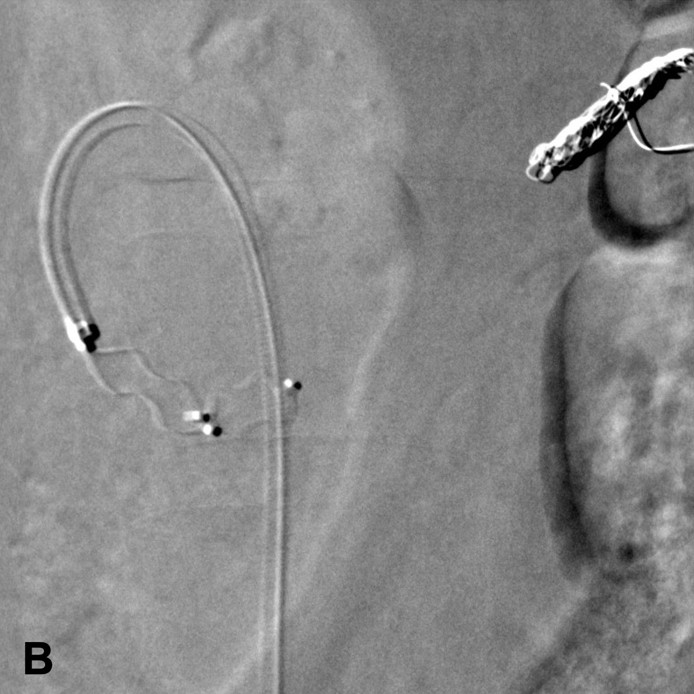
Figure 4b :Aneurysm exclusion by deployment of detachable coils in the distal splenic artery and two vascular plugs in the proximal splenic artery
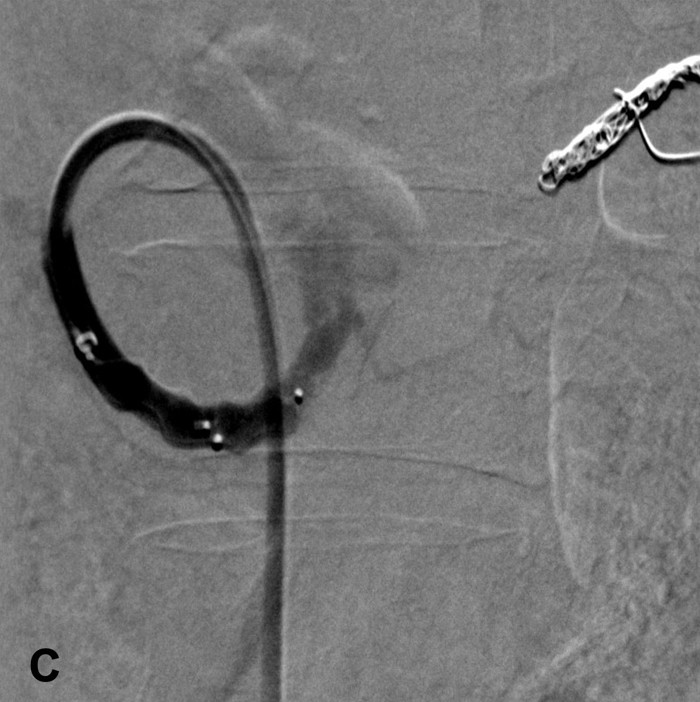
Figure 4c : Final angiography shows the complete exclusion of the aneurysm
Epidemiology and Risk Factors: The autoptic incidence of SAAs ranges from 0,01% to 0,2% in large series. [2] SAAs occur four times more frequently in women and show a predilection for multiparity, portal hypertension, cirrhosis, and connective‑tissue disease. [1] Additional risk factors include hypertension, atherosclerosis, pancreatitis, and medial fibrodysplasia. Spontaneous rupture arises in 2–10 % of all diagnosed SAAs, but the probability increases sharply for diameters > 2 cm, during pregnancy, and in liver‑transplant candidates. [1, 3] Maternal mortality reaches 70 %, with fetal loss up to 95 %. [4]
Pathophysiology: True SAAs involve all arterial wall layers, whereas pseudo‑aneurysms result from partial wall disruption with haematoma containment. Pregnancy-related hormonal and haemodynamic changes — particularly during the third trimester — promote medial degeneration and elastic‑tissue fragmentation. High splenic‑artery tortuosity further amplifies shear stress. Most SAAs (74-87%) are located in the distal segment of the splenic artery. Up to 21 % of r‑SAAs exhibit the “double‑rupture phenomenon”: initial bleeding confined to the lesser sac is transiently tamponaded, followed hours later by free intraperitoneal rupture and circulatory collapse. [1]
Clinical Presentation: Approximately 80 % of unruptured SAAs are asymptomatic. Rupture classically presents with acute epigastric or left‑upper‑quadrant pain, Kehr’s sign, nausea, and features of haemorrhagic shock. In double rupture, an initial pain episode may partially resolve, misleading clinicians until a secondary deterioration occurs 6–96 h later. [1]
Diagnostic Evaluation: In the following table the role and the limitations of common diagnostic exams are described:

Laboratory findings are non‑specific and reflect acute blood loss.
Management
Initial Resuscitation: Resuscitative priorities mirror other exsanguinating intra‑abdominal bleeds: airway protection, massive transfusion, permissive hypotension until definitive haemorrhage control, and early activation of vascular, interventional radiology, and obstetric (if the patient is pregnant) teams. Haemostasis has to be warranted – if needed – with antidotes to reverse anticoagulation, platelets transfusions, antifibrinolytic drugs, coagulation factors.
Definitive Treatment: Open surgical repair (OSR). Emergency laparotomy with proximal and distal ligation ± splenectomy remains the procedure of choice for unstable patients, pregnant women, or aneurysms at the splenic hilum. OSR achieves rapid haemorrhage control but carries peri‑operative mortality of 13 %, and has lower re‑intervention rates than endovascular therapy. [5]
Endovascular therapy (EVT): Techniques include coil or plug embolisation, covered‑stent exclusion, and glue embolics. Technical success approaches 98 %, with peri‑operative mortality 7–10 %. [5, 6] EVT affords shorter hospital stay and splenic preservation but necessitates post‑procedure imaging due to a 22 % re‑intervention rate in r‑SAA. [6]
Comparative outcomes: A systematic review of 350 r‑SAA cases found no significant mortality difference between OSR and EVT (12.9 % vs 7.8 %, p = 0.84). [5] An earlier multi‑centre cohort likewise reported equivalent survival but higher morbidity for open repair. [7]
Special Situations Pregnancy: Any symptomatic SAA or lesion > 2 cm warrants prophylactic repair; most authorities recommend open splenectomy because EVT exposes the fetus to radiation and contrast medium. [3, 4]
Portal‑hypertensive patients: Concomitant liver disease increases rupture risk; pre‑transplant repair — preferably endovascular — is strongly advised.
Prognosis and Follow‑up: Overall mortality after spontaneous rupture ranges from 10 % to 25 % in non‑pregnant adults and up to 70 % during gestation. [3] Predictors of death include haemodynamic instability, delay to definitive control, and underlying coagulopathy. Post‑EVT imaging (CT or Doppler ultrasound) at 1, 6, and 12 months is recommended to detect recanalisation or new pseudoaneurysm formation. Long‑term splenectomy patients require vaccination against encapsulated bacteria (Streptococcus pneumoniae, Haemophilus influenzae, and Neisseria meningitidis).
Future Directions: Prospective registries and standardised reporting of clinical variables are needed to refine risk stratification and treatment algorithms. Development of low‑profile covered stents and robotic‑assisted splenic‑preserving surgery may broaden minimally‑invasive options.