
Unconventional Removal of Dermoid Cyst Contents Using Dental Tools: A Case Report
Emily R. Pynn1*, Laura Power2
¹Northern Ontario School of Medicine University, Thunder Bay, Ontario, Canada
²Department of Obstetrics and Gynecology, Thunder Bay Regional Health Sciences Centre, Thunder Bay, ON
*Corresponding author
Emily R. Pynn, Northern Ontario School of Medicine University, Thunder Bay, Ontario, Canada
E-mail: epynn@nosm.ca
DOI: 10.55920/JCRMHS.2025.12.001513
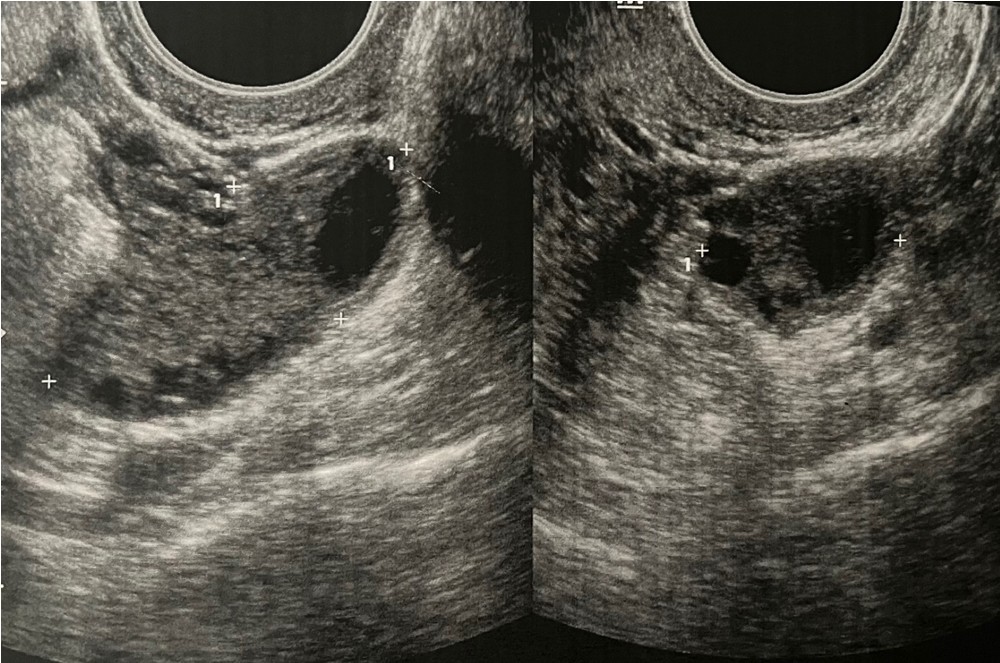
Figure 1A: Ultrasound image demonstrating normal anatomy.
A subsequent ultrasound demonstrated the cyst had grown to 93 × 50 × 88 mm, with internal vascularity (color score 2) and a hyperechoic, heterogeneous solid area consistent with a dermoid cyst. Serum β-hCG was negative.

Figure 1B: : Ultrasound of dermoid cyst showing echogenic nodules and shadowing
The size and features of the cyst, along with the patient's ongoing suffering, led to a referral for a laparoscopic right ovarian cystectomy.
Surgical Procedure: A 1 cm umbilical incision was made to gain laparoscopic access while the patient was in the lithotomy posture. A 12 mm laparoscopic port was used. Three more 5 mm ports were positioned in the suprapubic area, LLQ, and RLQ. The following conclusions were observed:
- A right ovarian dermoid cyst that has four calcified teeth (three small and one large), hair, and sebaceous material
- Endometriosis affecting the uterosacral ligament and the right sidewall of the pelvis.
- A small cyst on the left ovary and normal fallopian tubes.
The cyst was elevated from the pelvis using Trendelenburg positioning. A 1 cm incision was made on the ovarian serosa using laparoscopic scissors with monopolar cautery. The cyst capsule was carefully peeled away using retraction and blunt dissection. The dermoid cyst was placed in an endoscopic retrieval bag, but its calcified contents prevented morcellation, complicating its removal through the umbilical port.
Innovative Approach: To address the challenge of removing the oversized teeth, the surgical team opted to use dental forceps—a tool designed for precision handling of calcified structures. While rarely employed in laparoscopic surgery, dental forceps were chosen for their fine, calibrated design, allowing for the controlled extraction of the cyst’s hardened contents without requiring a larger incision. Despite the unconventional nature of the tool, its fine design allowed for precise manipulation, minimizing damage to surrounding ovarian tissue.
The specimen was placed in a laparoscopic bag through the 12 mm port. The port was removed, and the bag was pulled through the incision. The soft tissue was easily extracted but the bony structures were difficult to remove. Initially, kohker clamps were used to try to grasp the teeth and either morcellate them or removed them. This proved difficult as the teeth were too hard to morcellate and would slip through the clamps if they encountered resistance at the umbilical incision. Ring forceps were also used to grasp the teeth but again they could not successfully grasp the teeth, one of which was very large. It became clear that specialized extraction forceps were required, and a dental tray was opened (Figure 2). Using dental forceps, the teeth were successfully grasped, and 4 teeth were extracted (Figure 3). The controlled maneuvering of the forceps allowed the teeth to be extracted through the 1 cm incision without the need to extend it. The fascial incision was subsequently closed with 0 Vicryl sutures.

Figure 2: 76S Upper Roots Serrated Extraction Forceps used to extract the teeth from the ovarian dermoid cyst.
Figure 3: Extracted teeth from the ovarian dermoid cyst. The scale emphasizes their size and illustrates the technical challenge of removal.
Postoperative Course: The patient experienced mild swelling near the umbilicus postoperatively, which resolved without intervention. Pathological examination confirmed a mature cystic teratoma containing sebaceous material, hair, and four calcified teeth. Follow-up at six weeks revealed complete symptom resolution and no complications.