
A Case of Melioidosis: Still Unresolved and Undetected in Unexplored Regions
Saika Farook1; Farhan Muhib2; Mir Sajedul Karim3; Md. Shariful Alam Jilani4
¹Department of Microbiology, Ibrahim Medical College, Dhaka, Bangladesh.
²Department of Microbiology, Ibrahim Medical College, Dhaka, Bangladesh.
³Department of Microbiology, Ibrahim Medical College, Dhaka, Bangladesh; and Department of Microbiology, Popular Diagnostic Center Ltd, Dhaka, Bangladesh.
⁴Department of Microbiology, Ibrahim Medical College, Dhaka, Bangladesh.
*Corresponding author
Saika Farook MBBS, MD (Microbiology) Assistant Professor Department of Microbiology, Ibrahim Medical College, Dhaka, Bangladesh.
DOI: 10.55920/JCRMHS.2025.10.001457
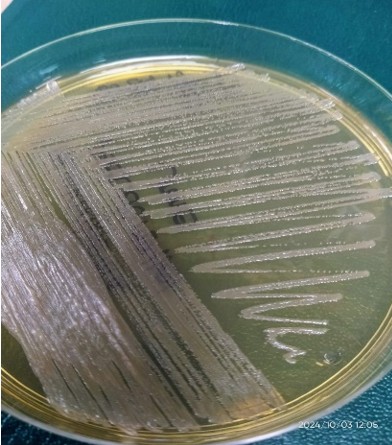
Figure 1: Colony of B. pseudomallei in MacConkey agar media following 24 hours of incubation at 37OC.
However, his symptoms did not improve and about a month later once again he reported to the clinic with similar clinical features. This time his random blood sugar (RBS) was found 8.07 mmol/L, C-reactive protein (CRP) 129.01 mg/L, and Widal test once again revealed antibodies within normal range. The second urine report revealed clear urine with pus cells reduced to 0-1/ HPF and epithelial cells also reduced to 1-2/ HPF. Culture of the urine yielded growth of mauve colored gram negative bacilli in MacConkey agar media (Figure-1), that were motile, oxidase positive, citrate negative and non-fermenter of lactose, glucose and sucrose. The isolate was sensitive to ceftazidime, meropenem, amoxicillin+clavulanic acid, piperacillin+tazobactum and doxycycline, while resistant to ciprofloxacin, aminoglycosides, trimethoprim- sulphamethoxazole (TMP-SMX) and colistin. What makes this case reportable is that the culture plate was almost discarded, considering the organism to be laboratory contaminant because of inexperience and lack of knowledge regarding this particular deadly bacteria. Very fortunately, a microbiologist trained and experienced on the laboratory detection of B. pseudomallei, from Dhaka city was present during that time in the said clinic on Naogaon district to conduct a training, who suspected the organism to be B. pseudomallei owing to the colony morphology, biochemical findings and antimicrobial sensitivity pattern. The culture plate was immediately sent to K A Monsur Research Laboratory in the Department of Microbiology of Ibrahim Medical college, Dhaka, maintaining adequate safety precautions.
Table 1: Laboratory investigations of the patient.

*Note: ESR (Erythrocyte sedimentation rate); WBC (white blood cell); RBS (Random blood sugar); CRP (Creactive protein); RBC (Red blood cell)
*The antibiotic amoxicillin+clavulinic acid sensitivity is not provided by VITEK system. It was found sensitive by disc diffusion method.
The isolate was confirmed to be B. pseudomallei by monoclonal antibody based latex agglutination test for B. pseudomallei (Melioidosis Research Center, Khon Kaen, Thailand), VITEK 2 system and Polymerase Chain Reaction (PCR). As the patient resided in a remote area of the country other supportive investigations such as computed tomography of the chest, or radiological imaging of the lower abdomen were not conducted for exclusion of any deep seated abscess. The patient’s physician in Rajshahi Medical College was consulted about the appropriate management of melioidosis. However, perhaps due to miscommunication or a lack of understanding, he was prescribed with oral tetracycline just for a week. Initially, his symptoms subsided but about a month later in the early weeks of November, the patient reported to Ibrahim Medical College in Dhaka with high grade feveronce again. Finally, his antimicrobial regimen began in intensive phase.