Assessing the potential of microRNAs in the diagnostic landscape of Rheumatoid Arthritis: A Diagnostic Test Accuracy Meta-Analysis

Atta Ullah Khan¹*, Maria Ali2, Sara Iftikhar3, Khadija Afzal3, Umme Habiba3

¹Saint Petersburg Research Institute of Ear, Throat, Nose and Speech, 9 Bronnitskaya St., St. Petersburg, 190013, Russia
²Saint Petersburg State University, 8A, 21st Line Vasilyevsky Island, St. Petersburg, 199106, Russia

*Corresponding author

Atta Ullah Khan, Department of Precision Medicine, University of Campania “Luigi Vanvitelli”, 80138 Naples, Italy

Abstract

Circulating microRNAs (miRNAs) have garnered substantial interest as minimally invasive diagnostic biomarkers for rheumatoid arthritis (RA). This meta-analysis aimed to systematically appraise the diagnostic performance of circulating miRNAs in the detection of RA. A diagnostic test accuracy (DTA) meta-analysis was conducted, synthesizing data from 20 eligible studies evaluating circulating miRNAs as diagnostic tools for RA. Pooled estimates for sensitivity, specificity, diagnostic odds ratio (DOR), positive likelihood ratio (PLR), and negative likelihood ratio (NLR) were derived using a random-effects model. Subgroup analyses stratified by specimen type (serum, plasma, PBMCs, and whole blood) were undertaken to explore heterogeneity. Sensitivity analyses and Deeks’ funnel plot asymmetry test were performed to assess the robustness of findings and potential publication bias. The pooled sensitivity and specificity were 0.840 (95% CI: 0.797–0.875) and 0.874 (95% CI: 0.829–0.908), respectively. The aggregated DOR was 40.987 (95% CI: 24.030–69.910), indicating strong discriminative capacity. The pooled PLR was 6.360 (95% CI: 4.761–8.497) and NLR was 0.177 (95% CI: 0.133–0.234). Subgroup analyses revealed superior diagnostic accuracy for serum-derived miRNAs. Although sensitivity analyses demonstrated consistent results, Deeks’ test suggested the presence of publication bias. Circulating miRNAs exhibit compelling diagnostic potential for RA, particularly those isolated from serum specimens. Despite favorable diagnostic metrics, heterogeneity and evidence of small-study effects necessitate further standardization and prospective validation prior to clinical integration.

Keywords: Rheumatoid Arthritis, Autoimmunity, miRNAs, Biomarkers, Inflammation

Introduction

Rheumatoid arthritis (RA) is a chronic, systemic autoimmune disease that causes persistent synovial inflammation and eventually leads to joint destruction, functional disability, and impaired quality of life(1). RA affects 0.5%–1% of the world population(2,3) and represents a substantial socioeconomic burden because of disability and healthcare costs in the long term. RA pathogenesis is multifactorial; genetic susceptibility loci, environmental insults, and immune-mediated dysregulation converge to drive synovial inflammation and joint degeneration(4,5). Although therapeutic strategies have expanded in recent years, early diagnosis continues to be a key hurdle, as the disease frequently progresses insidiously prior to the development of overt clinical symptoms(6).

Early and accurate diagnosis of RA is crucial since initiation of disease-modifying antirheumatic drugs (DMARDs) at early stages has been associated with better clinical outcomes, such as preventing irreversible damage of the joints and improving quality of life(7). At present, diagnosis of RA remains dependent largely on clinical assessment, imaging techniques, and serological markers including rheumatoid factor (RF) and anti-citrullinated protein antibodies (ACPAs)(8,9). While such biomarkers have greatly enhanced our ability to diagnose and characterize disease, they also contain limitations. RF, for example, is nonspecific, as it may be positive in many other autoimmune diseases and also in healthy individuals(10,11). Although ACPAs are associated with high specificity, they are not 100% sensitive(12), resulting in a minority of patients remaining undiagnosed in the initial evolutionary stage of RA. These limitations highlight an urgent clinical need for more sensitive and specific diagnostic markers that enable the early systematic detection of patients and optimize disease management(13).

MicroRNAs (miRNAs) have evolved as encouraging candidates for new diagnostic biomarkers in recent years. MiRNAs are small, non-coding RNA molecules (about 18–25 nucleotides long), and involved in post-transcriptional gene regulation by binding to complementary sequences on target mRNAs, resulting in either mRNA degradation or translational repression(14). Cell differentiation, proliferation, apoptosis, immune regulation, and other bioprocesses are modified by miRNAs, which are closely related to RA pathogenesis(15). Notably, in bodily fluids such as serum, plasma and synovial fluid miRNAs display great stability, rendering them attractive non-invasive biomarkers for disease detection and monitoring.

Several miRNAs were found to be differentially expressed in RA patients versus healthy controls in several studies and have potential diagnostic application. In RA patients, miR-146a, miR-155, and miR-21 have been found to be increased and correlated with both disease activity and inflammatory markers(16–18). In contrast, others, miRNA124a and miRNA34a are identified to be downregulated in some misregulations of immune response disorders(19,20). These results demonstrate the complex regulatory networks that miRNAs mediate throughout the pathogenesis of RA, and further support the potential use of miRNAs as diagnostic biomarkers for RA.

Despite the increasing amount of literature, the diagnostic performance of individual miRNAs depends on study design, sample sizes, patient populations and miRNA detection techniques, which may partially explain differences in results between studies on a single miRNA. A few studies have shown high sensitivity and specificity while some have reported modest or inconsistent findings. This heterogeneity constitutes a major impediment to the clinical translation of miRNA biomarkers and requires thorough assessment of the published literature.

Difference in performance between such studies can be addressed by performing a meta-analysis to summarize the data and also provide a more accurate evaluation of miRNAs diagnostic performance in RA. A meta-analysis can aggregate data from different studies and estimate the overall sensitivity, specificity, diagnostic odds ratios, and area under the receiver operating characteristic (ROC) curve, which would provide more insight into the real potential of the use of miRNAs as diagnostic biomarkers. In addition, subgroup analyses based upon sample type (serum, plasma, synovial fluid), miRNA profiling methodologies (qRT-PCR, microarray, next-generation sequencing) and cohort characteristics may also identify sources of heterogeneity and inform future investigations.

As the first meta-analysis, this study sought to investigate the diagnostic accuracy of miRNAs as biomarkers for RA in a systematic way. The current meta-analysis aims to integrate evidence from diverse studies and address the overall diagnostic performance of miRNAs for distinguishing RA patients from healthy persons, specific miRNAs with the highest potential for diagnosing RA, and the possible sources of heterogeneity that may influence diagnostic accuracy. Therefore, this meta-analysis seeks to provide insightful information on the clinical potential of miRNAs as noninvasive diagnostic biomarkers in the early diagnosis and effective management of RA.

Methods

Study Design and Data extraction: This systematic review and diagnostic test accuracy (DTA) meta-analysis follows the Preferred Reporting Items for Systematic Reviews and Meta-Analyses of Diagnostic Test Accuracy Studies (PRISMA-DTA) guidelines(21). The review protocol was developed a priori and follows established methodological recommendations for the conduction of diagnostic tests accuracy (DTA) reviews.

Search Strategy: A systematic literature search was performed from inception until 15/2/25. Databases searched included PubMed/MEDLINE, Embase and Web of Science. The search included controlled vocabulary combinations as well as free text with terms related to “microRNA” (or “miRNA”), “rheumatoid arthritis” and “diagnosis” (or “biomarker”). The complete search strategy for each database is shown in (Supplementary Table 1). Also, reference lists of included studies and relevant reviews were checked manually for additional eligible articles.

Study Selection: Two reviewers, (MA and MAW), screened all retrieved citations independently in two phases (title /abstract screening and full-text review). Disputes were resolved by discussion or by consulting a third reviewer.

Eligibility Criteria: Observational diagnostic accuracy studies about adults diagnosed with rheumatoid arthritis according to recognized classification criteria (ACR/EULAR), Circulating miRNAs (individual or panel) quantified in serum, plasma, or whole blood through any molecular detection technique (qRT-PCR) and Clinical diagnosis in accordance with specified RA classification criteria with non-RA patients or healthy controls. Studies must report or permit calculation of diagnostic accuracy data (true positives, false positives, true negatives, false negatives). Excluded studies were case reports, review articles, animal studies, studies without a control group or without sufficient data for 2×2 contingency table.

Data Extraction: Two reviewers independently extracted data using a standardized form. Data was reported as follows Characteristics of studies (author, year, country), Patient demographic characteristics (number of patients, age, sex, disease duration), Characteristics of index tests (miRNA type, detection method, sample type), Comparator characteristics, Reference standard used and data on diagnostic accuracy (TP, FP, TN, FN) (Supplementary Table 2).

Quality Assessment: The methodological quality and applicability of the included studies were assessed using the QUADAS-2(22) tool considering four domains: (1) patient selection; (2) index test; (3) reference standard; and (4) flow and timing. Two reviewers conducted the assessments in duplicate, with differences resolved by consensus. Results were visualized by means of the RevMan 5.4.

Statistical Analysis: Diagnostic accuracy estimates were pooled with a bivariate random-effects model (BRM), including estimates of sensitivity, specificity, positive likelihood ratio (PLR), negative likelihood ratio (NLR), and diagnostic odds ratio (DOR). A summary receiver operating characteristic (sROC) curve will be obtained. Heterogeneity was evaluated using the I² statistic and explored via subgroup analyses. If enough data were available, a meta-regression analysis was performed. Deeks’ funnel plot asymmetry test was applied to evaluate for potential publication bias. All analyses were performed using OpenMetaAnalyst (open-source, cross-platform software for advanced meta-analysis) and R version 4.4.1.

Results

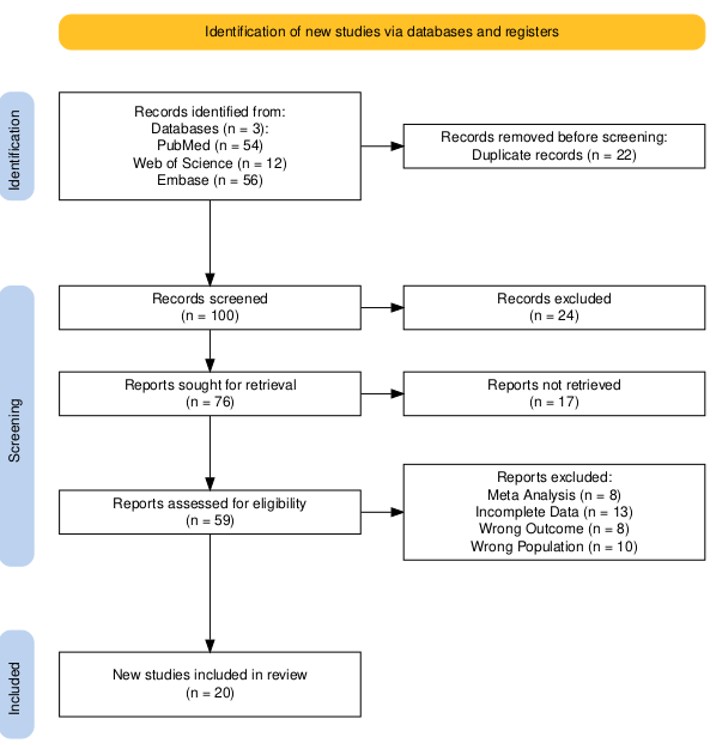
Study Selection and Quality Assessment: In this systematic review and meta-analysis, 20 studies were retrieved(23–42), with 3,115 participants, (1,571) rheumatoid arthritis patients and (1,544) controls. There was substantial variability in sample sizes across studies, with group sizes ranging from as few as 5 to as many as 306 participants. Diagnostic performance of the included studies exhibited significant variability with sensitivities (53.90% to 100%), specificities (41.75% to 100%) and the area under the receiver operating characteristic curve (AUC) (0.607 to 0.9958) indicating considerable heterogeneity regarding the detection of circulating microRNAs (miRNAs) (Supplementary Table 3). The study selection and screening processes followed Preferred Reporting Items for Systematic Reviews and Meta-Analyses of Diagnostic Test Accuracy Studies (PRISMA-DTA) guidelines and are visually summarized in the PRISMA flow diagram (Figure 1).

The methodological quality and applicability were assessed by using the QUADAS-2 tool as seen in (Figure 2). The patient selection domain had the highest risk of bias, as 95% of studies were rated as high-risk, mostly due to either being case-control designs, or not properly reporting how patients were recruited. Of these, 60% of studies were classified as unclear risk in relation to the index test domain, owing to insufficient reporting of blinding or pre-defined thresholds. In contrast, the reference standard domain was mostly at low risk of bias (75%) or unclear risk (25%) owing to lack of detail about reference standard implementation. The flow and timing domain was assessed with low bias (85%) suggesting appropriate management of participants and minimal attrition.

Across domains, applicability concerns were low. Minor concerns (5%) were identified in patient selection, due to either restrictive inclusion/exclusion criteria or insufficient characterization of participants. Now, although the methodological quality was not uniform, the absolute number of included studies was somewhat limited given the focused nature of the research topic, and the overall summary of evidence combined to yield strong evidence supporting the potential application of circulating miRNAs in the diagnosis of rheumatoid arthritis.

Figure 1: PRISMA Flow Chart for Search Strategy 
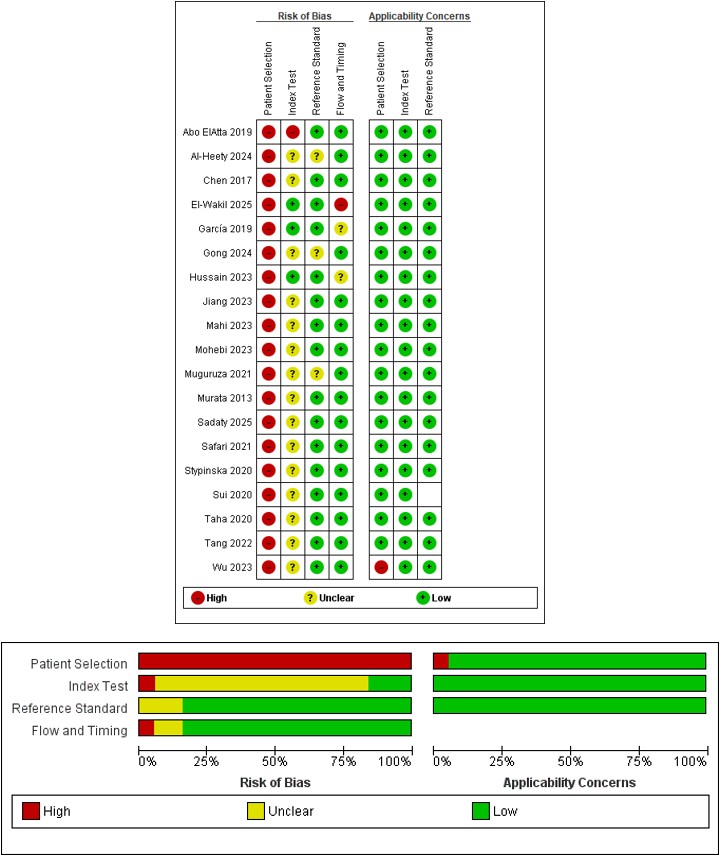
Figure 2: Quality Assessment of Studies

Figure 3: Negative likelihood ratio (NLR) and Positive likelihood ratio (PLR)
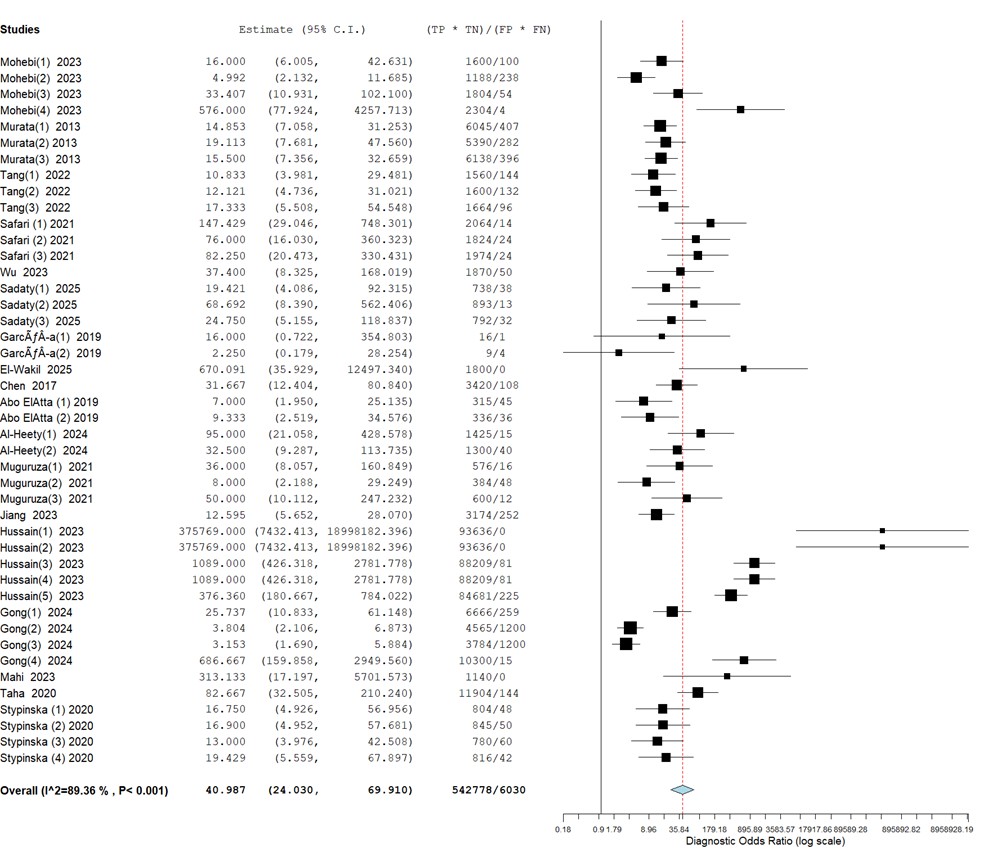
Figure 4: Diagnostic odds ratio (DOR)

Figure 5: Summary receiver operating characteristic curve (sROC) participants and minimal attrition.

Diagnostic accuracy of miRNAs for rheumatoid arthritis: Meta-analysis was performed to evaluate the diagnostic value of miRNAs as RA biomarkers in the eligible studies. Pooled Negative Likelihood Ratios (NLR), Positive Likelihood Ratios (PLR), and Diagnostic Odds Ratios (DOR) are shown as forest plots (Figure 3 and Figure 4) (Supplementary Table 4). The pooled negative likelihood ratio was 0.177 (95% CI: 0.133–0.234) and the pooled positive likelihood ratio was 6.360 (95% CI: 4.761–8.497), indicating moderate diagnostic accuracy. In addition, a pooled diagnostic odds ratio of 40.987 (95% CI: 24.030–69.910) was observed, confirming a high discriminative ability of circulating miRNAs for differentiating RA patients from the controls. The area under the sROC curve showed overall diagnostic performance, and the sROC curve was situated in the upper-left quadrant (specifying good diagnostic performance of miRNAs for the diagnosis of RA) (Figure 5).

Heterogeneity and subgroup analysis: Substantial heterogeneity was observed among studies examined in this meta-analysis. To seek potential sources of heterogeneity, subgroup analysis by sample source (plasma, blood, PBMCs and serum) were conducted. Subgroup analysis showed differences among sources, where the highest pooled sensitivity among sources was 0.886 (95% CI: 0.833–0.924, I² = 85.33%) for serum-derived miRNAs, followed by PBMCs 0.822 (95% CI: 0.731–0.887, I² = 41.67%), plasma 0.795 (95% CI: 0.716–0.857, I² = 83.67%) and blood 0.716 (95% CI: 0.659–0.767, I² = 0%)​  In terms of specificity, serum also exhibits the highest pooled specificity of 0.897 (95% CI: 0.823–0.942, I² = 93.85%), followed by blood samples with 0.889 (95% CI: 0.796–0.943, I² = 10.39%), plasma with 0.846 (95% CI: 0.798–0.885, I² = 60.7%), and PBMCs at 0.807 (95% CI: 0.657–0.902, I² = 54.9%)​. Pooled NLR and PLR also differed between subgroups. As demonstrated in (Supplementary Figure 1a - 1c) and summarized in (Supplementary Table 5) ​, serum miRNAs yielded the lowest NLR of 0.136 (95% CI: 0.088–0.210, I² = 92.76%), and highest PLR of 8.191 (95% CI: 5.054–13.275, I² = 94.28%), superior to any other source (plasma, blood, and PBMCs). DOR analysis revealed high heterogeneity across sources, with serum miRNAs displaying the highest pooled DOR of 78.399 (95% CI: 29.474–208.539, I² = 94.1%) followed by plasma, blood, and PBMC-derived miRNAs​. In summary, results of the subgroup analyses revealed that serum-derived miRNAs demonstrated consistently better diagnostic performance compared with other types of samples, while heterogeneity was high. Since diagnostic accuracy is impacted by miRNA source, this should be carefully considered when translating the assay to clinical practice.

Sensitivity analysis and publication bias: Diagnostic accuracy results were subjected to sensitivity analysis to test their robustness. In the leave-one-out analysis, the diagnostic accuracy of pooled DOR was not materially influenced by any single study indicating the stability of the results of this meta-analysis (Supplementary Figure 2). Publication bias was assessed by using Deeks’ funnel plot asymmetry test. The funnel plot showed some asymmetry, which suggested possible publication bias or small-study effects (Supplementary Figure 3). Therefore, results should be interpreted with caution owing to the potential biases associated with smaller studies.

Discussion

This comprehensive diagnostic test accuracy (DTA) meta-analysis aimed to systematically evaluate the diagnostic utility of circulating microRNAs (miRNAs) as potential biomarkers for rheumatoid arthritis. Our pooled analyses according to various diagnostic indices including sensitivity, specificity, diagnostic odds ratio (DOR) and likelihood ratios highlight the ability of circulating miRNAs to accurately discriminate RA patients from controls and substantiate the potential role of circulating miRNAs as a non-invasive diagnostic biomarker for RA diagnosis.

In general, all miRNAs showed high diagnostic accuracy with pooled sensitivity and specificity of 0.840 (95%CI: 0.797–0.875) and 0.874 (95%CI: 0.829–0.908), respectively. They represent clinically significant ability in RA differentiation from controls. Furthermore, the pooled positive likelihood ratio (PLR, 6.360; 95% CI:4.761–8.497) and negative likelihood ratio (NLR, 0.177; 95% CI:0.133–0.234) calculations also provided supporting evidence that circulating miRNAs might contribute to the post-test probability of RA diagnosis and are likely to strengthen the diagnostic process. A subgroup analysis was carried out based on miRNA source (serum, plasma, PBMCs, and whole blood) which offered key insights into the heterogeneity noted amongst studies. The analysis showed that serum-derived miRNAs had the best diagnostic capacity, with the highest sensitivity (0.886), specificity (0.897), PLR (8.191) and DOR (78.399). These findings are consistent with previous literature highlighting serum as a more stable biofluid for miRNA detection (lower rates of cellular contaminants and more stable miRNA expression profiles). Considerable heterogeneity persisted even after subgroup stratification, especially in serum and plasma derived miRNA subgroups, suggesting possible methodological differences, variability in clinical indications, or diversity of analytical methods employed among studies.

A leave-one-out sensitivity analysis demonstrated the robustness of the pooled estimates with no single study significantly affecting overall findings. However, the Deeks’ funnel plot indicating publication bias showed substantial asymmetry, suggestive for small-study effects or preferential publication of positive results. Such publication bias highlights the need for careful interpretation of pooled diagnostic estimates and brings the need for standardized, methodologically rigorous studies to validate these findings.

There were significant variations in methodology between included studies that require consideration; specifically, differences in miRNA quantification methods, selection of patients, disease severity, and treatment status likely contributed to the observed heterogeneity. For future clinical translation, it will be important to standardise pre-analytical (e.g., sample collection and processing) and analytical approaches. Moreover, the identification of miRNA signatures or finder panels would allow for higher diagnostic accuracy and help with clinical implementation.

With our meta-analysis, we contribute to the literature by (i) systematically pooling heterogeneous data and (ii) thoroughly investigating the clinical applicability of circulating miRNAs. However, some limitations are to be noted. First, the underlying methodological heterogeneity across studies may affect the generalizability of outcomes. Second, publication bias may have increased the apparent diagnostic accuracy. Finally, the absence of common cut-off values for the quantification methods of miRNAs makes learning these widely clinically applicable thresholds even more difficult and thus the requirement for agreement on defined miRNA diagnostic values

Conclusion

In summary, this diagnostic test accuracy meta-analysis provides strong evidence in support of circulating miRNAs as non-invasive biomarkers for the diagnosis of rheumatoid arthritis. Circulating miRNAs have shown a high diagnostic accuracy, and serum-derived miRNAs showed a better performance compared to other sources of miRNAs. However, wide heterogeneity and publication bias still highlight the needs for further verification in large prospectively designed and standardized studies before clinical application. In the long run, standardized protocols and clearly defined diagnostic thresholds for circulating miRNAs will foster the use of their integration into routine clinical practice, addition of new knowledge, and ultimately lead to improved detection and management strategies for early onset RA.

Acknowledgements The authors thank management of the Vellore Institute of Technology for providing ’VIT SEED GRANT(RGEMS)- Sanctioned order NO: SG20240122 for carrying out this work.

Author contributions Atta Ullah Khan: Conceptualization, Methodology, Writing-Original draft preparation Maria Ali: Writing- Original draft preparation Khadija Afzal, Sara Iftikhar and Umme Habiba: Editing and Formatting Maria Ali: Provided overall guidance and supervision.

Funding No specific funding was received from any source (government, industry, or non-profit).

Data availability No datasets were generated or analysed during the current study.

Declarations

Ethical approval and consent Not applicable to this study.

Competing interests The authors declare no competing interests.

References

  1. Smolen JS, Aletaha D, McInnes IB (2016). Rheumatoid arthritis. The Lancet. Oct 22; 388(10055): 2023–38.
  2. Alamanos Y, Drosos AA (2005). Epidemiology of adult rheumatoid arthritis. Autoimmun Rev 4(3): 130–6.
  3. McInnes IB, Schett G (2011). The Pathogenesis of Rheumatoid Arthritis. New England Journal of Medicine. Dec 8; 365(23): 2205–19.
  4. Deane KD, Demoruelle MK, Kelmenson LB, Kuhn KA, Norris JM, et al. (2017). Genetic and environmental risk factors for rheumatoid arthritis. Best Pract Res Clin Rheumatol. Feb 1; 31(1): 3.
  5. Aletaha D, Smolen JS (2018). Diagnosis and Management of Rheumatoid Arthritis: A Review. JAMA. Oct 2; 320(13): 1360–72.
  6. Fraenkel L, Bathon JM, England BR, St.Clair EW, Arayssi T, et al (2021). 2021 American College of Rheumatology Guideline for the Treatment of Rheumatoid Arthritis. Arthritis and Rheumatology. Jul 1; 73(7): 1108–23.
  7. Cunningham KY, Hur B, Gupta VK, Arment CA, Wright KA, et al (2023). Patients with ACPA-positive and ACPA-negative rheumatoid arthritis show different serological autoantibody repertoires and autoantibody associations with disease activity. Scientific Reports 2023 13: 1. Apr 1; 13(1): 1–14.
  8. Li K, Wang M, Zhao L, Liu Y, Zhang X (2022). ACPA-negative rheumatoid arthritis: From immune mechanisms to clinical translation. EBioMedicine. Sep 1; 83: 104233.
  9. Wu CY, Yang HY, Luo SF, Lai JH (2021). From Rheumatoid Factor to Anti-Citrullinated Protein Antibodies and Anti-Carbamylated Protein Antibodies for Diagnosis and Prognosis Prediction in Patients with Rheumatoid Arthritis. Int J Mol Sci. Jan 12; 22(2): 686.
  10. Motta F, Bizzaro N, Giavarina D, Franceschini F, Infantino M, et al (2023). Rheumatoid factor isotypes in rheumatoid arthritis diagnosis and prognosis: a systematic review and meta-analysis. RMD Open. Aug 4; 9(3): e002817.
  11. van Delft MAM, Huizinga TWJ (2020). An overview of autoantibodies in rheumatoid arthritis. J Autoimmun. Jun 1; 110: 102392.
  12. Abdelhafiz D, Baker T, Glascow DA, Abdelhafiz A (2023). Biomarkers for the diagnosis and treatment of rheumatoid arthritis – a systematic review. Postgrad Med. Apr; 135(3): 214–23.
  13. Bartel DP (2018). Metazoan MicroRNAs. Cell. Mar 22; 173(1): 20.
  14. O’Connell RM, Rao DS, Baltimore D (2012). MicroRNA regulation of inflammatory responses. Annu Rev Immunol. Apr 23; 30(Volume 30, 2012): 295–312.
  15. Pauley KM, Satoh M, Chan AL, Bubb MR, Reeves WH, (2008). Upregulated miR-146a expression in peripheral blood mononuclear cells from rheumatoid arthritis patients. Arthritis Res Ther. Aug 29; 10(4): R101.
  16. Nakasa T, Miyaki S, Okubo A, Hashimoto M, Nishida K, et al (2008). Expression of MicroRNA-146 in Rheumatoid Arthritis Synovial Tissue. Arthritis Rheum. May; 58(5): 1284.
  17. Stanczyk J, Leslie Pedrioli DM, Brentano F, Sanchez-Pernaute O, Kolling C, et al (2008). Altered expression of MicroRNA in synovial fibroblasts and synovial tissue in rheumatoid arthritis. Arthritis Rheum. Apr; 58(4): 1001–9.
  18. Yang BL, Ge Y, Zhou Y, Wang J, Xie X, et al (2019). miR-124a inhibits the proliferation and inflammation in rheumatoid arthritis fibroblast-like synoviocytes via targeting PIK3/NF-κB pathway. Cell Biochem Funct. Jun 1; 37(4): 208–15.
  19. Chen XM, Huang QC, Yang SL, Chu YL, Yan YH, et al (2015). Role of Micro RNAs in the Pathogenesis of Rheumatoid Arthritis: Novel Perspectives Based on Review of the Literature. Medicine. Aug 1; 94(31): e1326.
  20. McInnes MDF, Moher D, Thombs BD, McGrath TA, Bossuyt PM, et al (2018). Preferred Reporting Items for a Systematic Review and Meta-analysis of Diagnostic Test Accuracy Studies The PRISMA-DTA Statement. JAMA - Journal of the American Medical Association. Jan 23; 319(4): 388–96.
  21. Whiting PF, Rutjes AWS, Westwood ME, Mallett S, Deeks JJ, et al (2011). Quadas-2: A revised tool for the quality assessment of diagnostic accuracy studies. Ann Intern Med. Oct 18; 155(8): 529–36.
  22. Mohebi N, Damavandi E, Rostamian AR, Javadi-Arjmand M, Movassaghi S, et al (2023). Comparison of Plasma Levels of MicroRNA-155-5p, MicroRNA-210-3p, and MicroRNA-16-5p in Rheumatoid Arthritis Patients with Healthy Controls in a Case-control Study. Iran J Allergy Asthma Immunol. Aug 1; 22(4): 354–65.
  23. Safari F, Damavandi E, Rostamian AR, Movassaghi S, Imani-Saber Z, et al (2021). Plasma levels of MicroRNA-146a-5p, MicroRNA-24-3p, and MicroRNA-125a-5p as potential diagnostic biomarkers for rheumatoid arthritis. Iran J Allergy Asthma Immunol. Jun 15; 20(3): 326–37.
  24. Jiang G, Wang F, Qi F, Zhang L (2023). Circulating miR-222-3p is associated with ankylosing spondylitis development and predicts therapeutic efficacy of nonsteroidal anti-inflammatory drugs. J Biochem Mol Toxicol. Nov 1; 37(11).
  25. Sui X, Liu H, Zhou Y (2020). Expression of miR‑495 and miR‑326 in peripheral blood of rheumatoid arthritis patients and its significance. Exp Ther Med. Aug 19; 20(4): 3766-3774
  26. Taha M, Shaker OG, Abdelsalam E, Taha N (2020). Serum a proliferation-inducing ligand and MicroRNA-223 are associated with rheumatoid arthritis: Diagnostic and prognostic implications. Molecular Medicine. Oct 1; 26(1).
  27. Tang J, Lin J, Yu Z, Jiang R, Xia J, Yang B, et al (2022). Clinical and Experimental Rheumatology 2022 Natural Science Foundation of China, China (82072356, 81871710), Fujian Science Fund for Distinguished Young Scholars, China (2018J06022), Program for young and middle-aged backbone of Fujian Provincial Health Commission. Vol. 40, Clinical and Experimental Rheumatology.
  28. El-Wakil DM, Nasr AM, Awad AR, Bassyouni IH, Madany NMH (2025). Expression patterns of ciRS-7 and miR-7 in peripheral blood mononuclear cells of rheumatoid arthritis patients. Egyptian Rheumatologist. Apr 1; 47(2): 80–4.
  29. Mahi H, Yousefi Z, Toufan F, Yarmohammadi M, Jafarisani M, et al (2023). Oleuropein as An Effective Suppressor of Inflammation and MicroRNA-146a Expression in Patients with Rheumatoid Arthritis. Cell J.; 25(7): 505–12.
  30. Martínez-Hernández R, Fuente H de la, Lamana A, Sampedro-Núñez M, Ramos-Levi A, et al (2020). Utility of circulating serum miRNA profiles to evaluate the potential risk and severity of immune-mediated inflammatory disorders. J Autoimmun. Jul 1; 111.
  31. Romo-García MF, Bastian Y, Zapata-Zuñiga M, Macías-Segura N, Castillo-Ortiz JD, et al (2019). Identification of putative miRNA biomarkers in early rheumatoid arthritis by genome-wide microarray profiling: A pilot study. Gene. Dec 15; 720.
  32. Rodríguez-Muguruza S, Altuna-Coy A, Castro-Oreiro S, Poveda-Elices MJ, Fontova-Garrofé R, Chacón MR (2021). A Serum Biomarker Panel of exomiR-451a, exomiR-25-3p and Soluble TWEAK for Early Diagnosis of Rheumatoid Arthritis. Front Immunol. Nov 15; 12.
  33. Hussain MZ, Haris MS, Rizwan M, Ashraf NS, Arshad M, et al (2023). Deregulation of exosomal miRNAs in rheumatoid arthritis patients. PLoS One. Jul 1; 18(7 July).
  34. Chen ZZ, Zhang XD, Chen Y, Wu YB (2017). The role of circulating miR-146a in patients with rheumatoid arthritis treated by Tripterygium wilfordii Hook F. Medicine (United States). May 1; 96(20).
  35. Al-Heety RA, Turki KM (2024). Association of circulating micro-RNAs (miR-21-5p and miR-142-3p (and tumor necrosis factor-α with Rheumatoid Arthritis. Human Gene. Sep 1; 41.
  36. Stypinska B, Wajda A, Walczuk E, Olesinska M, Lewandowska A, et al (2020). The serum cell-free microRNA expression profile in MCTD, SLE, SSc, and RA patients. J Clin Med. Jan 1; 9(1).
  37. Wu T, Zhang Y, Peng A, Wu X (2023). The Diagnostic Value of miR-124a Expression in Peripheral Blood and Synovial Fluid of Patients with Rheumatoid Arthritis. Hum Hered. Jun 14; 88(1): 58–67.
  38. Abo ElAtta AS, Ali YBM, Bassyouni IH, Talaat RM (2019). Upregulation of miR-221/222 expression in rheumatoid arthritis (RA) patients: correlation with disease activity. Clin Exp Med. Feb 1; 19(1): 47–53.
  39. Murata K, Furu M, Yoshitomi H, Ishikawa M, Shibuya H, et al (2013). Comprehensive microRNA Analysis Identifies miR-24 and miR-125a-5p as Plasma Biomarkers for Rheumatoid Arthritis. PLoS One. Jul 18; 8(7).
  40. Gong J, Zhang X, Khan A, Liang J, Xiong T, et al (2024). Identification of serum exosomal miRNA biomarkers for diagnosis of Rheumatoid arthritis. Int Immunopharmacol. Mar 10; 129.
  41. Sadaty MM, Mekhemer SM, Abdel-Ghany S, El-Ansary AR, Mohamed R, et al (2025). Expression profiles of miR-101-3p and miR-431-5p as potential diagnostic biomarkers for rheumatoid arthritis. Sci Rep. Dec 1; 15(1).
TOP