
Thyroid abscess as a primary presentation of Tuberculosis A Case Report
Dr Mohamed amin Adan Ahmed1, Abdihakim Elmi Abdishakur2*
¹General practitioner, ICU department, Somali Sudanese hospital,Mogadisho, Somalia
²General Surgery Department, Somali Sudanese Specialized Hospital, Mogadishu, Somalia
*Corresponding author
*Abdihakim Elmi Abdishakur, General Surgery Department,Somali Sudanese Specialized Hospital, Mogadishu ,Somalia
DOI: 10.55920/JCRMHS.2025.10.001416
Abstract
Introduction: Thyroid tuberculosis (TB) is infrequently reported even in regions with high TB prevalence, due to the gland’s inherent resistance and nonspecific clinical presentations. involvement of the thyroid gland in extrapulmonary tuberculosis (TB) is an uncommon occurrence. It can manifest as various thyroid conditions, making timely diagnosis challenging and necessitating a high level of clinical suspicion. This report presents a case of thyroid cold abscess caused by tuberculosis, The goal is to raise awareness among clinicians about this possibility and to emphasize its clinical management.
Case presentation: This study presents a case of a 14-year-old girl diagnosed with a tubercular thyroid abscess Clinical examination, imaging, and fine needle aspiration cytology confirmed the diagnosis, revealing granulomatous inflammation consistent with tuberculosis. This case underscores the diagnostic challenges posed by thyroid TB due to its mimicry of malignancies and other thyroid pathologies. Fine-needle aspiration biopsy and imaging are critical tools for diagnosis. Though anti-tubercular therapy remains the primary treatment, surgical intervention is necessary in some cases. Awareness of this rare condition is essential for timely diagnosis and management, particularly in endemic regions.
Clinical discussion: Thyroid TB should be considered in patients presenting with non-tender, cold nodules, especially in high-risk populations, including those with comorbidities or from TB-endemic areas. A thorough history and examination are crucial to identifying atypical extrapulmonary manifestations.
This discussion underscores the importance of clinical vigilance and a multidisciplinary approach to managing this rare and complex condition.
Conclusion : Tubercular thyroid abscess is an exceptionally rare clinical entity, often presenting diagnostic challenges due to its nonspecific symptoms and resemblance to other thyroid conditions such as malignancies or cystic lesions. This case highlights the importance of considering thyroid tuberculosis in the differential diagnosis of thyroid swellings, especially in endemic regions. Treatment with anti-tubercular therapy remains the cornerstone of management, while surgical interventions may be required for abscess drainage or complications.
Key words: Thyroid, Abscess, Tuberculosis
Introduction
Tuberculosis (TB) was the world’s second leading cause of death from a single infectious agent in 2022,. An estimated 10.6 million people fell ill with TB worldwide in 2022. The TB incidence rate is estimated to have increased by 3.9% between 2020 and 2022, with COVID-related service disruptions leading to nearly half a million TB deaths in these three years.(1)
TB typically begins in the lungs, but it can also manifest in other organs, including the thyroid gland. Thyroid tuberculosis has been reported in very few instances, even in countries with a high prevalence of TB. It is frequently misdiagnosed or delayed due to its nonspecific signs and symptoms, which include fever, night sweats, fatigue, single or multiple nodules, goiter with caseation, chronic fibrosing nodules, and cold or acute abscesses.(2)
Tuberculosis (TB) of thyroid is a rare disease even in an endemic country like somalia. To establish a diagnosis of thy- roid TB is challenging since it can mimic a carcinoma, suppura- tive abscess or a haemorrhage in a thyroid cyst. In this paper, we present the case of thyroid TB that developed while the patient was on anti-tubercular therapy (ATT). The diagnosis was made on fine needle aspiration (FNA) of thyroid gland.(3)
Thyroid tuberculosis is uncommon probably due to the anti- bactericidal properties of colloids within the thyroid follicles and high vascularization of the gland.(4)
Diagnosis of thyroid tuberculosis is often missed or delayed due to unspecific signs and symptoms and presents in various clinical manifestations including single or multifocal nodules, chronic sinuses, goiter with caseation, chronic fibrosing nod- ules, and cold or acute abscess(4)(5). In some circumstances, it can mimic thyroid cancer with some mechanical obstruction signs including hoarseness or dysphagia as shown in our case. Ultrasonography-guided fine-needle aspiration biopsy is appraised as an important procedure to assist the diagnosis for detailed examination of cytology and AFB culture.(4)(3) Although antituberculous therapy remains the mainstay treat- ment, surgery is still often performed to facilitate abscess drainage and to prevent total destruction of the thyroid tissue.(4)(3) Failure to respond to antituberculous drugs and recurrence occur in around 1% of cases due to multi-drug resistance .(4) Although very rare, atypical presentation of extra-pulmonary tuberculosis in the thyroid gland re- quires thorough anamnesis and in-depth examination .
Case Report
A 14year-old girl presented with swelling in the right lobe of thyroid. There were no generalized symptoms like fever, malaise, night sweats and weight loss. There was no history of difficulty in swelling or voice change. On clinical examination there was a single abscess of size 6x4 cm in right lobe of thyroid moving with swallowing. The smooth surface, non-tender with normal overlying skin. There were no clinical features of hypothyroidism or hyperthyroidism. Routine blood investigations were done; hemoglobin 11.0 g/ dl, total leucocytes count 8600/mm3, neutrophils 67/ mm3, The erythrocyte sedimentation rate was 30 mm. Thyroid function tests T3, T4, TSH were normal. X-ray chest was normal. Ultrasonography of neck revealed a 30x120 mm encapsulated collection anteriorly to the thyroid gland The CECT scan of neck was done to rule out carcinoma of thyroid gland. This was helpful in diagnosis of tubercular thyroid abscess as localized caseous anterior to the thyroid lobe .and figured out presence of suprclavicular lymph node.
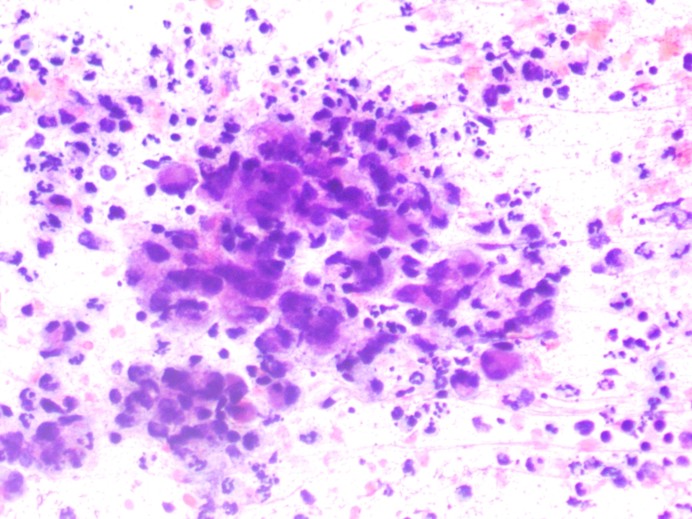
Figure 1: Shows predominantley sheets of neutrophil. with necrotic dirty granular background, scattered lymphocytes.

Figure 2: Shows intraoperative abscess drainge.
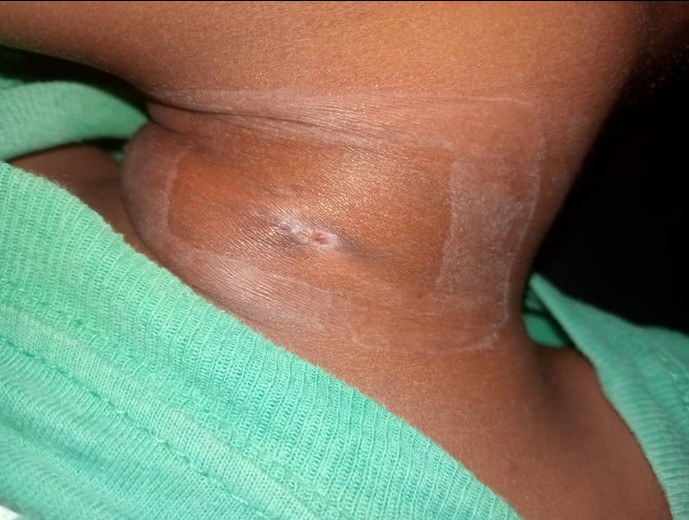
Figure 3: Shows healed wound after 3 weeks pos incision and drainge.
Fine needle aspiration was done to confirm the diagnosis. The stained smears revealed predominantley sheets of neutrophil. with necrotic dirty granular background, scattered lymphocytes and scattered aggregates of foamy histiocytes and epitheli od granuloma. No malignant cell evident. And daignosed as Suppurative Granulomatous Inflammation Consistent with Tuberculosis, GeneXpert test: Trace for Mycobacterium tuberculosis nucleic acid material.
The patient was put on antitubercular treatment with four drug regimens. The swelling decreased in size in next three months. The patient increased in weigth ,and continued on three drug regimens for another six months leading to complete resolution of swelling.
Discussion
Tuberculosis of the thyroid gland is a rare disease with an incidence of about 0.1%-0.4% (6). This can be based on the resistance of thyroid gland to the infections which attributed to a number of factors, as follows; a prosper- ous lymphatic and vascular supply, well developed cap- sule, high iodine contents of the gland and bactericidal effect of the colloid and iodine.(7)
Tuberculosis of the thyroid gland can be primary or sec- ondary and occurs in association with tuberculous in- fection of the other tissues or organs (4). Frequently secondary extension is seen due to hematogenous dis- semination or direct extension from an active laryngeal or nodal focus (8)
In thyroid tuberculosis, duration of presenting symptoms varies from 2 weeks to one year and there is no relation- ship with age or sex.(9) The most common symptoms are fatigue, fever, and night sweating and weight loss. The pressure symptoms, like dysphagia, dyspnea and dysphonia may be present.(10)
In conclusion, tuberculosis of the thyroid gland should be kept in mind in patients with non-tender, cold nodules. Fine needle aspiration is a rapid, simple and effective diagnostic method for tuberculosis of the thyroid gland.
Once thyroid tuberculosis is diagnosed, antituberculosis drugs can be given first. Although anti-tuberculous is still the cornerstone of therapy, surgery is frequently used to promote abscess extraction and avoid total thyroid tissue degradation (5),(4). About 1% of cases fail to respond to anti-tuberculous drugs and relapse because of resistance to multiple drugs. Although extremely uncommon, atypical manifestations of extrapulmonary tuberculosis in the thyroid necessitate a comprehensive history and examination. Clinicians should be highly suspicious of high-risk individuals who have medical comorbidities, such as immunocompromised diseases, from endemic regions.(1)
Conclusion
Tubercular thyroid abscess is a rare clinical diagnosis as pulmonary tuberculosis may not be associated with pulmonary tuberculosis in most of these patients. Tubercular thyroid abscess can be diagnosed only with a very high degree of clinical suspicion. Imaging techniques like magnetic resonance imaging scan and computed tomography scan are useful in making the diagnosis of tubercular thyroid abscess. Definitive diagnosis can be made by cytological examination by presence of tubercular granuloma. Tubercular thyroid abscess can be treated by aspiration of pus followed by antitubercular treatment thus avoiding surgery of thyroid. (11)
Footnote
Funding source : No funding was needed for this case report, except for the amount required if published.
informed consent statement: The patient provided informed written consent to publish this case study and accompanying photographs.
Conflict-of-interest statement: All the authors report no relevant conflicts of interest for this article.
SCARE Checklist (2023) statement: The authors have read CARE Checklist (2023), and the manuscript was prepared and revised according to CARE Checklist (2023). (12)
References
- Xiao X; Cao Q;& Shi Y (2024). Thyroid tuberculosis and cold abscess after infection with COVID-19: A case report. Heliyon;10(7).
- Organization WH. Global tuberculosis report 2021: supplementary material. World Health Organization; 2022.
- Kataria SP, Tanwar P, Singh S, Kumar S. Primary tuberculosis of the thyroid gland: a case report. Asian Pac J Trop Biomed. 2012;2(10):839–40.
- Bulbuloglu E; Ciralik H & Okur E (2006). Tuberculosis of the thyroid gland: review of the literature. World J Surg;30:149–55.
- Alam MA; Ahmed MN & Khan AH(2021). Metastatic tuberculous abscess: a rare manifestation of cutaneous tuberculosis. IDCases;26:e01257.
- Girgin S; Gedik E &Büyükbayram H(2007). Asymptomatic thyroid tuberculosis in a multinodular goitre patient: a case report. Acta Chir Belg;107(4):457–9.
- Bilgin G: Hasanoğlu A& Cakır B(2005), Tumer H, Üstün H, Kuşdemir A. Tuberculosis of thyroid with vocal cord paralysis: A report of a case; 6: 67-69
- Kapan M, Toksöz M, Bakır ŞD, Yazar BÇ, Evsen MS, Bozkurt Y, et al. PRIMARY THYROID TUBERCULOSIS: CASE REPORT AND REVIEW OF THE LITERATURE. Eur J Gen Med. 2011;8(4):357–60.
- Pandit AA, Joshi AS, Ogale SB, Sheode JH. Tuberculosis of thyroid gland. 1997;
- Razmpa E; Sharifian H& SADEGHI HM(2007).Clinical and paraclinical aspects of thyroid tuberculosis. 2007;45(5).
- Arora B; MS FIAMS FAIS(2017). Tubercular thyroid abscess: A case report. Int J Case Rep Images;8(9):587–91.
- Sohrabi C; Mathew G & Maria N(2023). The SCARE 2023 guideline: updating consensus Surgical CAse REport (SCARE) guidelines. Int J Surg;109(5):1136–40.