
Treatment of Squamous Hyperplasia of the Vulva with Autologous Platelet-Rich Plasma in Postmenopausal Women - own Exprience
Dobrinka H. Gincheva1*; Veronika H. Gincheva2
Department of Gynecology, University Hospital "St. Marina", Medical University - Pleven, Bulgaria.
²Department of Dermatology, University Hospital“Dr. Georgi Stranski”, Medical University - Pleven, Bulgaria.
*Corresponding author
*Dobrinka H. Gincheva, Department of Gynecology, University Hospital "St. Marina", Medical University - Pleven, Bulgaria.
DOI: 10.55920/JCRMHS.2025.10.001411
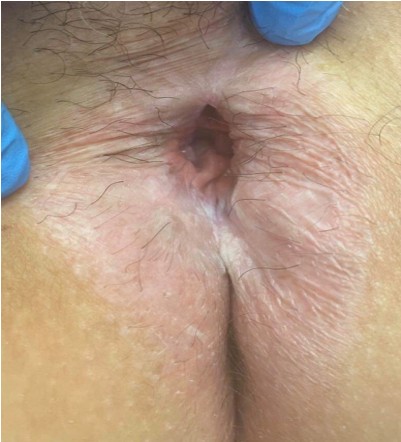
Figure 1: Macroscopic view of the lesion before plasmotherapy. External genital organs were post-simple vulvectomy state, with well circumscribed hyperemic areas, lo-cated laterally around the vaginal entrance. Against this background, prominating leucoplakic areas with spread to the perineum are noted.
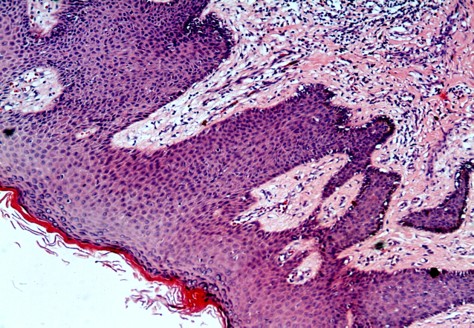
Figure 2: Squamous hyperplasia - mild hyperkeratosis, acanthosis, thickened and elongat-ed epidermal papillae that merge in places.
The patient was consulted with a dermatologist to rule out skin disease. The patient's complete blood count was within reference limits. Microbiological examination of vaginal fluid showed normal vaginal flora for the age.
A biopsy was taken from the specimen located in the vulvar area around the vaginal entrance to rule out a malignant component. The histological result was as follows: „Epidermis with hyperkeratosis, parakeratosis and acanthosis - squamous hyperplasia“ (fig. 2).
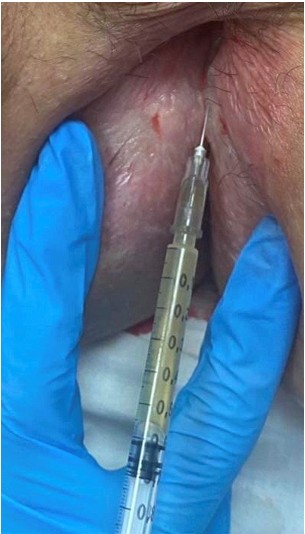
Figure 3: Performance of PRP - therapy of the external genitalia.
After the informed consent was discussed and signed by the patient, the first PRP-therapy of the vulva was performed on 21.03.2024 at University hospital “Saint Marina” – Pleven, Bulgaria, with local anesthesia with lidocaine (fig. 3).
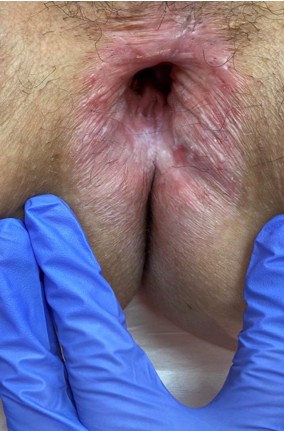
Figure 4: Appearance of the lesion after the first PRP-therapy.
Autologous platelet-rich plasma is obtained as follows: 10 ml of autologous venous blood is drawn. The thickness of the needle should be at least 1.1 mm in diameter. The blood is placed in a special tube with a separating gel and with 2.5 ml of Acid Citrate A Anticoagulant solution. The tubes are moved to a centrifuge set at 3200 rpm for 5 minutes. The supernatant, a layer overlying the separating gel, is withdrawn with a syringe. Before manipulation, the skin is cleansed with Iodaseptsolutio 10% and treated topically with a cream containing Lidocaine and Prilocaine. Intradermal plasma injection: plasma is injected into the affected areas of the vulvar and perineal skin using 31-32 G calibre needles, 6-13 mm long. The injection technique is predominantly papular and micropapular, injections are performed from the centre to the periphery in all problem areas, the distance between injection points is 8-10 mm. The needle is inserted at a 45º angle to a depth of 4-6 mm. Post-injection treatment of the skin: cleansing with Iodaseptsolutio 10%, followed by application of tcream, which has anti-inflammatory, anti-exudative and reparative effects.
In this particular patient, a total of four plasma treatments were performed over 20 days. The very next day after the first treatment, the woman reported relief of discomfort (fig. 4).
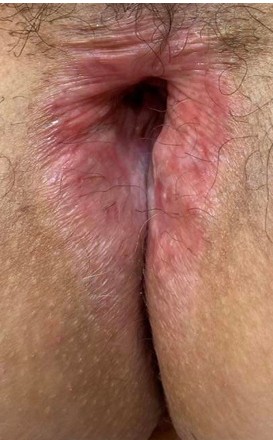
Figure 5: Appearance of the lesion after the fourth PRP-therapy.
At the follow-up examination performed one week after the fourth procedure, we found no symptoms. The patient reported that she felt well and that the dryness, pruritus and discomfort in the external genital area had disappeared (fig. 5).
The maintenance therapy schedule was discussed. We performed maintenance plasma treatments every third month for one year. The woman is now feeling well and leading a normal and full life. She reports no symptoms in the external genital area. She continues to visit the office only for check-ups every three months.
At each examination, the effect of the procedure is assessed. The intensity of pigmentation, absence of scabs, improved skin elasticity, moisturization, and turgor were noted. The patient reported a reduction in the incidence of pruritus, dyspareunia and dysuric complaints. A significant increase in quality of life was reported. No recurrence of the condition has been observed to date.